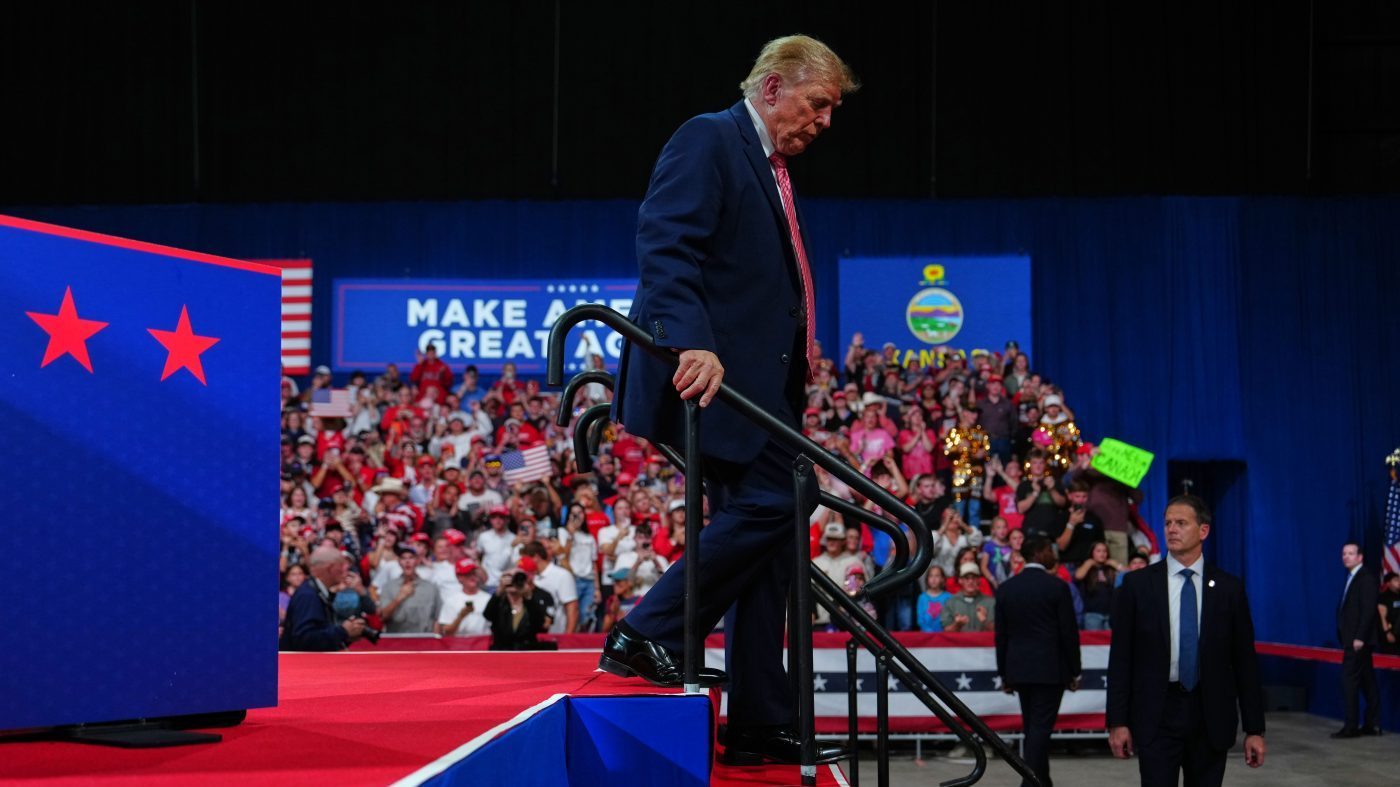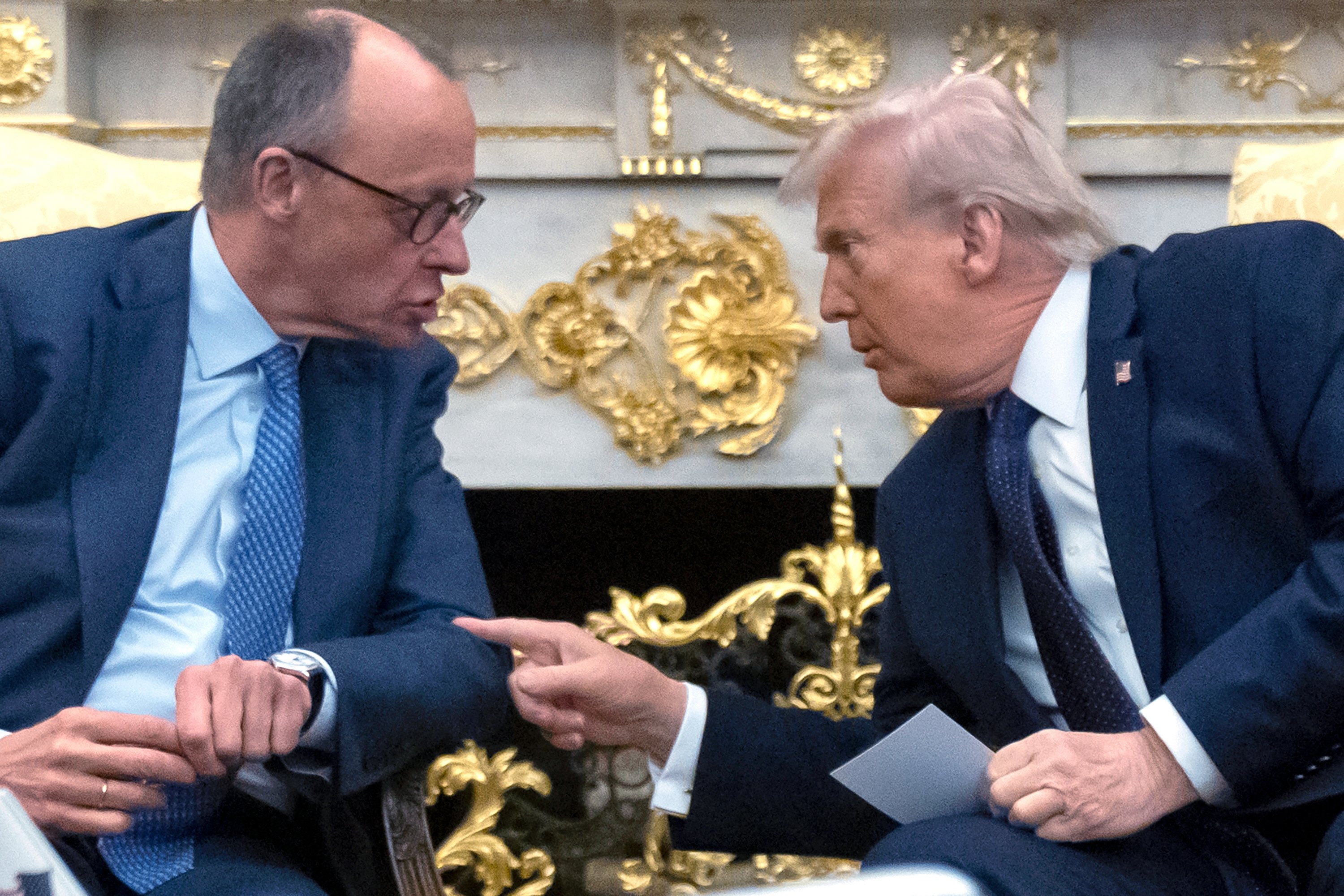
President Donald Trump declared Wednesday that the United States may significantly scale back its military presence in Germany, escalating a public feud with Chancellor Friedrich Merz over the ongoing Iran crisis. In a statement posted on X, Trump said the administration is “studying and reviewing the possible reduction of Troops in Germany,” with a decision expected “over the next short period of time.”
The announcement comes days after Merz asserted that the US was being “humiliated” by Iran, a remark that drew a sharp rebuke from Trump. The president took to Truth Social earlier this week to criticize Germany’s economic performance, writing that the country is doing “so poorly, both Economically, and otherwise.”
Despite the growing rift, Merz insisted on Wednesday that his relationship with Trump “remains good.” The White House has not commented on what specifically prompted the reconsideration of troop levels, leaving analysts to speculate that the president’s frustration with Berlin’s refusal to commit forces to the Strait of Hormuz is a key factor.
Germany hosts the headquarters for US European Command and US Africa Command, as well as Ramstein Air Base and Landstuhl Regional Medical Center, the largest American military hospital outside the United States. According to Reuters, more than half of the 36,400 US active-duty personnel based in Europe are stationed in Germany, making any reduction a major shift in the American defense posture on the continent.
Trump has repeatedly criticized NATO allies, including Germany, for failing to meet defense spending targets. Earlier this month, he lambasted Japan, South Korea, China, and Germany for not backing US efforts to regain control of the Strait of Hormuz, writing, “Incredibly, they don’t have the Courage or Will to do this work themselves.”
However, Defense Undersecretary Elbridge Colby recently praised Berlin for agreeing to ramp up its military spending in line with Trump’s vision for NATO. “President Trump has rightly laid out that Europe must step up, and NATO must no longer be a paper tiger,” Colby said on X. “Germany is now taking the leading role in this. After years of disarmament, Berlin is stepping up.” He added that Germany’s new military strategy shows a “clear path forward” and that the Department of Defense looks forward to “collaborating closely.”
The tension over troop levels is unfolding against a backdrop of broader geopolitical and economic strains. The ongoing Iran conflict has driven up prices, with March inflation hitting 3.5%, stoking political pressure on Trump. Meanwhile, the president has rejected nuclear talks with Tehran, demanding Iran “cry uncle” to end the Strait blockade, as detailed in his recent ultimatum.
The potential troop reduction is also seen as part of a broader pattern of Trump’s transactional approach to alliances. With the administration already facing policy rifts, including the departure of the acting US envoy to Ukraine amid internal disagreements, the move could signal a fundamental shift in how Washington engages with its European partners.
Colby’s meeting with German Army General Carsten Breuer suggests that while the public rhetoric is heated, lines of communication remain open. But Trump’s threat to thin the American military footprint in Germany—home to critical command and medical infrastructure—raises questions about the future of the NATO alliance and the president’s willingness to use troop deployments as leverage.