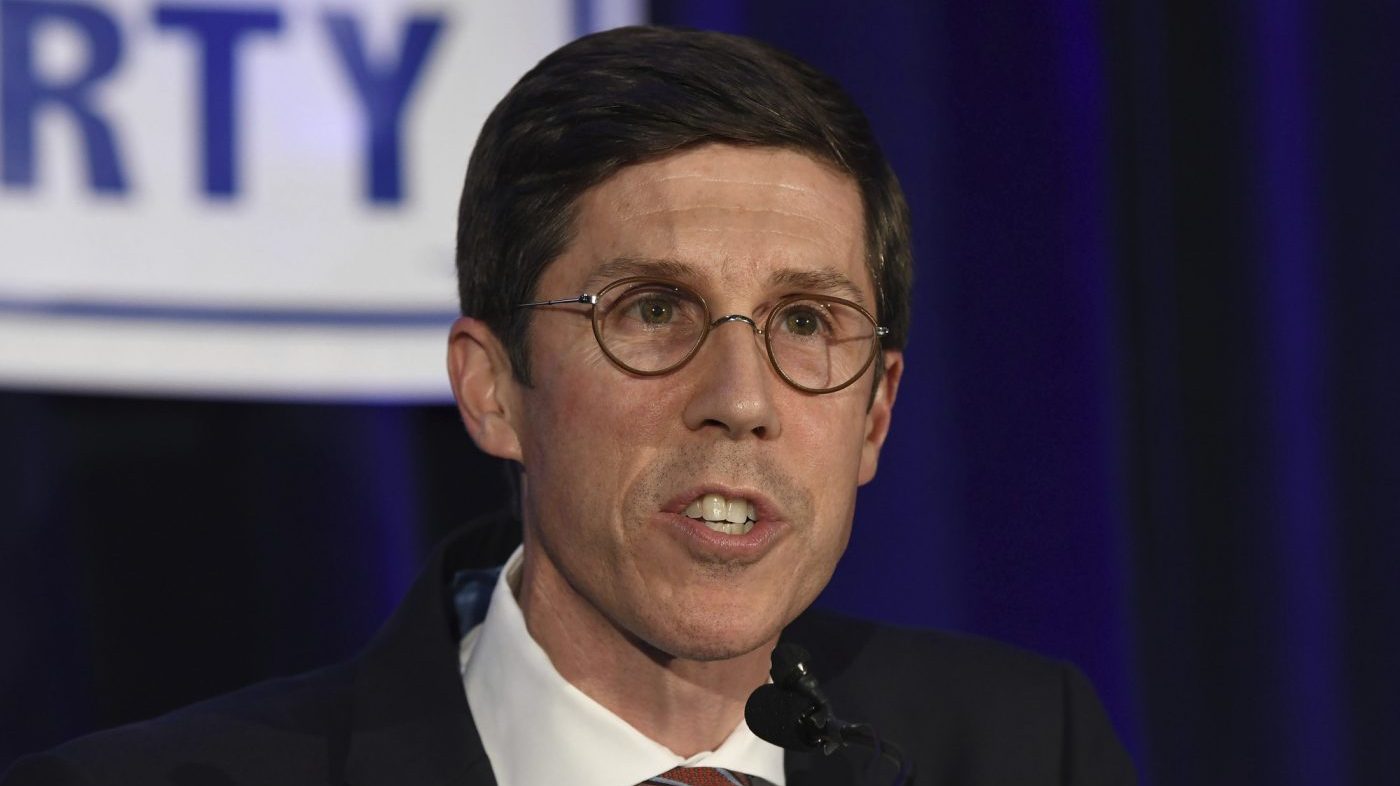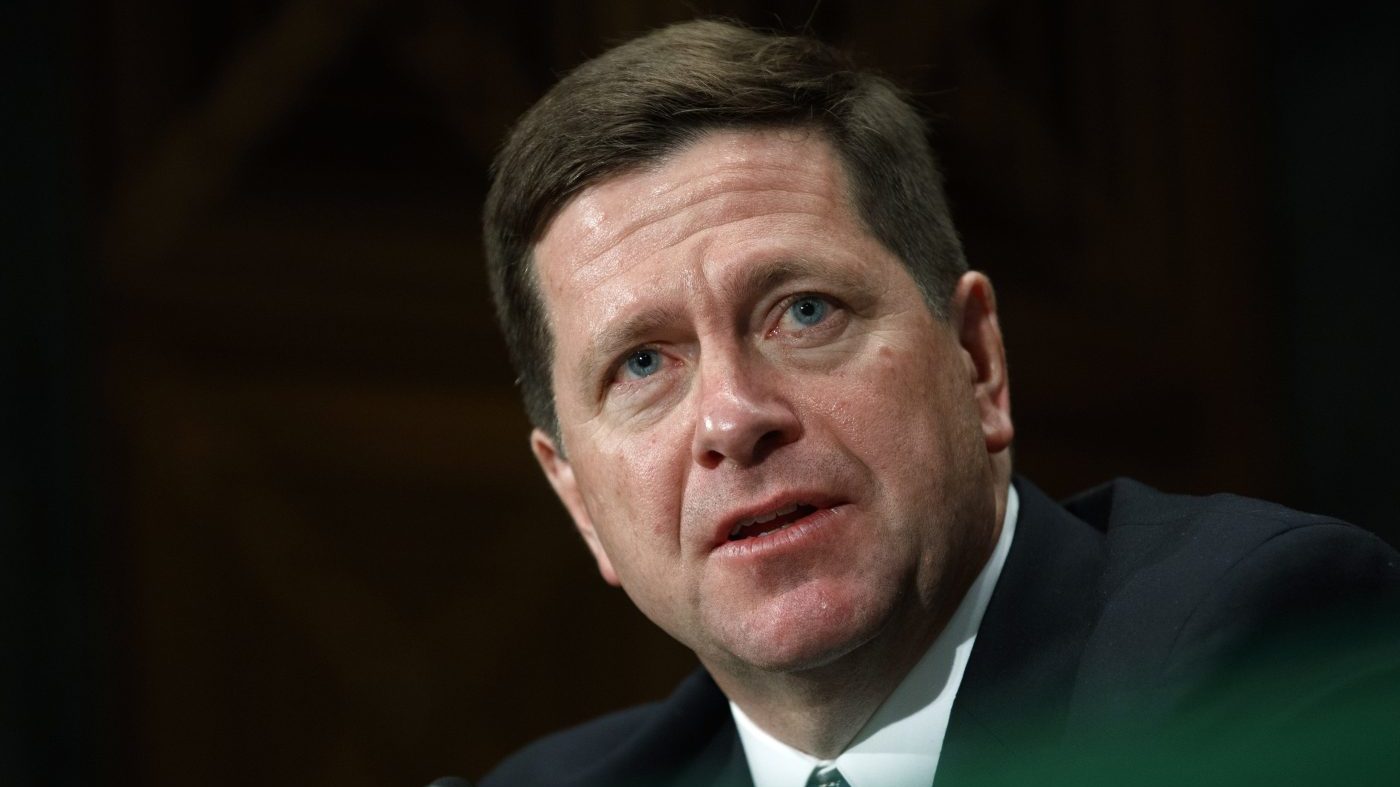
President Trump on Thursday tapped former Securities and Exchange Commission Chair Jay Clayton to serve as director of national intelligence, a move aimed at easing a political firestorm over his acting pick, Bill Pulte, that has paralyzed surveillance legislation on Capitol Hill.
Clayton, a former federal prosecutor and head of the law firm Sullivan & Cromwell, currently serves as U.S. attorney for the Southern District of New York. In a post on Truth Social, Trump hailed Clayton as a “very highly respected” figure in the legal community and urged the Senate to confirm him “as soon as possible.”
The nomination comes as Trump faced mounting pressure from both parties to reverse course on Pulte, whom he named acting DNI earlier this month. Pulte, who also leads the Federal Housing Finance Agency, has drawn sharp criticism for using his position to refer Trump opponents for criminal prosecutions over alleged mortgage fraud. That controversy has fueled Democratic opposition to renewing the nation’s warrantless surveillance powers under Section 702 of the Foreign Intelligence Surveillance Act.
On Thursday, the House and Senate each rejected bills to extend the spy authority, with Democrats citing Pulte’s expected takeover of the intelligence community on June 19 as a dealbreaker. Senate Minority Leader Chuck Schumer (D-N.Y.) told reporters that Clayton’s nomination would not change the calculus unless Pulte is removed entirely. “He has got to go. Period,” Schumer said. “I support getting rid of Pulte. That’s unequivocal.”
The standoff underscores the broader dysfunction over intelligence leadership. Clayton, who had been floated for attorney general after Trump’s election, is well regarded in legal circles but has no direct experience in intelligence. His nomination will require Senate confirmation, which could prove contentious given the partisan divide over the DNI role and ongoing battles over surveillance reform.
Trump’s decision to pivot to Clayton may also be an attempt to shore up support among moderate Republicans and national security hawks who have grown uneasy with Pulte’s politically charged tenure at FHFA. The White House declined to comment on whether Pulte would remain in an acting capacity after Clayton’s nomination is processed.
The collapse of the FISA extension has left the intelligence community in limbo, with current surveillance authorities set to expire in weeks. Lawmakers are expected to resume negotiations, but the Pulte issue remains a sticking point. As one senior Democratic aide put it, “No Pulte, no deal.”
Clayton’s background in financial regulation and corporate law offers a stark contrast to Pulte’s aggressive political style. Whether that will be enough to break the logjam on Capitol Hill remains an open question. For now, the intelligence community faces an uncertain future with two prospective leaders and no clear path to confirming either.