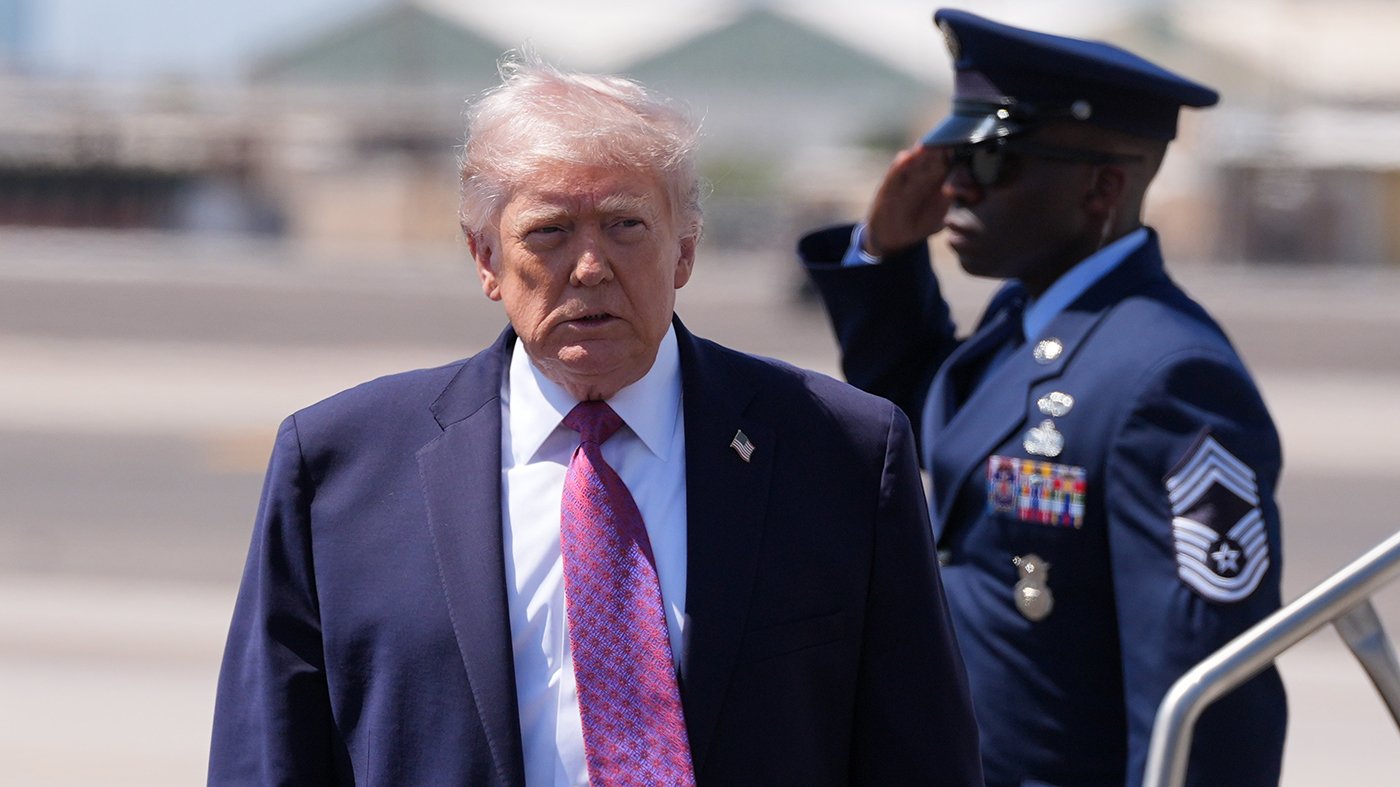
President Donald Trump will not appear at the National Rifle Association's annual convention in Houston this weekend, marking his second consecutive absence from the event. The decision breaks a streak of appearances dating back to 2015 and has ignited a debate about the political standing of an organization once considered indispensable to Republican electoral success.
A Pattern of Absence
The NRA's annual meeting, scheduled for April 16-19, will proceed without its most prominent modern champion. While the organization's leadership has characterized Trump's decision as a simple scheduling conflict, critics and observers point to a broader pattern of declining engagement from top Republican figures as evidence of the group's waning influence.
In an interview, NRA Director of Public Affairs Justin Davis dismissed concerns that Trump's absence signals a rift. "The president is obviously incredibly busy with worldwide affairs right now, and we're incredibly close to the administration," Davis stated, describing Trump as an "incredible ally." He noted that Acting Attorney General Todd Blanche and Assistant Attorney General for Civil Rights Harmeet Dhillon are scheduled to speak, asserting "the administration will be here with us." The Justice Department did not confirm the officials' participation, and their names were not listed among session speakers on the event's website ahead of the convention.
Mounting Challenges and Critiques
The scrutiny comes as the NRA navigates severe headwinds. The organization has been embroiled in a prolonged legal and financial scandal that led to the resignation of its longtime CEO, Wayne LaPierre, in 2024. LaPierre faced allegations of misusing millions in member funds for personal luxuries, including private flights and lavish vacations. This internal turmoil has coincided with a stark decline in revenue. Membership dues, which brought in $200 million a decade ago, plummeted to just $61 million in 2023, according to an independent audit.
Emma Brown, Executive Director of the gun violence prevention group GIFFORDS, argued Trump's repeated snub is telling. "It really represents the radical decline in influence that we've seen from the NRA in the last five to 10 years," Brown said. "They are hemorrhaging money. They are certainly hemorrhaging political support. It is very unusual for a sitting Republican president to skip the NRA convention, and Trump is now skipping it for the second time in two years."
The group's political spending has also dramatically contracted. In 2016, the NRA deployed $54 million to support Trump's presidential campaign. For the 2024 cycle, its reported spending was just over $10 million, a fraction of its previous outlay.
Leadership's Defense and Pivot
Davis acknowledged past failures but insisted the organization is reforming. "The folks who were around or played a major role in those wrongdoings of the past are all gone," he said, pointing to a new board and leadership team under CEO Doug Hamlin. "Our CEO... is laser-focused on making sure the NRA gets back on track." Davis emphasized new processes are designed to ensure member funds are "spent judiciously" and expressed confidence in winning back trust, though he conceded "it's going to take time."
The convention itself reflects a scaled-back approach. The high-profile NRA-ILA Leadership Forum, which previously featured major political speakers, was canceled last year after Trump's first absence and does not appear to be returning with headline political figures this year. This stands in contrast to the Trump administration's focus on other pressing international matters, such as when the President vowed to prevent Iran from obtaining nuclear weapons amid complex diplomatic signals. Similarly, the administration has recently been occupied with escalating tensions with Federal Reserve Chair Jerome Powell and addressing domestic political challenges, including speaking to young voters in Arizona as his support in key demographics softens.
As 70,000 attendees are expected in Houston, the event serves as a test of the NRA's ability to mobilize its base despite its troubles. The organization's future political clout may depend on its capacity to demonstrate stability and relevance to both its members and Republican candidates who have long relied on its endorsement and grassroots network. Trump's ongoing focus on other priorities underscores a potential recalibration of this historic alliance.