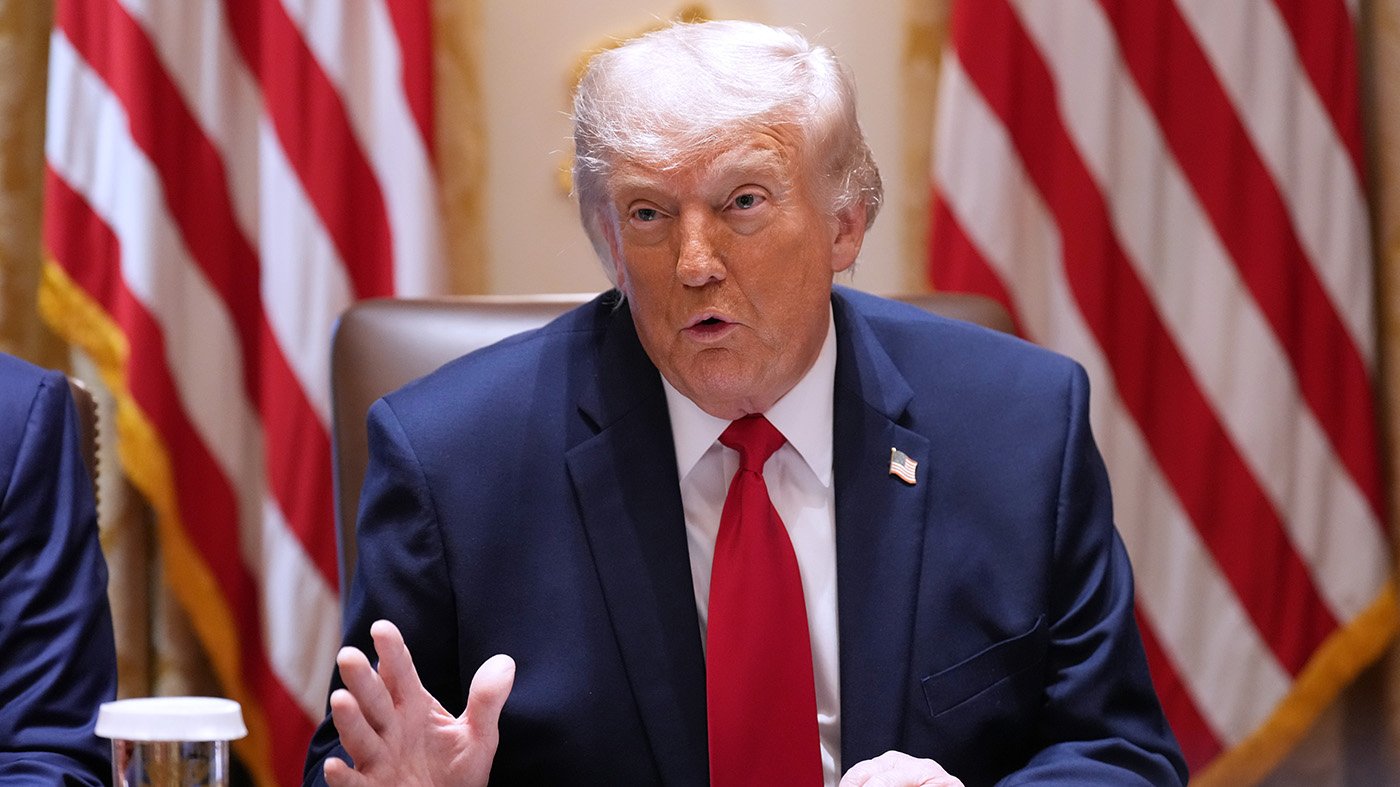
President Trump on Tuesday quietly signed an executive order that directs federal agencies to strengthen their defenses against advanced artificial intelligence models and develop a voluntary testing framework, marking a significant retreat from the administration's earlier, more ambitious plans.
The order, signed without public ceremony, requires AI labs to voluntarily submit their models to the government for up to 30 days before public release. This is a sharp reduction from the 90-day review period in the original draft, which had drawn intense criticism from industry players who argued that such a timeline would cripple innovation and hamper competition with global rivals.

The White House had initially scheduled a high-profile signing event in late May, inviting tech executives to witness the rollout. But Trump abruptly canceled the ceremony that morning, telling reporters he feared the order could undermine U.S. competitiveness against China. "I don't want to do anything that's going to get in the way of that lead," he said at the time, adding that the order "could've been a blocker" to domestic AI development.
The final version retains language that explicitly bars any mandatory licensing or preclearance requirements for AI models, including frontier systems. "Nothing in this section shall be construed to authorize the creation of a mandatory governmental licensing, preclearance, or permitting requirement for the development, publication, release, or distribution of new AI models, including frontier models," the order states—a provision that tech policy figures had insisted upon to prevent what they saw as overreach.
The directive also tasks officials from the Commerce and Treasury departments, along with the heads of the Cybersecurity and Infrastructure Security Agency, the Department of Homeland Security, and the National Security Agency, with developing a benchmarking process to evaluate the cybersecurity capabilities of AI models. White House technology and cybersecurity aides will also participate. The benchmarking will set a threshold for designating a model as a "covered frontier model."
The push for a review process—even a voluntary one—marks a notable shift for an administration that has largely taken a hands-off approach to AI regulation. The move was triggered in part by concerns raised after Anthropic unveiled its advanced cybersecurity model, Mythos, which the company said could identify decades-old security flaws, raising fears that hackers could exploit such capabilities to target critical infrastructure.
Reports that Trump reversed course after conversations with former White House AI and crypto czar David Sacks, SpaceX CEO Elon Musk, and Meta CEO Mark Zuckerberg have been disputed. Both Musk and Meta later said the calls occurred after Trump announced the postponement, not before.
It remains unclear whether the scaled-back order will satisfy the tech industry's earlier anxieties. One former Trump White House official expressed skepticism about the voluntary nature of the process, telling The Hill last month, "What is to say it stays that way?"
In a related development, Trump also scaled back tariffs on select steel and aluminum derivatives, signaling a broader pattern of recalibrating executive actions amid industry pushback. Meanwhile, the administration faces scrutiny over other policy moves, including Congress pouring billions into immigration enforcement with millions wasted at Guantanamo.