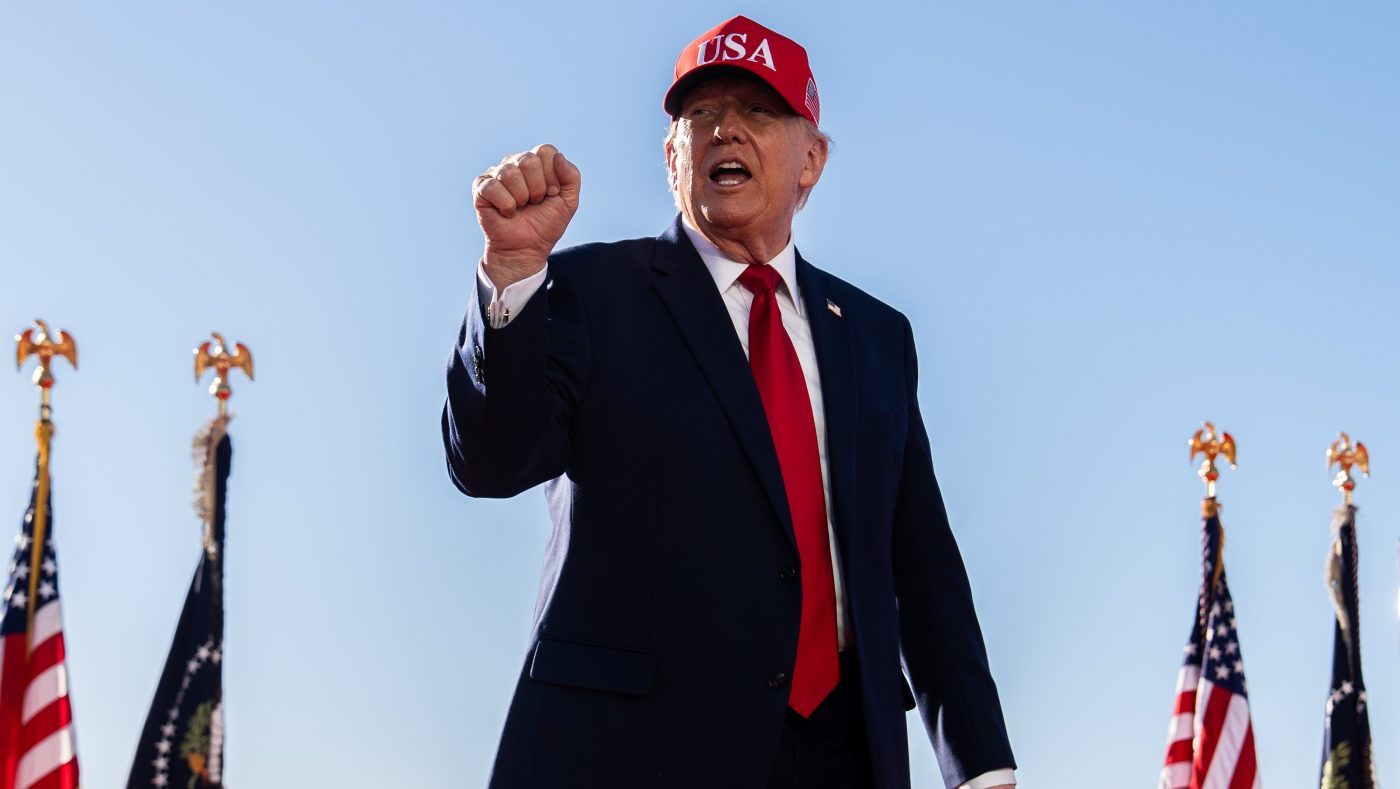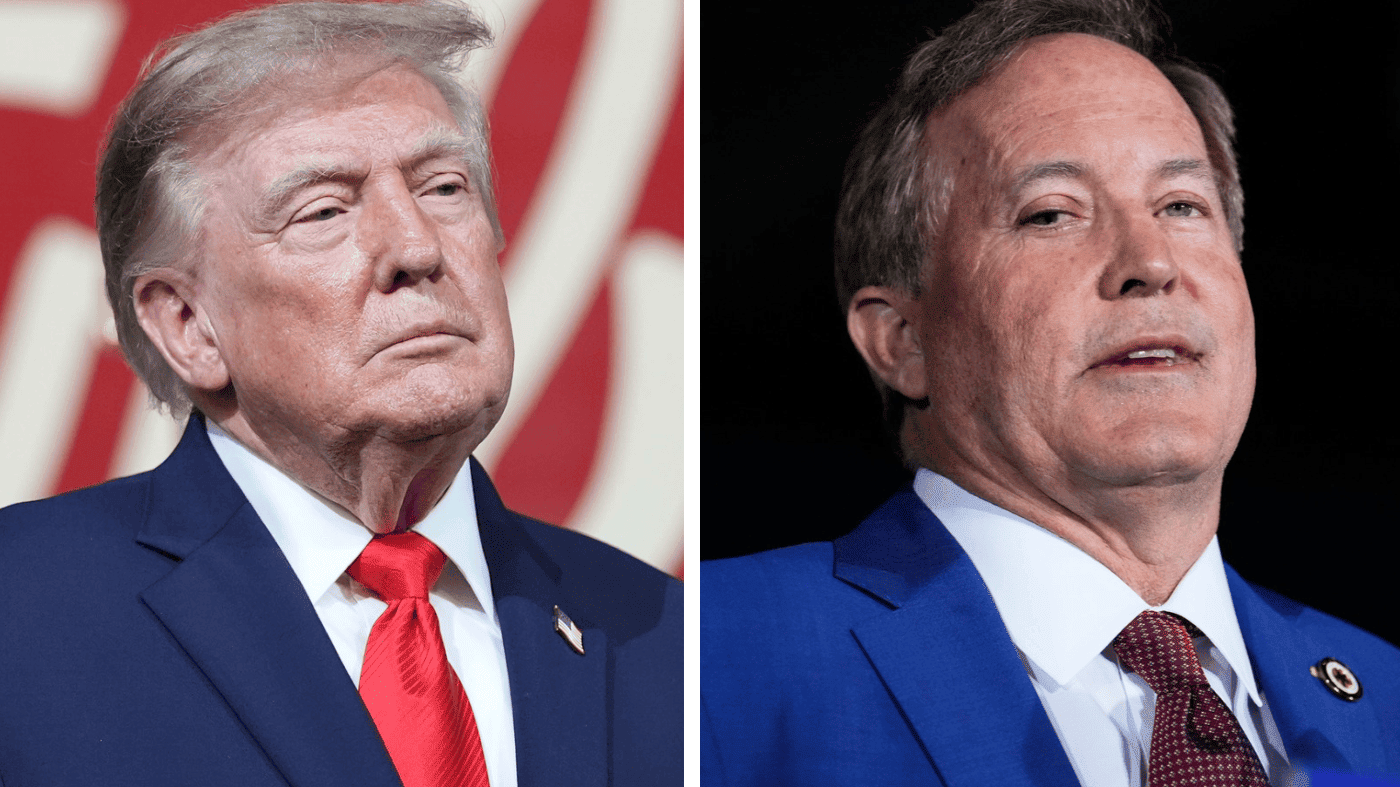
President Trump is making his third trip to Texas in a month on Wednesday, this time to rally support for Republican Senate hopeful Ken Paxton, who is trailing his Democratic opponent James Talarico in a race that has become a bellwether for the midterms. The visit underscores growing Republican anxiety as polling averages show Talarico ahead by roughly three points, within the margin of error but enough to put the GOP on edge.
Trump's blitz through the Lone Star State began with a speech at the Republican National Committee's "Trump-a-palooza" event in Dallas, followed by a stop at a Denton motor plant. Now he heads to San Antonio, where Paxton and Republican House candidate Carlos De La Cruz are expected to appear. De La Cruz is locked in a tight contest against Democrat Johnny Garcia in the 35th District.
"Republicans are worried. They need Trump to elevate Republican turnout, and it's clear that Paxton on his own can't do it," said Brandon Rottinghaus, a political science professor at the University of Houston. "We're not used to seeing this many visits from our president, and I think that the upshot is that it's a real warning sign for Republicans."
Decision Desk HQ's latest polling averages put Talarico ahead of Paxton, and Vote Hub moved the race from "tilt D" to "lean D" on Monday. The Cook Political Report shifted it to a "toss-up" in August. DDHQ gives Talarico a 56 percent probability of flipping the seat, making it the most expensive Senate race of the cycle.
Money is flooding in on both sides. Trump's MAGA Inc. dropped $10 million in early September, Elon Musk's super PAC has spent over $6 million for Paxton, and the GOP Senate Leadership Fund's Texas PAC has poured a staggering $131 million into the race. Democrats are preparing their own initial investment, and Talarico raised $30 million in the second quarter against Paxton's $9 million. Paxton brought in $18 million in the third quarter, while Talarico has yet to release his numbers.
"This is a very close and super tight race. So the smallest things are going to make a difference," said Texas GOP consultant Vinny Minchillo. "This is a turnout election, and has been from the very beginning. And bringing the president in is going to rally the faithful — that's the plan — and to make sure that people get out and turn out for the whole Republican ticket, and certainly for Ken Paxton."
Trump's support for Paxton has been lukewarm at times. At the Dallas convention, he joked that he didn't "like the way Ken dresses," "talks," or "looks," but called him "the greatest" attorney general in the country. In Denton, he referred to Paxton as "a pain in the a--" and "a little controversial." Paxton himself admitted in leaked audio that the convention "dropped our numbers," though his adviser dismissed the report as "manipulated nonsense."
Paxton, who defeated incumbent Sen. John Cornyn in the primary with Trump's late endorsement, has been a polarizing figure. He faced impeachment on corruption charges (though acquitted), his wife filed for divorce, and he has been criticized for politicizing the attorney general's office. Trump's own unpopularity complicates matters, as Rottinghaus noted: "He's supported among core Republicans who the GOP needs to turn out, but he's also toxic among many in the Democratic field and among swing voters."
The stakes are high beyond this Senate race. As Trump reverses course on taxpayer-funded ads amid broader midterm worries, Texas remains a critical battleground. Johnson's warning that Democrats will impeach Trump if they win the House adds another layer of national significance. And with Trump's AI squad picks signaling a new White House strategy, the administration is juggling multiple fronts. For now, all eyes are on San Antonio, where Trump will try to shore up a Republican candidate who is fighting for his political life.