In a rare political retreat, President Trump announced Monday evening that he would no longer use taxpayer money to pay for a series of television advertisements touting his administration's achievements. Instead, the spots will be financed by his personal funds and his main super-PAC. While Trump denied any wrongdoing and blamed the "Radical Left" for the controversy, the shift in approach signals that the ads were becoming a political liability as the midterm elections approach.
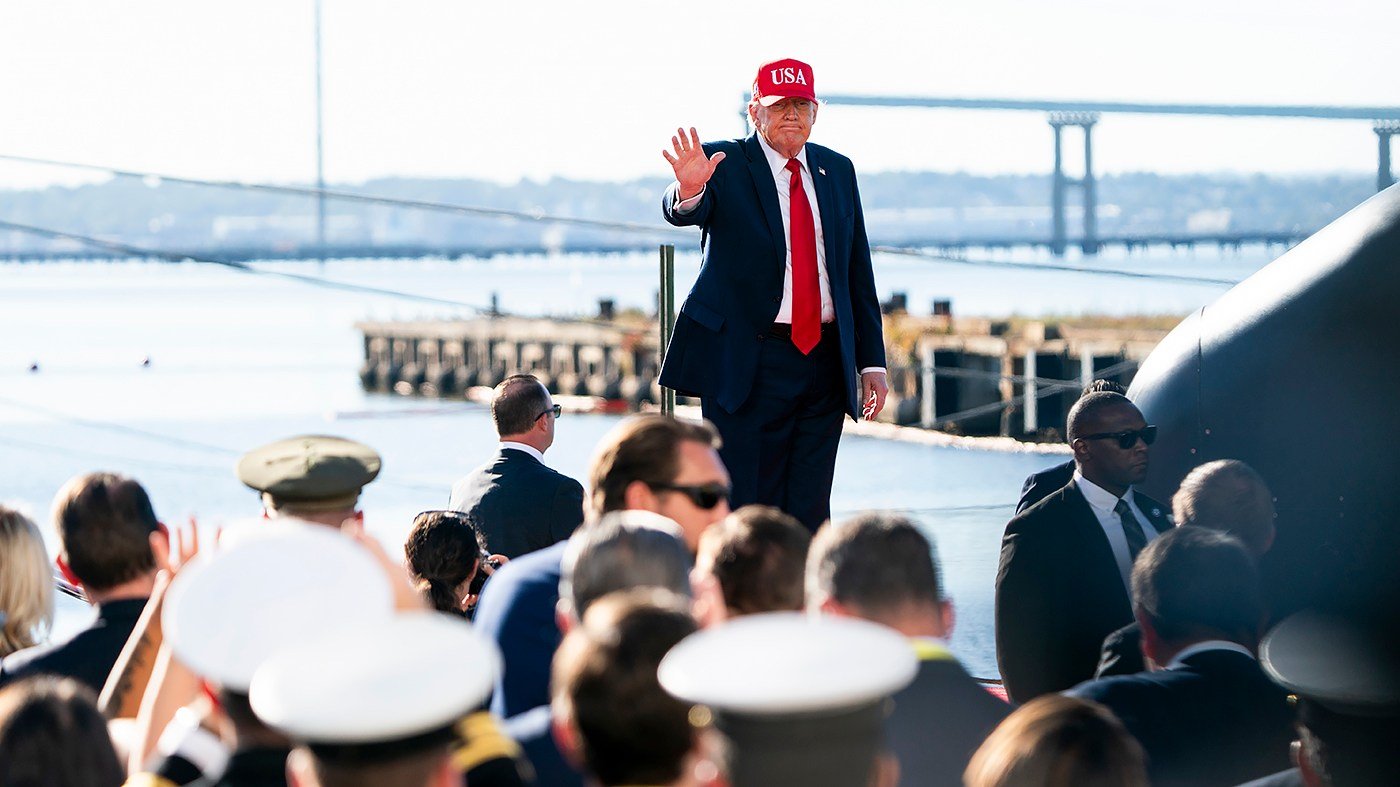
The episode is the latest flashpoint in a campaign season where Trump remains the central figure, for better or worse. Every midterm is partly a referendum on the sitting president, but Trump has gone out of his way to insert himself into the race. He has urged supporters to vote as if he were on the ballot, headlined both nights of the GOP's unusual midterm convention in Dallas, and is in the midst of a frantic schedule of rallies, which he insists are boosting the party's chances.
"The rallies have changed things around," Trump told reporters Tuesday, predicting a strong performance for Republicans. On social media, he was more emphatic, writing, "MY RALLIES ARE SAVING THE REPUBLICAN PARTY, AGAIN!!!" and claiming that "We are flipping races all over the place."
Yet his itinerary suggests a different reality. His travel has taken him largely to conservative strongholds—Nebraska, Alabama, Oklahoma—rather than competitive battlegrounds. That may be to ensure friendly crowds, but it also reflects a challenging landscape for the GOP. Senate races that were once considered safe for Republicans, such as in Texas and Kansas, have tightened, and Trump's approval rating has sagged to just 38 percent in the latest Hill-Decision Desk HQ average.
Some Republicans are clearly trying to distance themselves. Texas Gov. Greg Abbott, locked in an unexpectedly tight re-election fight, will skip Trump's rally in San Antonio on Wednesday, citing a scheduling conflict. That decision raised eyebrows, especially after a recent poll showed his Democratic challenger, Gina Hinojosa, leading by three points among likely voters. Meanwhile, three GOP Senate candidates in tough races—Ohio's Jon Husted, Iowa's Ashley Hinson, and Michigan's Mike Rogers—have urged a quick end to the war on Iran, without directly criticizing Trump.
Republican pessimism is particularly acute in the House. Sen. Thom Tillis (R-N.C.) told MS NOW's "The Beat" that "the House is almost statistically impossible to win at this point." Democrats are also taunting Trump, with Michigan Senate nominee Abdul El-Sayed sarcastically inviting the president to campaign in his state.
Princeton historian Julian Zelizer argued that Trump's centrality is "very damaging" to GOP prospects. "Voters are connecting the dots between President Trump's foreign policy, particularly Iran, and the cost of living," he said. "So when he is out there, it's not just that he's not dealing with the issues the public cares about. It's reminding them of the person they blame."
Trump's penchant for controversy hasn't helped. On Monday, he made transphobic remarks about Democratic Senate nominee Annie Andrews in South Carolina, adding to a long list of inflammatory statements. His public fights over Washington landmarks and attacks on the media have also kept him in the headlines.
Still, some loyalists insist the president is an asset. Barry Bennett, a senior adviser to Trump's 2016 campaign, argued that undecided voters are scarce and that Trump's rallies energize the base. "Someone is going to hate him more because he came to their town? I don't see it," Bennett said.
Others contend that Trump is ultimately a drag on his party. "Donald Trump is trying to change the narrative of a failed presidency by going and doing these rallies and showing these crowds," said Todd Belt, a political science professor. As the midterms near, the president's bet that his rallies can overcome the political headwinds remains a risky one.