Amid the fallout of the midterm elections, President Trump quietly issued a proclamation titled The American Declaration of Freedom in Space, outlining an ambitious vision to extend American presence across the solar system. The document frames this as forging "an interplanetary civilization founded on the enduring and inalienable rights of freedom and individual liberty."
The proclamation builds on the legacy of the Apollo missions and the ongoing Artemis program, setting a goal that goes beyond returning to the Moon or reaching Mars. It asserts that "the solar system and all of outer space beyond Earth are the province of all humans and are open to exploration, development, use, and the establishment of a permanent presence by American citizens consistent with United States law and the international obligations of the United States."
Notably, the proclamation does not claim sovereign territory, respecting the Outer Space Treaty, but it firmly positions the U.S. as the leader in space development. Just a few years ago, such a vision would have seemed like science fiction, but the rapid growth of commercial space—exemplified by SpaceX and Blue Origin—has made it plausible.
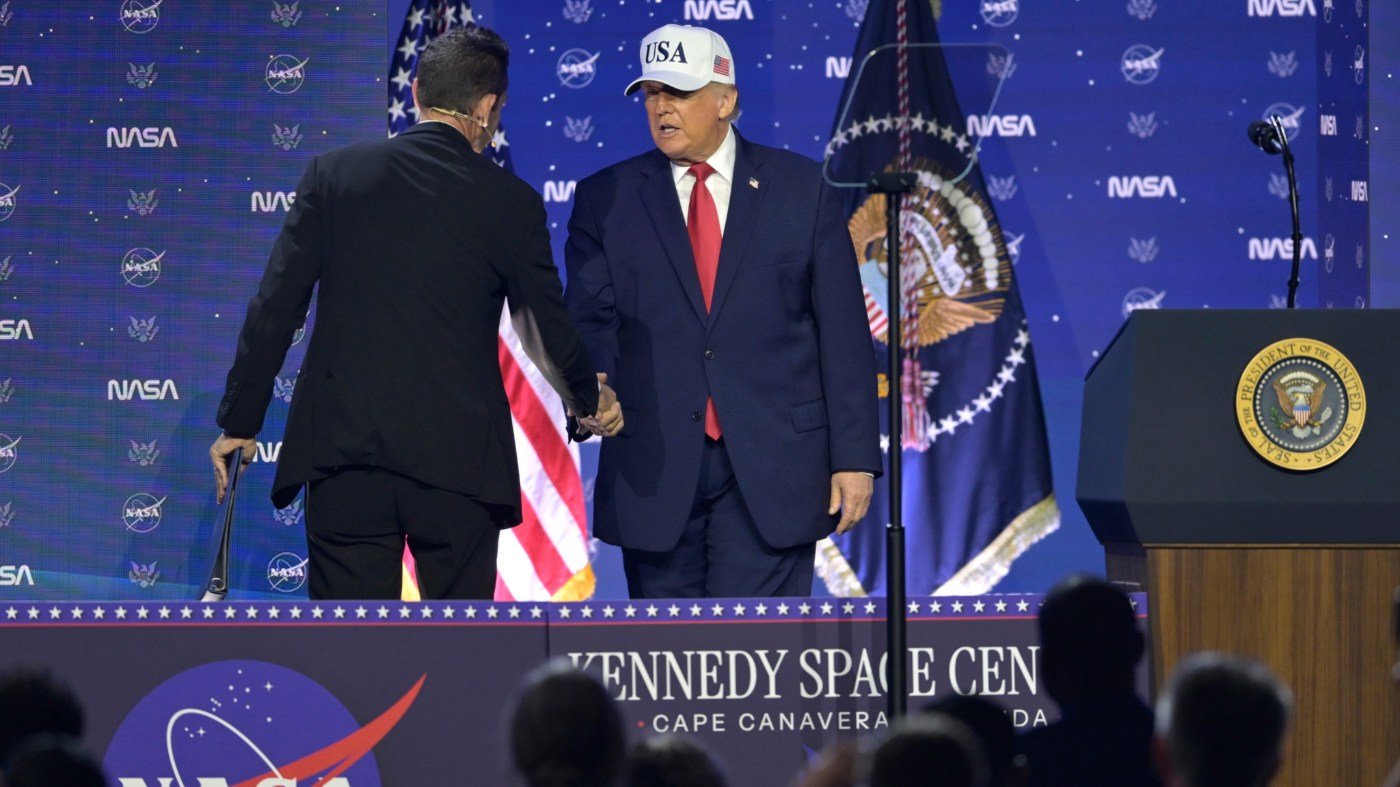
Three days after the midterms, Trump traveled to the Kennedy Space Center to speak at the Max Power technology exhibition. His remarks celebrated the space program alongside advances in nuclear power and genomics. He highlighted the upcoming Artemis IV mission, scheduled for 2028, the final year of his term.
The very next day, NASA announced new contracts under the Commercial Lunar Payload Services program, including a nuclear-powered rover named PROMISE, launch services, and surface infrastructure aimed at establishing a sustained presence at the Moon's South Pole.
With Republicans suffering losses in the midterms, Trump faces two challenges: countering emboldened Democrats and building a lasting legacy. He can use his veto pen and executive actions, as President Obama did after 2014. He must also defend Elon Musk, whose companies are crucial to space exploration.
Trump might look to Ronald Reagan's example. Despite the Iran-Contra scandal and investigations, Reagan left office with high approval ratings and became a historic figure after the Cold War's end. Reagan's legacy includes the space station program that became the ISS.
If all goes as planned, American astronauts will walk on the Moon in 2028, a sight not seen since 1972. Regardless of opinions on Trump, that achievement would be his doing. The Artemis program has survived transitions and enjoys bipartisan support.
President Kennedy is remembered for setting the Moon race in motion. Trump aims to surpass that by establishing a permanent presence in space, ensuring that exploration continues indefinitely. That would be a formidable legacy.