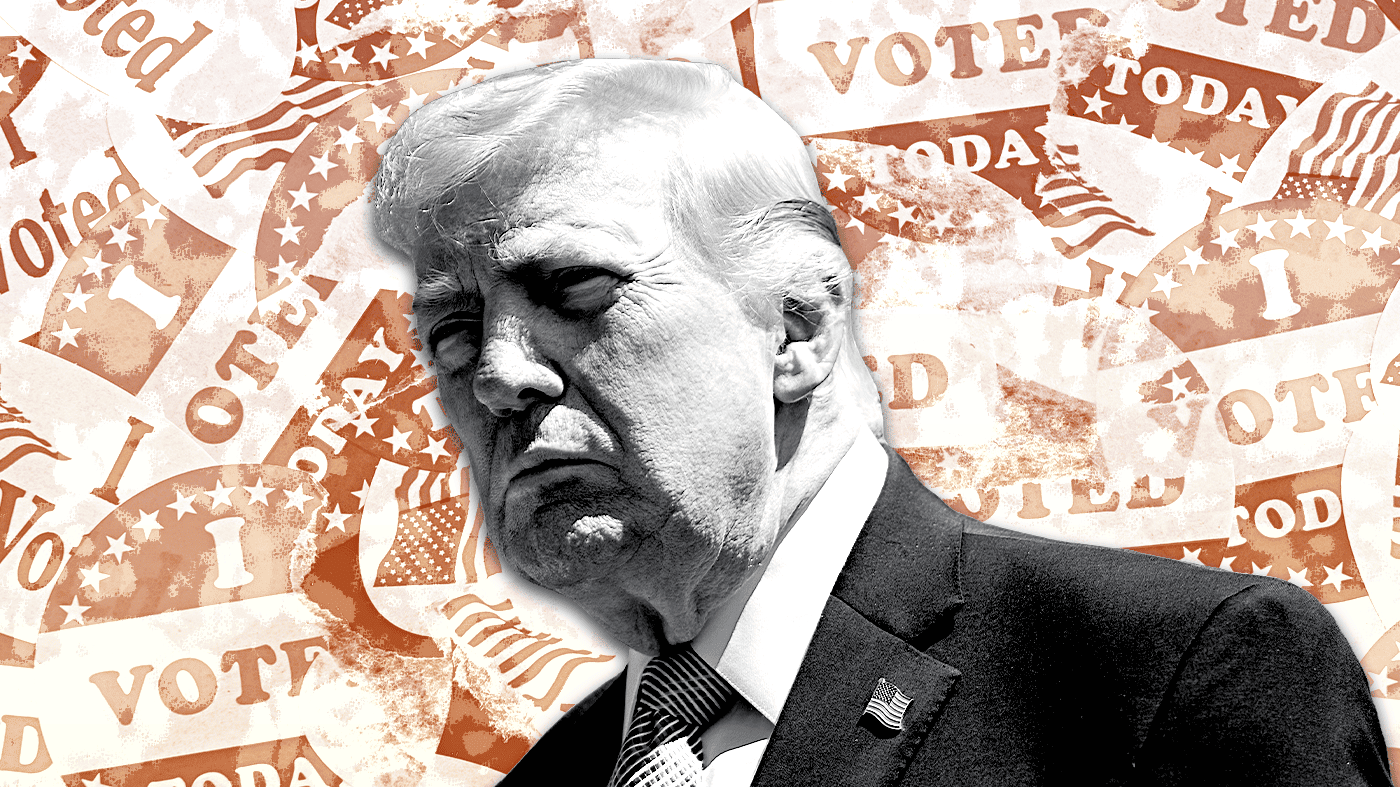
President Trump's latest maneuver to combine the Safeguard American Voter Eligibility (SAVE America) Act with legislation reviving the government's warrantless surveillance powers is fracturing House Republicans, as some warn the strategy is unlikely to succeed and could undermine national security.
Trump has repeatedly insisted he will not back renewing Section 702 of the Foreign Intelligence Surveillance Act (FISA)—which permits warrantless spying on foreign targets—unless the GOP's voter ID bill is attached. The SAVE America Act mandates proof of citizenship for federal voter registration and photo ID to cast a ballot, which Trump frames as essential election security ahead of the 2026 midterms. Critics, however, note that similar measures have faced legal challenges, as seen in a recent court ruling narrowing challenges to Trump's mail-in voting restrictions.
The push has already split Senate Republicans, with some treating it as a priority while others concede it lacks the votes and distracts from other business. Now, House Republicans who passed the SAVE Act earlier this year are cautioning that linking it to FISA renewal will complicate efforts to restore a critical intelligence tool.
“We need to get FISA reauthorized. It's absolutely unacceptable that it was allowed to lapse,” said Rep. Kevin Kiley (I-Calif.), who caucuses with Republicans. “I absolutely don't think we should be predicating its passage on unrelated legislation. It's a program that's of vital importance in its own right.” Rep. Don Bacon (R-Neb.) echoed that sentiment, calling the linkage “a Hail Mary” and adding that Trump “doesn't seem to understand the Senate.”
Section 702 expired on June 12 after Democrats opposed extensions due to Trump's appointment of Bill Pulte as acting director of national intelligence. The situation worsened when a nomination hearing for Jay Clayton, Trump's pick for Senate-confirmed DNI who had bipartisan support, was canceled at the president's behest. Now, demanding the SAVE Act be attached will likely alienate Democrats, whose support is needed in the Senate. Kiley expressed concern about further delays, noting Congress had already passed two short-term extensions before the lapse.
Rep. Thomas Massie (R-Ky.), a vocal privacy advocate who previously sought a warrant requirement for Section 702, called the linkage “dumb” on social media, questioning why lawmakers would trade Fourth Amendment protections for political advantage. Conversely, Rep. Anna Paulina Luna (R-Fla.) wrote “No Save America. No FISA,” aligning with Trump's stance. Rep. Andy Biggs (R-Ariz.) said he “wholeheartedly agrees” with the president, insisting on maximum constitutional protections.
Trump's demand is not unprecedented; he previously vowed not to sign legislation until the SAVE Act passed but later signed other priorities, including DHS funding and a reconciliation bill. Senate Majority Leader John Thune (R-S.D.) has rejected calls to change Senate rules to ease passage of the voter ID bill, telling Punchbowl News it would be “unrealistic” to pass it via a FISA extension. When asked if Trump might veto standalone FISA renewal, Thune told reporters, “I certainly would hope if we can get FISA off the floor, he would sign it.”
Even if bipartisan support emerges for a clean FISA renewal, hard-line conservatives demanding the SAVE Act could block it. On the House side, Speaker Mike Johnson (R-La.) would need near-unanimous GOP support to advance legislation through regular order. If he uses a suspension of the rules process requiring a two-thirds majority, it could be seen as a rebuke of Trump's demands. The standoff underscores deepening rifts within the GOP as the 2026 midterms approach, with some lawmakers prioritizing national security and others pushing election integrity measures that have sparked legal battles, such as a poll showing public doubt about the American dream amid policy debates.