President Trump is pivoting back to diplomatic engagement in the Middle East, seeking a new agreement with Iran after his administration's military pressure campaign failed to produce a breakthrough. But the negotiations, which Trump claimed would resume Monday, hit immediate turbulence as Iran denied any resumption of talks with Washington and instead pursued a separate bilateral arrangement with Oman over shipping lanes in the Strait of Hormuz.
The renewed diplomatic push follows a pattern of escalating threats and last-minute retreats. Since April, the U.S. has repeatedly threatened massive military action before calling it off, a cycle that has played out at least five times. Trump's latest claim of ongoing talks came even as Tehran signaled it sees little reason to engage directly with the U.S. at this point.
Gregory Brew, an Iran expert at Eurasia Group, said the U.S. is both a participant and an outsider in the Oman-Iran discussions. Tehran does not recognize any U.S. role in managing the waterway, yet any reopening of the strait depends on Washington lifting its naval blockade. "The Iranians have made it very clear they're not going to reopen the Strait unless the U.S. de-escalates, unless the U.S. drops its blockade and likely provides other concessions," Brew told The Hill.
Jason Campbell, a senior fellow at the Middle East Institute, said Iran appears to be crafting a deal with Oman that has backing from other Gulf states, which it could then use to pressure the U.S. "Iran could present it not just to the Omanis and the other immediate neighbors, but to the world as the only hurdle now to free and open shipping of the Strait of Hormuz is the U.S. naval blockade," Campbell said. "In any agreement that it would reach, I think both from a sort of geopolitical outmaneuvering standpoint, and also just from a lack of trust in Trump, Iran sees little need right now to engage in talks with the U.S. despite Trump's persistent insistence that this is the case."
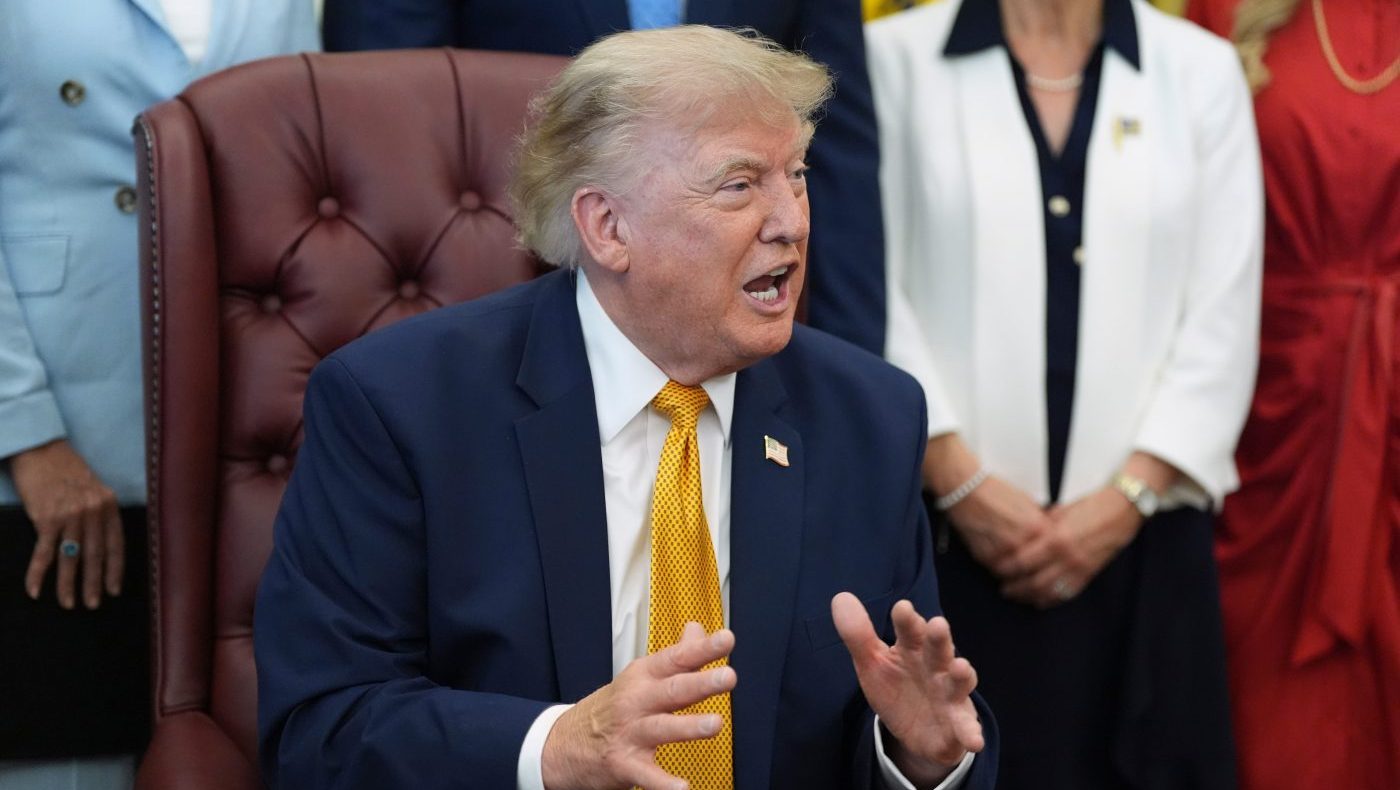
Trump, speaking from the Oval Office, insisted the talks were ongoing and held at Tehran's request. He said they were expected "to go quickly, one way or the other." "It's not very complex," he said. "We're talking about the strait, the opening of the strait, having it open, literally by tomorrow. Completely open. And that's phase one, and phase two is we then will talk about the nuclear capacity … the denuclearization of Iran." When pressed on how these talks differ from previous negotiations, he replied: "I want to give them every last chance before decapitation," adding the public would find out "today or tomorrow" how the discussions are going.
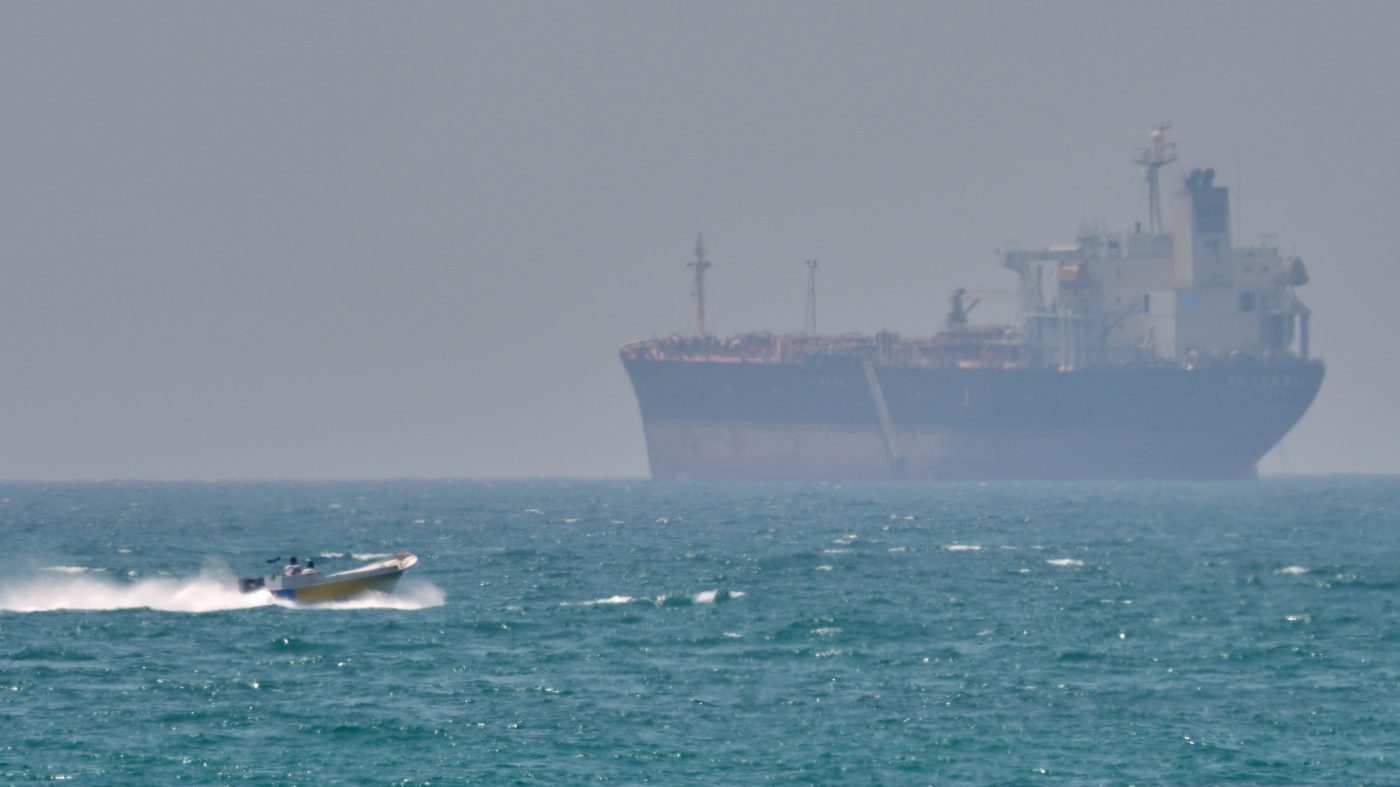
Iran, however, said Sunday that its talks with Oman focus on a new passage for tankers through the Strait of Hormuz. Iranian Foreign Ministry spokesperson Esmaeil Baghaei told state media that the two nations traded maps of a potential route. He insisted the strait will not return to pre-war status, a baseline demand of U.S. negotiators. While Trump has repeatedly claimed U.S. control of the waterway, Iran has effectively set the terms for shipping traffic for months.
Ships transiting the Strait of Hormuz currently have two options: a northern route closer to Iran's coast, which requires Tehran's approval and can take 48 hours, or a southern route near Oman, where vessels face threats from mines and aerial attacks. Traffic remains constrained, with nine ships successfully transiting Sunday, down from 23 on Friday, according to ship-tracking firm Kpler. Seven ships used the Iranian route.
Two proposals are on the table in the Oman-Iran talks, according to Brew. One is a new route for ships in the strait. The other involves a coordinated system where vessels enter the Persian Gulf via the Iranian route and exit via the Omani route. "Essentially, a coordinated structure, a coordinated mechanism for managing traffic," Brew said, adding the latter is more likely to yield an agreement.
Oman, which has long mediated between the U.S. and Iran, faces a delicate balancing act. It needs a deal with Iran because of their shared position along the strait, but it also faces immense pressure from Washington and Gulf Cooperation Council states not to "cave completely" to Tehran, Brew said. "It'll have to get regional and U.S. buy-in, and then the U.S., as I mentioned, will also have to find some kind of off-ramp in the current confrontation with the Iranians," he said. "Even if Iran reaches an agreement with Oman around what management of the Strait will look like, they're not going to do anything to open the Strait until the U.S. backs down."
Trump has ruled out allowing Iran to charge tolls on ships, touting the U.S. naval blockade as a "wall of steel." Since the blockade resumed on July 14, U.S. forces have redirected 44 commercial vessels from Iranian ports, disabled two, and boarded two others, according to U.S. Central Command. Trump said he was prepared to unleash the most devastating blow since World War II before being talked out of it by allies, including Saudi Arabia and the UAE. The standoff continues as Iran shows no sign of yielding to U.S. pressure, and the path to a negotiated settlement remains uncertain.