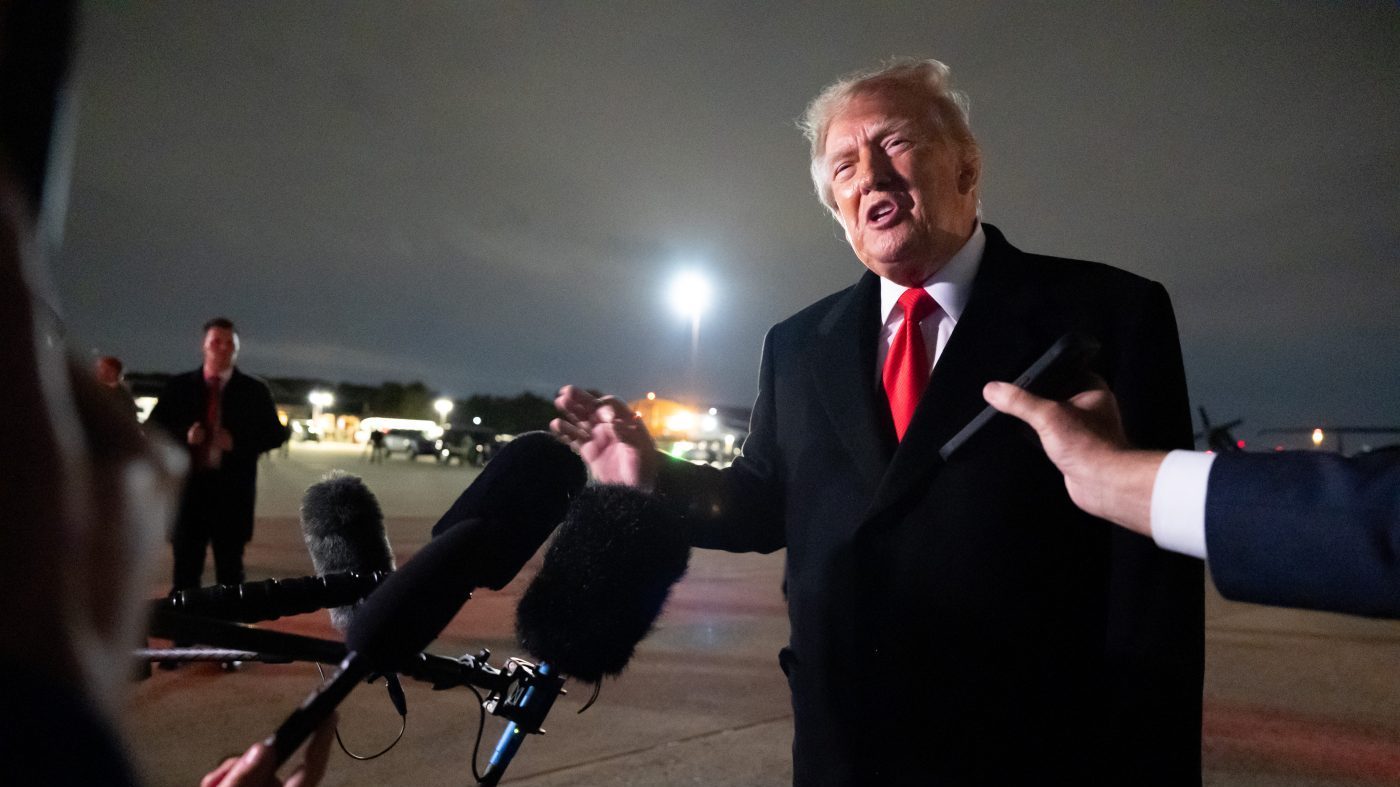
In January, amid threats to seize Greenland, President Trump unveiled the "Board of Peace," calling it "the Greatest and Most Prestigious Board ever assembled." The United Nations Security Council endorsed it as part of a plan to end the Gaza conflict, but the board's charter claimed a far wider mission: securing peace in conflict-affected areas. Trump, naming himself chairman for life, predicted it could replace the UN. Five months later, the board has little to show beyond a charter and a handful of security personnel.
The gap between Trump's rhetoric and reality is a hallmark of his presidency. He vowed to govern by "Promises made, promises kept," but in his administration, the promise itself often becomes the achievement. It grabs headlines, dominates news cycles, and distracts from setbacks. By the time the lack of progress is clear, Trump, the media, and most Americans have moved on.
The board held its only meeting in February at the renamed "Donald J. Trump Institute of Peace." Its members include a mix of mostly authoritarian states; key U.S. allies like European nations, Canada, Australia, Japan, and South Korea declined to join. At that meeting, members pledged $7 billion for Gaza reconstruction, and Trump promised an additional $10 billion. To date, only $23 million has materialized, and no major reconstruction contracts have been awarded.
The board announced plans for a 20,000-strong International Stabilization Force to provide security for reconstruction. Five months later, the force consists of a commander and four Moroccan officers. Early support evaporated amid concerns over the U.S.-Iran war, rules of engagement, legal authority, and financing, as well as Trump's insistence that no American troops would enter Gaza.
Gaza remains devastated. Reconstruction is stalled because Hamas refuses to disarm until Israel withdraws, and Israel refuses to withdraw until Hamas disarms. Trump's vision of transforming Gaza into office towers and tourist resorts looks increasingly absurd. He has said little about the board since declaring the war "over" in February. Secretary of State Marco Rubio admitted during a House hearing that "no one's going to invest money in Gaza until Hamas is demilitarized."
Solving Gaza's problems is undeniably difficult. But by presenting the Board of Peace as the solution, Trump sidelined the UN, confused allies, and created false expectations, making genuine rebuilding efforts harder. The board is emblematic of Trump's modus operandi: announce sweeping initiatives outside established channels, promise extraordinary results, then shift attention before reality sets in.
This pattern echoes earlier failures. In his first term, Trump promised to repeal and replace Obamacare, but his "Infrastructure Week" initiatives never materialized. In 2023, he proposed ten "Freedom Cities" to revive the American Dream; no site has been selected, and he no longer mentions it. He declared he would end the Russia-Ukraine war in 24 hours, reduce inflation on "Day One," and replace income tax with tariffs—none of which happened.
Days into his second term, Trump announced a "Golden Dome" missile defense system to shield the entire country by 2028. The Congressional Budget Office estimated the cost at $1.2 trillion and warned it could be overwhelmed by a full-scale attack. Despite some planning, the project remains theoretical. Similarly, Elon Musk's Department of Government Efficiency claimed to find tens of billions in waste, but actual savings were far smaller, and cuts to the federal workforce were damaging.
Trump's pattern of grandiose but unfulfilled plans has broader implications. It undermines America's credibility abroad and leaves urgent domestic problems unaddressed. As Democrats urged unity behind primary winners to counter Trump in midterms, and House GOP bets on Trump to drive midterm turnout, the gap between his promises and performance remains a defining political issue.