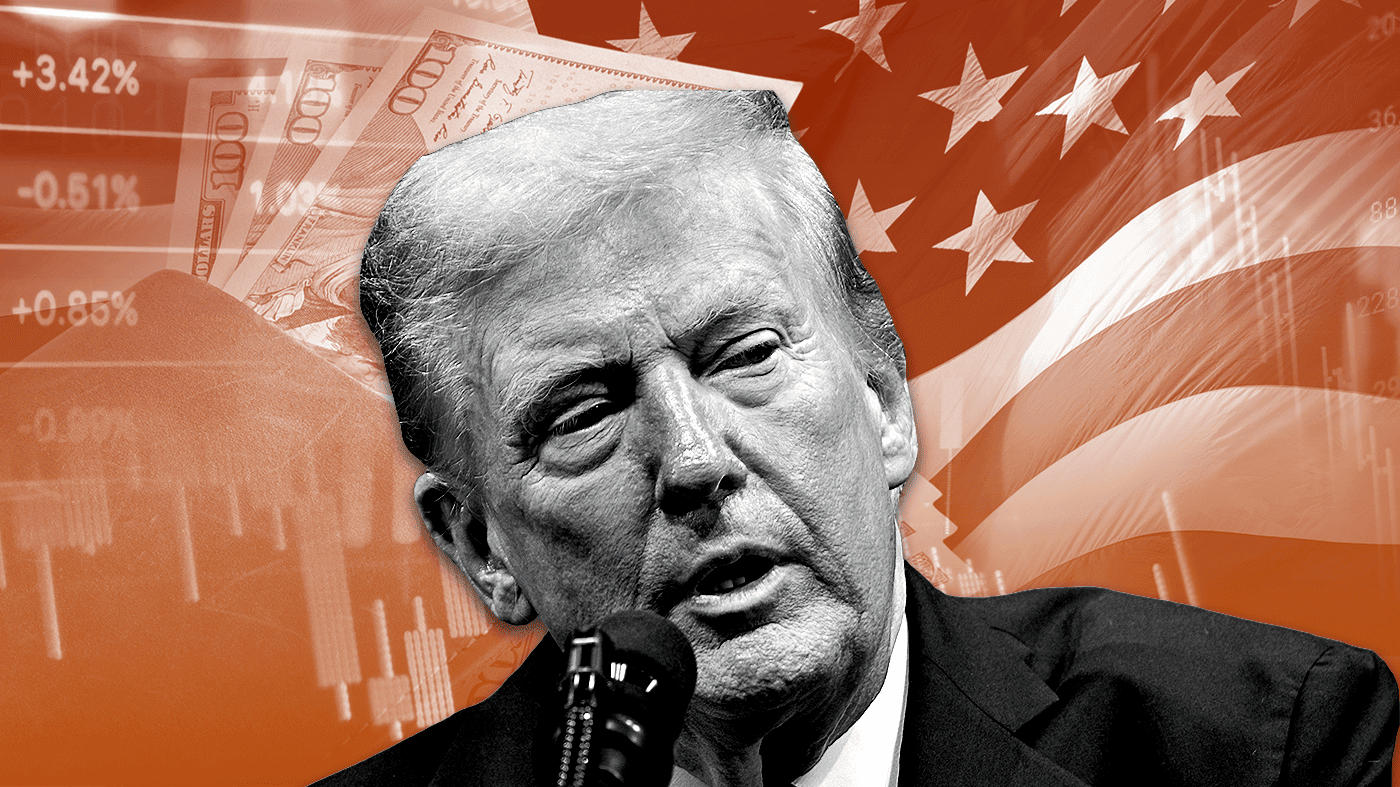
President Trump's attendance at Game Three of the NBA Finals at Madison Square Garden this week was hard to miss—not just for the basketball, but for the relentless advertising of sports betting. The arena is plastered with ads for Caesars Sportsbook, the Knicks' official betting partner, and the renamed Kalshi Concourse, a nod to the prediction market platform's partnership. This spectacle underscores a troubling trend: the White House is actively pushing America toward a gambling-centric economy, with prediction markets at the forefront.
Trump's history with gambling is well-documented. He ran four casinos in the 1990s and 2000s, all of which failed. Now, his family is deepening ties to the prediction market industry. Donald Trump Jr.'s venture capital firm, 1789 Capital, is a major investor in Polymarket, a Kalshi rival. Despite that, Kalshi named Trump Jr. a strategic adviser in January 2025, clearly betting on his proximity to power. Both firms see political connections as a winning wager.

The administration's embrace of prediction markets, which Trump has called the nation's next big industry, is fueled by cash-strapped states seeking new tax revenue. But the result is a system where every government action becomes a potential profit opportunity, and officials are more focused on their betting portfolios than ethical governance. This shift is already yielding dangerous consequences.
Master Sgt. Gannon Ken Van Dyke faces trial on Dec. 7 for allegedly using classified information about the capture of Venezuelan President Nicolás Maduro to make $400,000 on Polymarket. Three congressional candidates were fined by Kalshi in April for betting on their own elections. The White House issued a memo in April warning staff against insider wagering but has refused to formally ban employees from using privileged information in prediction markets. Unsurprisingly, key Trump officials are landing lucrative jobs at Kalshi and its allies. Outgoing policy communications director Jacki McGavick recently joined Kalshi, and former deputy chief of staff Taylor Budowich works for Americans for Fair Markets, a Kalshi-funded advocacy group.
This erosion of integrity goes beyond policy. It's reshaping American culture. Young people, bombarded by social media influencers and algorithms, now measure success by "performance wealth"—a relentless comparison of financial status. A 2023 Wall Street Journal/NORC poll found that between 2019 and 2023, only one value rose in importance for Americans: money. Patriotism, religion, and community involvement all declined. In this environment, grifting and fraud become as acceptable as honest work, as long as you don't get caught. Trump's history of blending government service with personal enrichment starts to seem like common sense.
The question is whether we want a nation dominated by unregulated prediction markets and get-rich-quick schemes. Who benefits, besides the platform owners and insiders with access to secret information? More profoundly, what happens to a culture where young people are so obsessed with wealth that they feel no social obligation to each other? The answer, as today's White House shows, is a leadership class that prioritizes personal profit over public trust.
This isn't just about gambling—it's about the soul of American democracy. As polling shows a decline in the share of Americans who see democracy as core to national identity, the stakes couldn't be higher. The Trump administration's cozy relationship with prediction markets is a direct threat to the integrity of our institutions.