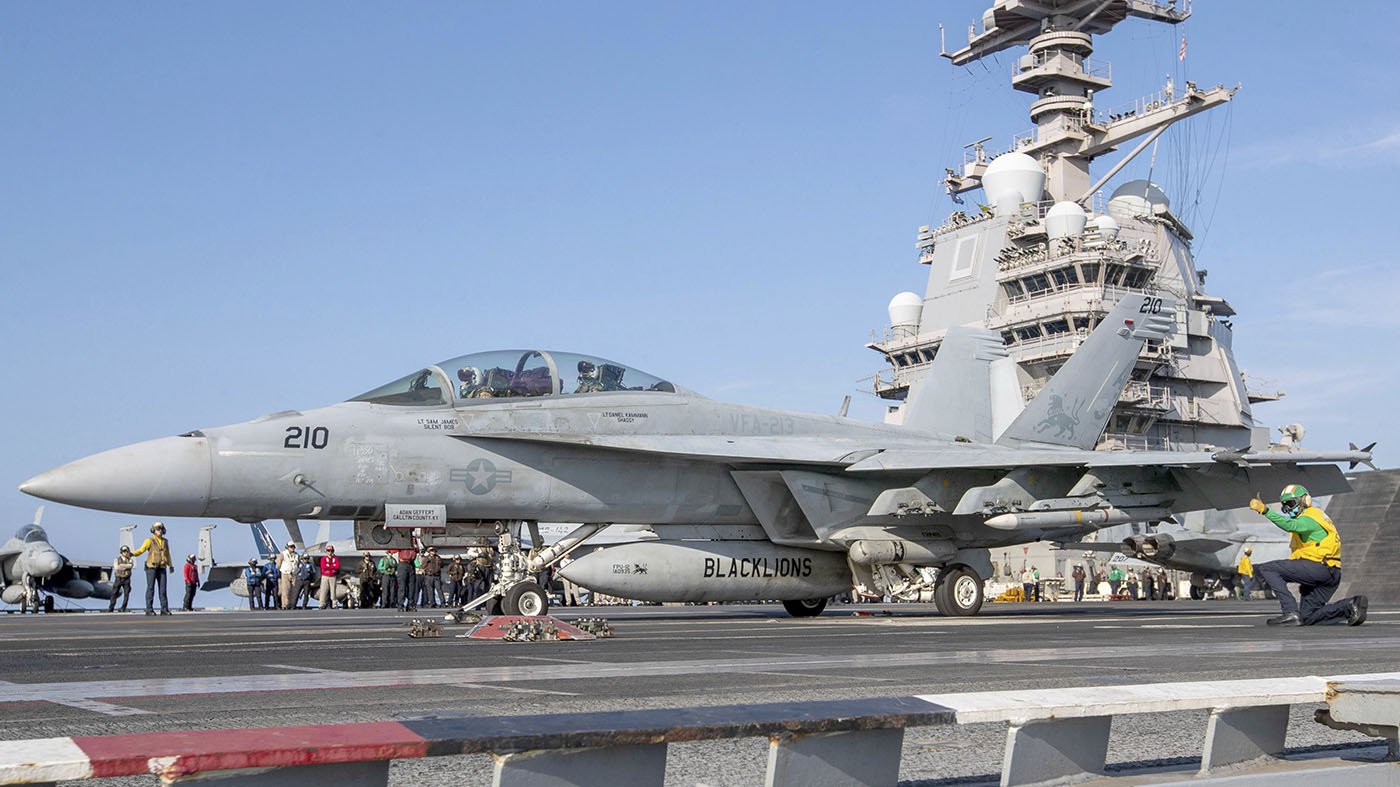
President Trump is increasingly intervening in the design of the Navy's next-generation aircraft carriers, backing changes that could significantly raise costs and disrupt construction timelines. The president has directed a return to steam catapults on the Ford-class carriers and has ordered a review of moving the ship's command tower, or "island," toward the center of the vessel—a move that would alter the ship's profile and operational layout.
Industry experts and former defense officials say the proposals are unlikely to be fully implemented, given that construction is already underway. They suggest Navy leaders will either convince Trump that the current electromagnetic launch system (EMALS) and advanced weapons elevators are superior, or they will simply wait out his term in office.
"I think the idea with this and with the electromagnetic catapult is to do the studies and maybe do some of the redesign work, but not actually incorporate it into the ships, because the actual construction part of those ships is far enough in the future that they could wait it out, right, and wait until the president's out of office and then just not implement the change," said Bryan Clark, a senior fellow at the Hudson Institute.
Brent Sadler, a 26-year Navy veteran and now a senior research fellow at the Heritage Foundation, said engineers and pilots will likely make the case to Trump to keep the current island placement and stick with EMALS, advanced weapons elevators, and advanced arresting gear. But he cautioned that Trump's mind may already be made up.
"It's all part of the same review. So, the president has a view. He … wants things to be more grand," Sadler said. "He wants things to be more reliable. And I think when he gets the math back, the engineers give him back the study in 60 days. I think you'll see things moderate, but I don't think he's going to let up."
Sadler added that Trump's intense interest in the Navy is generally positive, even if it creates friction. "He has a long memory, and he loves the Navy; has a lot of interest in the Navy, and that's good. Doesn't always feel that way if you're on the receiving end, but I mean he's very much paying attention," he said.
The Navy's internal review, first reported by The Hill, is examining whether to relocate the island—currently positioned on the starboard side—to a more central location to match the aesthetic of older carriers that Trump prefers. The island is the nerve center for navigation, tactical command, and flight-deck operations.
Retired Navy Adm. Gary Roughead, who served as chief of naval operations from 2007 to 2011, said the review will not simply disappear from Trump's priority list. He stressed that the Navy must weigh the engineering effort, cost, and operational impact of any design change.
"I think they also will have to look at what are the engineering changes that are required, the amount of effort and man hours that will go into making that design change if, in fact, the decision is made to change the design, and the effort and the engineering effort and design effort obviously will detract from other shipbuilding design initiatives that are in play," Roughead said.
Moving the island would require re-engineering the ship's internal structure to support its weight and would affect the vessel's stability and center of gravity. Clark explained that the island's placement is crucial for stability; a poorly positioned island could cause dangerous oscillations in rough seas.
The current rearward placement of the island was chosen to maximize flight deck space, allowing more efficient movement of aircraft and increasing sortie generation. Moving it forward could create bottlenecks, akin to an airport traffic jam, slowing flight operations.
As the Navy conducts its 60-day review, the outcome remains uncertain. But experts agree that any major redesign would likely delay the already delayed Ford-class program and add billions to its cost. The White House and Navy have not commented publicly on the review's progress.