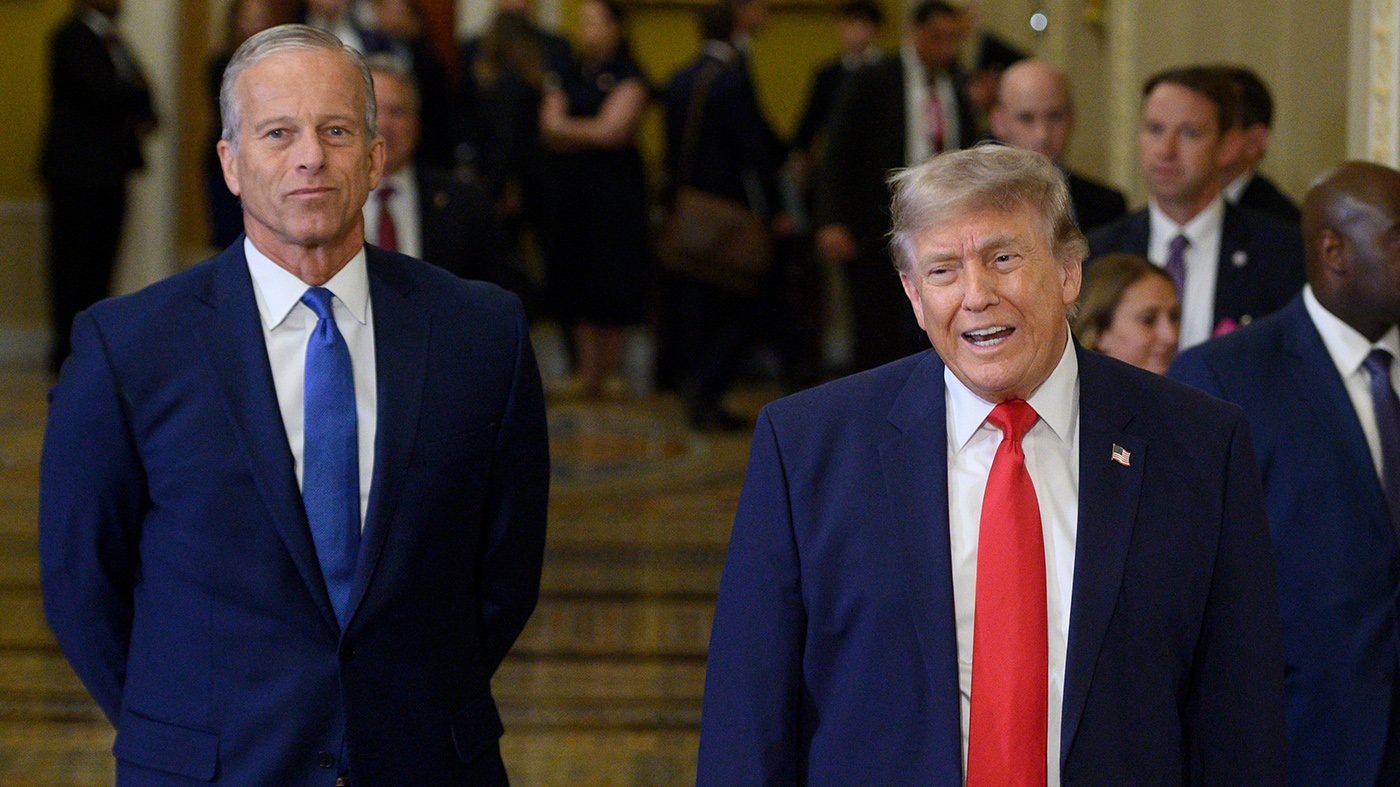
President Trump blindsided Republican senators on Wednesday by refusing to sign a popular housing affordability bill, escalating tensions that have been simmering for weeks. The move came during what was supposed to be a show of party unity, with Trump scheduled to sign the 21st Century ROAD to Housing Act before meeting with Senate Majority Leader John Thune and other GOP senators to map out the remainder of the year's agenda.
Instead, Trump took to Truth Social to announce he would not sign the housing bill unless the Senate also passed the Safeguard American Voter Eligibility (SAVE America) Act, an election reform measure that has virtually no chance of clearing the upper chamber. The demand caught Republican leaders off guard and immediately soured the atmosphere on Capitol Hill.
The housing bill, which had broad bipartisan support and was seen as a major Republican accomplishment, was intended to address rising housing costs—a key issue for voters. Trump's refusal to sign it without the SAVE Act effectively killed the bill's prospects, at least for now, and left GOP lawmakers scrambling to explain the reversal to constituents.
Earlier in the day, Trump had already clashed with GOP senators over a separate issue. During a closed-door lunch meeting, he erupted at lawmakers over a successful resolution passed the day before that directed him to withdraw U.S. forces from hostilities against Iran. The resolution, which passed with support from some Republicans, was seen as a rebuke of Trump's foreign policy and a rare instance of Congress asserting its war powers.
Trump's anger over the Iran vote spilled into the housing bill standoff, with multiple senators describing the lunch meeting as tense and confrontational. Trump's heated exchange with Senator Bill Cassidy over the Iran resolution further underscored the growing divide between the White House and Senate Republicans.
The SAVE Act, which would require proof of citizenship to register to vote, has been a priority for Trump and some House conservatives but faces steep opposition in the Senate. Even if it passed, it would likely be challenged in court, as similar voter data disputes have been blocked by the judiciary. By linking the housing bill to this controversial measure, Trump has effectively dared Senate Republicans to either back his election reform push or abandon a popular piece of legislation.
Senate Majority Leader John Thune, who had been working to build consensus on both bills, was caught in the middle. Privately, several GOP senators expressed frustration with Trump's tactics, warning that the standoff could harm the party's image ahead of the 2026 midterms. Publicly, most remained cautious, with few willing to directly criticize the president.
The standoff also complicates broader legislative efforts, including GOP fiscal conservatives' resistance to Trump's $1.5 trillion defense and Iran war funding push. With the housing bill now in limbo, party leaders face an uphill battle to advance any major legislation in the coming weeks.
Trump's decision to torpedo the housing bill is the latest in a series of confrontations with his own party. Earlier this month, he clashed with GOP lawmakers over the Iran war powers resolution, and his push for the SAVE Act has deepened divisions. The unraveling of what was meant to be a day of unity signals that the relationship between Trump and Senate Republicans is at its lowest point in months.