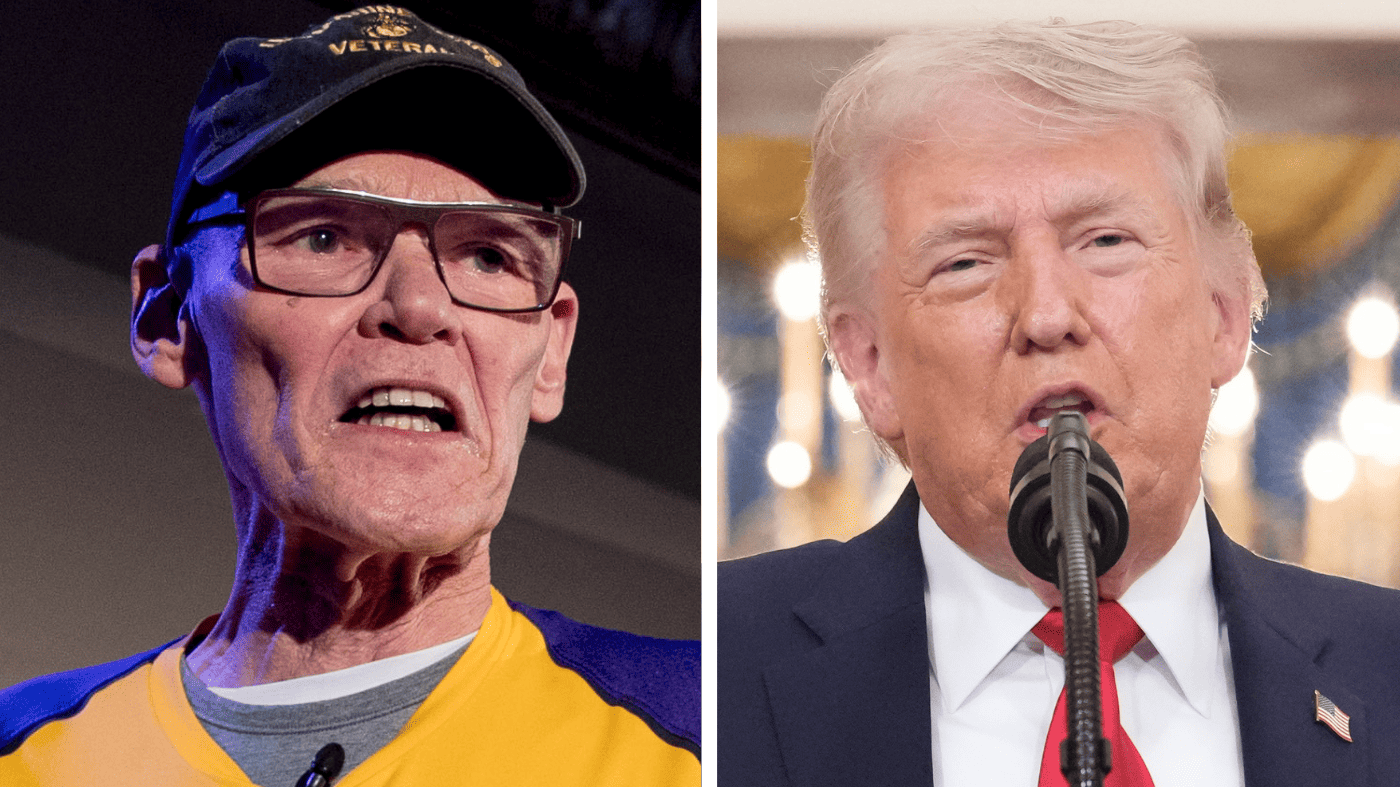
President Trump launched a scathing attack on veteran Democratic strategist James Carville Tuesday, labeling him a "wacko" for advocating that Democrats pursue major structural changes to American governance upon regaining power. The broadside came in response to Carville's renewed calls for adding states and expanding the Supreme Court.
Carville's Controversial Proposals
James Carville, the 81-year-old consultant, has repeatedly suggested Democrats should pursue statehood for Puerto Rico and the District of Columbia while expanding the Supreme Court from nine to thirteen justices. Last August, he framed these moves as essential to "saving democracy," and last week urged Democrats on a podcast to "Don't run on it. Don't talk about it. Just do it."
In a lengthy Truth Social post, Trump tore into these ideas, calling Democrats who support them "Country Destroying Sleazebags" who would dominate American politics for "100 years" if successful in adding states. He again demanded Senate Republicans eliminate the legislative filibuster, the 60-vote threshold frequently used to block legislation.
Supreme Court Frustrations Boil Over
The president's criticism extended to the Supreme Court itself, where he claimed Democrats were "already doing great" despite the court's conservative majority. "The Democrat Justices stick together like glue, totally loyal to the people and ideology that got them here," Trump wrote, describing them as an "immovable force."
He contrasted this with what he called disloyalty from "Certain Republican Appointees" who "let the Democrats push them around, always wanting to be popular, politically correct, or even worse, wanting to show how 'independent' they are." This frustration follows several rulings that have gone against the administration, including a February decision that struck down much of his sweeping tariff agenda—a ruling Trump called "very unfortunate" during his State of the Union address.
Targeting His Own Appointees
While not naming them directly, Trump directed particular frustration at two of his three Supreme Court appointees—Justices Neil Gorsuch and Amy Coney Barrett. Both joined with Chief Justice John Roberts and the court's liberal justices in rejecting Trump's argument that he could unilaterally impose tariffs without congressional approval, a legal setback that has contributed to declining economic approval ratings for the administration.
"I put certain people on the United States Supreme Court who totally misrepresented who they were, and the true ideology for which they stand!" Trump wrote, marking one of his most direct criticisms of his judicial nominees. This internal conflict comes as fractures appear within the MAGA movement on multiple fronts.
Birthright Citizenship Battle
Trump also predicted the Supreme Court would rule against him on birthright citizenship, expressing skepticism after observing oral arguments earlier this month. "Everyone knows that, as an example, Birthright Citizenship, which is Unconditional and Absent from any other developed or successful Country, is a disaster for the United States of America," he wrote, adding that "based on the questioning by Republican Nominated Justices that I watched firsthand in the Court, we lose."
The president's escalating rhetoric against the judiciary reflects growing tensions between the executive and judicial branches, occurring alongside revelations about the court's internal deliberations that have deepened concerns about its institutional stability. As Trump prepares for potential political battles ahead, his relationship with the court he helped shape remains increasingly fraught.