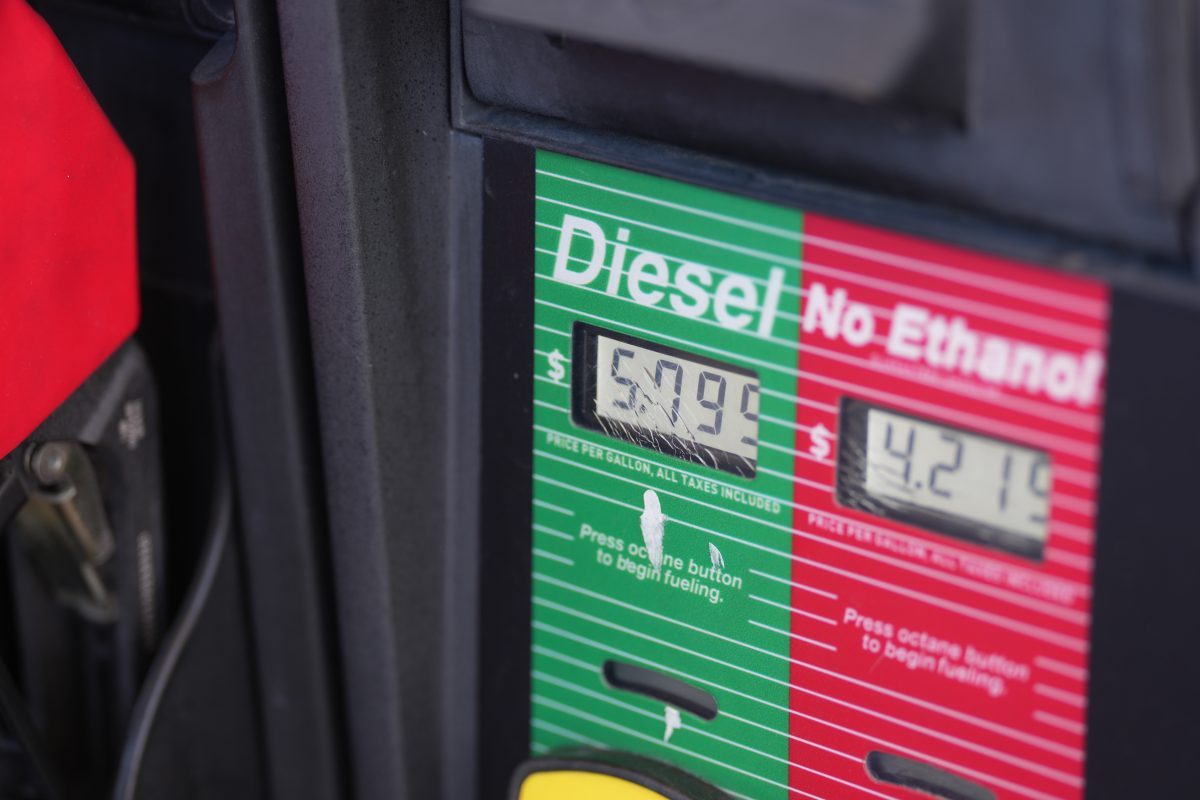
President Trump on Monday signed an executive order intended to expand the use of red-dyed diesel, a fuel that carries a lower tax burden, as part of his broader push to reduce diesel prices. The move, however, has drawn skepticism from energy analysts who argue that the measure may be more symbolic than substantive.
Red-dyed diesel is regular diesel with a red dye added to indicate that it is exempt from state excise taxes and the 24.4-cents-per-gallon federal tax. The dye serves as a marker for law enforcement to identify fuel that is being used illegally on public roads, according to a White House fact sheet.
The fuel has long been available for off-road uses such as farming, construction, and marine operations. Farmers, for instance, can use it in tractors and other equipment without paying the highway taxes that fund road maintenance. Other applications, like generators or certain industrial vehicles, may require a license depending on state rules.
Trump's order, as described by the White House, calls for a deferral of the federal excise tax on dyed diesel used on highways for the remainder of the year, without interest or penalties, and explores eliminating the tax obligation altogether. The president claimed that "a typical trucker will save more than $100 every time they fill up."
Yet experts caution that the actual savings may be modest and that the order's reach is limited. Patrick De Haan, head of petroleum analysis at GasBuddy, noted that "most major truck stops don't sell dyed diesel," and that "states have their own dyed diesel laws, and an executive order can't override them." For example, North Dakota imposes a 4-cents-per-gallon tax on dyed diesel, and other states have their own regulations.
Tom Kloza, chief oil analyst at Gulf Oil, told The Hill that he doesn't expect the expansion to make a significant difference in overall diesel prices, calling it "really a cosmetic gesture." He added, "This really is a Band-Aid where a tourniquet would be more appropriate."
Several states have already taken unilateral action. Texas recently expanded dyed diesel use for on-road truckers and farmers, and Indiana suspended restrictions for agriculture and timber operations. Other states, including Oklahoma, North Dakota, North Carolina, Nebraska, Missouri, Louisiana, Arkansas, and Alabama, have also made moves regarding dyed diesel.
De Haan also pointed out that the White House's language suggests the tax is "deferred," not eliminated, and that supply, not taxes, is the primary issue driving diesel prices. He wrote on X that "supply is the problem, not taxes, when it comes to diesel."
For those interested in finding red-dyed diesel, commercial fuel card companies like CNRG Fleet offer maps of stations selling dyed diesel, though some states like Massachusetts, Rhode Island, Connecticut, Alaska, and Hawaii lack listings. The Commercial Fueling Network's map includes locations in Rhode Island and Connecticut.
While the order may provide some relief for certain truckers and farmers, the broader impact on fuel prices remains uncertain. As the administration continues to push for lower energy costs, the debate over red-dyed diesel highlights the complexities of fuel taxation and state versus federal authority.