Public Rift Emerges Over Iran Policy
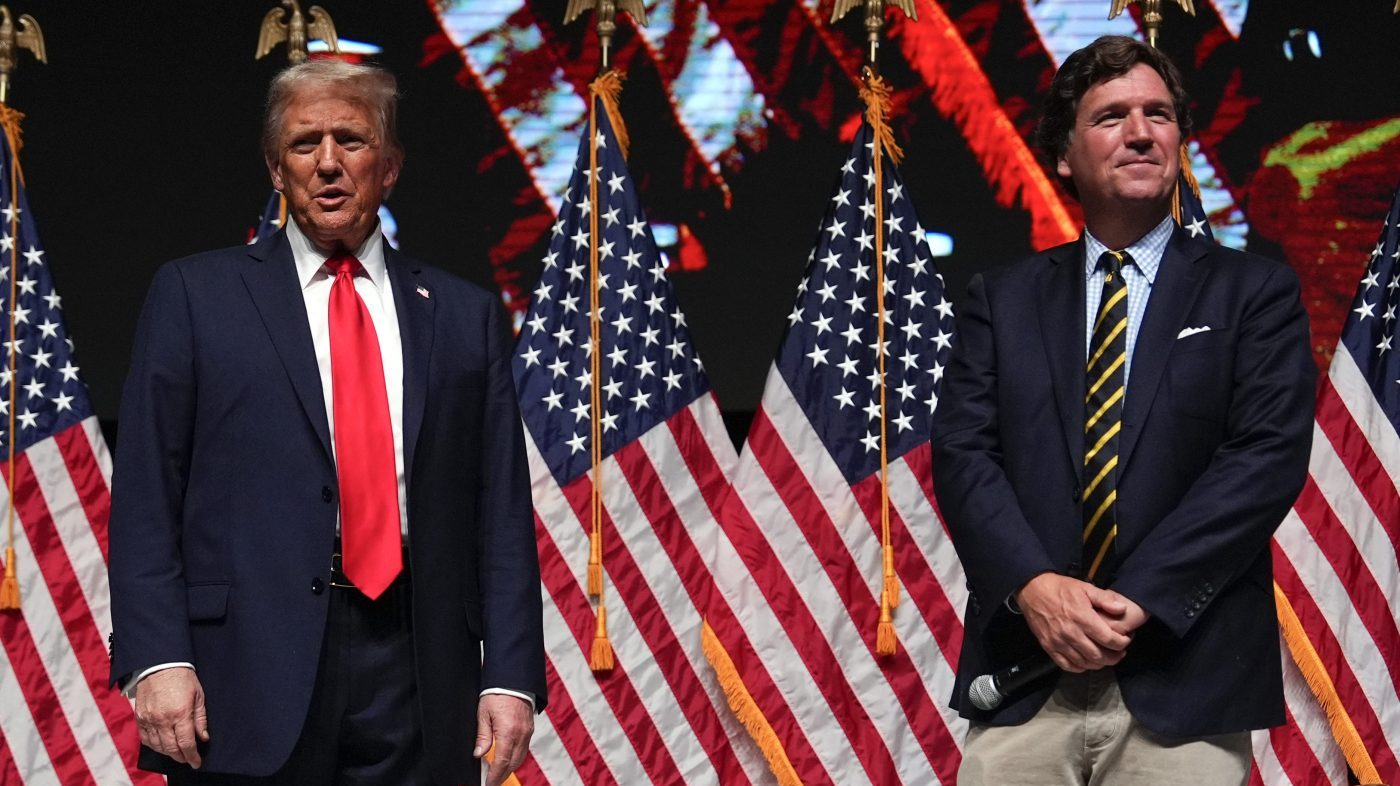
Former President Donald Trump has openly turned on one of his most prominent former media allies, launching a scathing personal attack against commentator Tucker Carlson after Carlson criticized Trump's approach to Iran. The conflict erupted following a series of social media posts from Trump that included threats against Tehran and an expletive-laden demand that Iran open the Strait of Hormuz.
In an interview with the New York Post, Trump dismissed Carlson's intelligence and relevance. "Tucker's a low IQ person that has absolutely no idea what's going on," Trump stated. "He calls me all the time; I don't respond to his calls. I don't deal with him. I like dealing with smart people, not fools." This represents a dramatic shift from their previous alliance, during which Carlson was a vocal supporter of Trump's 2020 reelection campaign.
Carlson's Condemnation of 'Vile' Rhetoric
The rupture stems from Carlson's Monday night commentary where he characterized Trump's social media post as "vile on every level" and accused the former president of attempting to play "God." Carlson specifically took issue with what he interpreted as religious mockery in Trump's rhetoric. "If you seek a religious war, that's a good idea. But by the way, no decent person mocks other people's religions," Carlson argued. "To mock other people's faith is to mock the idea of faith itself."
Carlson has broken sharply with Trump on Middle East policy, particularly regarding Israel's influence and military action against Iran, which he has labeled "evil." This ideological divergence has now exploded into a public personal feud, revealing significant fractures within the conservative movement over foreign intervention and the tone of political discourse.
Trump's Provocative Deadline Threat
The immediate catalyst was a Truth Social post from Trump on Tuesday that set an 8 p.m. EDT deadline for Iran to agree to a ceasefire. In the post, Trump warned that "a whole civilization will die tonight, never to be brought back again" if Iran failed to comply. This apocalyptic language sparked immediate international concern and drew criticism from multiple quarters. The ultimatum followed his earlier post demanding Iran "OPEN THE STRAIT OF HORMUZ NOW!!!" which included profane language.
Trump's threats have prompted wider political and legal scrutiny. Some Democratic lawmakers have condemned the rhetoric as potentially constituting a war crime, while others have questioned its strategic wisdom. Simultaneously, the current administration has been forced to deny that nuclear options are being considered as the deadline approached.
Broader Implications for Conservative Unity
This public feud between two of the most influential figures on the American right signals more than a personal disagreement; it reflects a substantive policy divide over America's role in the Middle East. Carlson's criticism represents a growing isolationist sentiment within a segment of the Republican base, while Trump's aggressive posture aligns with more traditional interventionist and hawkish elements.
The exchange also highlights the ongoing power struggle over the direction of conservative media and political commentary. As Trump seeks to maintain his dominance over the Republican narrative, challenges from formerly allied voices like Carlson create new complexities for his potential 2024 campaign. The incident demonstrates how foreign policy, particularly regarding Iran and Israel, remains a potent and divisive issue capable of splintering political alliances.
Meanwhile, the international community continues to monitor the situation closely. The United Nations has issued reminders about the Geneva Conventions in light of the threats, and experts have debated the legality of targeting civilian infrastructure. As some national security figures have warned, military action alone rarely achieves lasting political objectives in such complex regional conflicts.