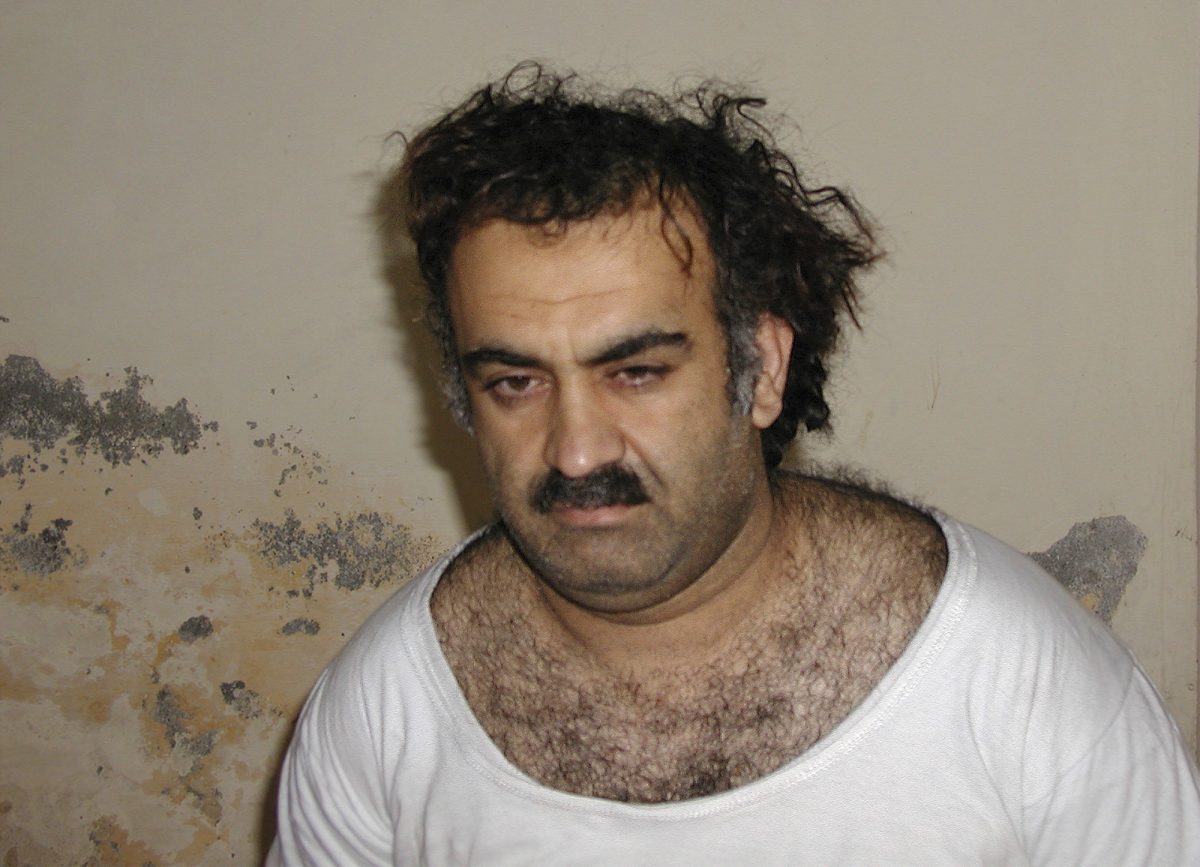
A military judge has set a June 2028 trial date for Khalid Sheikh Mohammed, the self-proclaimed mastermind of the September 11, 2001 attacks, rejecting prosecutors' request for an earlier start as unrealistic.
In an order issued Wednesday, Lt. Col. Michael Schrama scheduled jury selection to begin on June 5, 2028, at the U.S. Naval Base in Guantánamo Bay, Cuba. Opening statements would follow 30 days after the panel is empaneled.
Prosecutors had sought a January 2027 trial date, but Schrama deemed that timeline "incompatible" with the court's conduct order, noting that a more "realistic" date was necessary given the case's complexity.
Mohammed stands accused alongside two co-defendants, Walid bin Attash and Mustafa al-Hawsawi, of orchestrating the attacks that killed nearly 3,000 people at the World Trade Center, the Pentagon, and in a field in Pennsylvania.
The case has been mired in procedural delays since its inception in 2012, when Mohammed and his co-defendants were first arraigned. Schrama is the fifth judge to preside over the proceedings, a testament to the legal and logistical hurdles that have plagued the military commission.
The new timeline pushes the trial into the midst of the 2028 presidential election cycle, a period when national security policy often takes center stage. The delay also raises questions about the viability of the military commission system, which has faced criticism from human rights groups and legal experts for its slow pace and procedural irregularities.
While the 2028 date is set, it remains uncertain whether the trial will actually proceed as scheduled. Previous deadlines have slipped, and the defense has raised concerns about the admissibility of evidence obtained through enhanced interrogation techniques. The case also intersects with broader debates over political infighting that can influence military justice policy.
For the families of the victims, the announcement offers a glimmer of hope that accountability may finally be achieved, though many remain skeptical given the history of delays. The trial's timing also coincides with early 2028 general election trial heats, potentially making it a political flashpoint.
As the legal process grinds forward, the nation continues to grapple with the legacy of 9/11 and the pursuit of justice for those who perished. The 2028 trial date, while distant, represents a concrete step in a marathon legal battle that has tested the limits of the U.S. military justice system.