The 4th Circuit Court of Appeals handed Democrats a significant victory on Tuesday, ruling 2-1 that super PACs and political parties must pay the standard rate for television advertisements, rather than the discounted "lowest unit charge" (LUC) reserved for candidates. The decision, which comes in the final weeks of the midterm campaign, could reshape spending dynamics in the closing stretch.
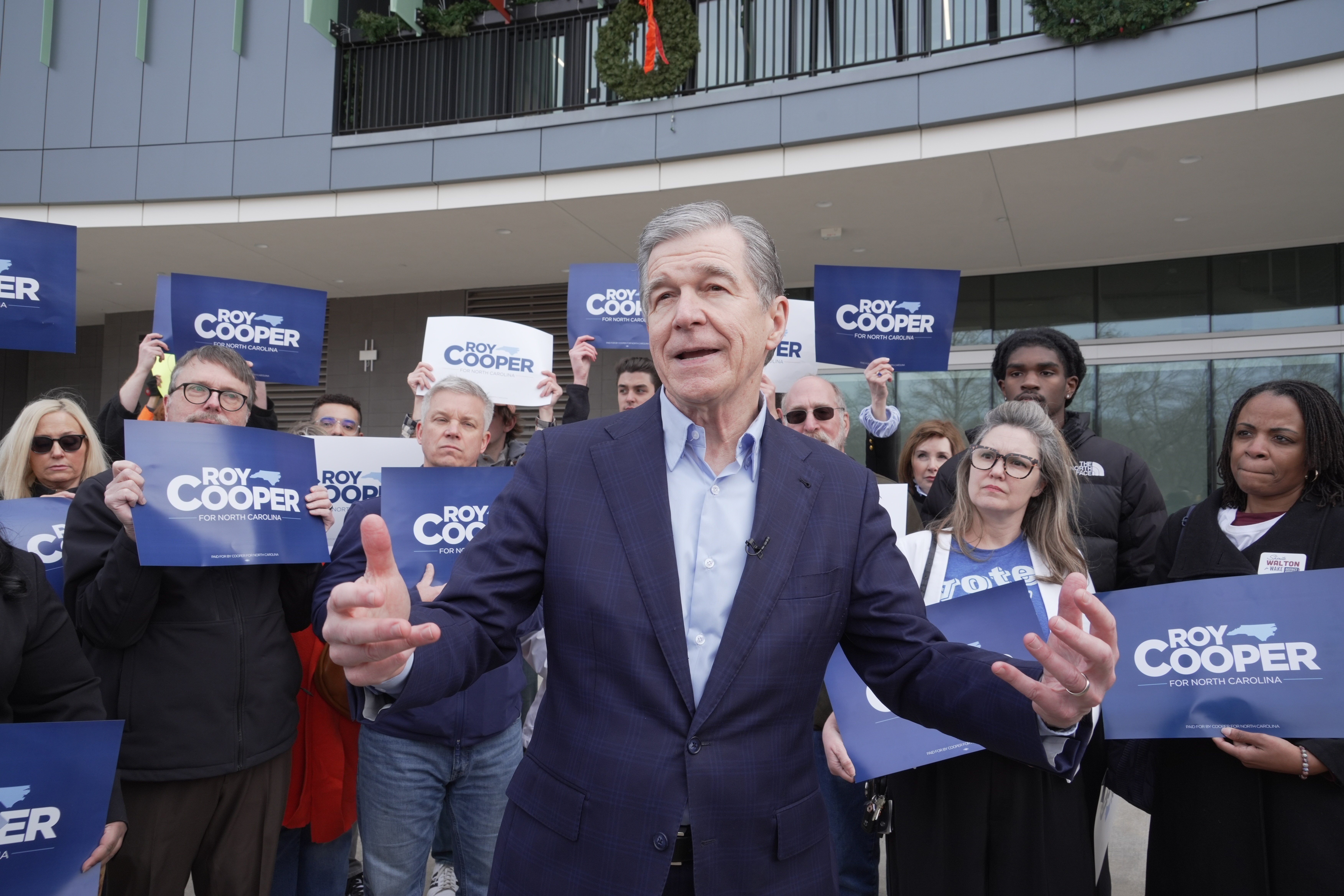
The lawsuit, filed against the Federal Communications Commission (FCC) and the National Republican Congressional Committee and National Republican Senatorial Committee, was brought by Democratic Senate nominees Sherrod Brown (Ohio), Jon Ossoff (Ga.), Roy Cooper (N.C.), and Rep. Kristen McDonald Rivet (Mich.). It challenged an FCC public notice that extended LUC eligibility to joint fundraising committees that include non-candidate entities.
Under federal law, candidates are entitled to the LUC for ads aired in the 45 days before a primary and 60 days before a general election. The majority opinion, authored by Judge Robert B. King (appointed by Bill Clinton), held that the FCC's expansion of the benefit to parties and super PACs was unlawful. "There is no question that candidates are entitled to the LUC," King wrote, but he added that a joint fundraising committee "cannot be understood to be 'using' a broadcaster on behalf of a candidate" when it spends money contributed to a non-candidate committee.
Judge J. Harvie Wilkinson III, a Ronald Reagan appointee, dissented, arguing the court lacked jurisdiction and that the ruling would disrupt settled campaign finance practices mid-election. "The majority proposes nothing less than an upending of settled campaign finance ground rules right in the middle of an election season," Wilkinson wrote, noting that broadcasters had already provided LUC rates to groups now excluded.
Democrats hailed the decision, pointing to their grassroots fundraising advantage. "Put plainly, today's ruling makes clear that lowest unit rate is an exclusive right given to candidates and incumbent campaigns and that is the law of the land," said Devan Barber, executive director of the Democratic Senatorial Campaign Committee, and Julie Merz, executive director of the Democratic Congressional Campaign Committee, in a joint statement. They added that "Democratic candidates' strong grassroots fundraising amplifying the voice of everyday Americans remains a fundamental advantage in the midterms."
Republicans, who had hoped to leverage the LUC for party committees after the Supreme Court's June ruling that struck down limits on coordinated spending between parties and candidates, said they would appeal to the Supreme Court. That earlier decision, split along ideological lines, was seen as a potential financial boon for the GOP.
The ruling could have immediate implications for ad buys in key battlegrounds. Recent polling in Texas shows Democrats competitive in several House races, and the ability to stretch ad dollars is critical. Meanwhile, voters appear to trust Democrats more on cost-of-living issues, which could amplify the impact of well-funded ad campaigns.
Legal experts note that the 4th Circuit's decision applies only to states within its jurisdiction, but the FCC's rule has nationwide effect, so broadcasters may adjust their practices accordingly. The case now heads to the Supreme Court, where its fate is uncertain.
For now, the ruling levels the playing field in the final weeks, preventing party committees from enjoying the same rate advantage as candidates. As the midterms approach, both sides are recalibrating their media strategies in light of the new legal landscape.