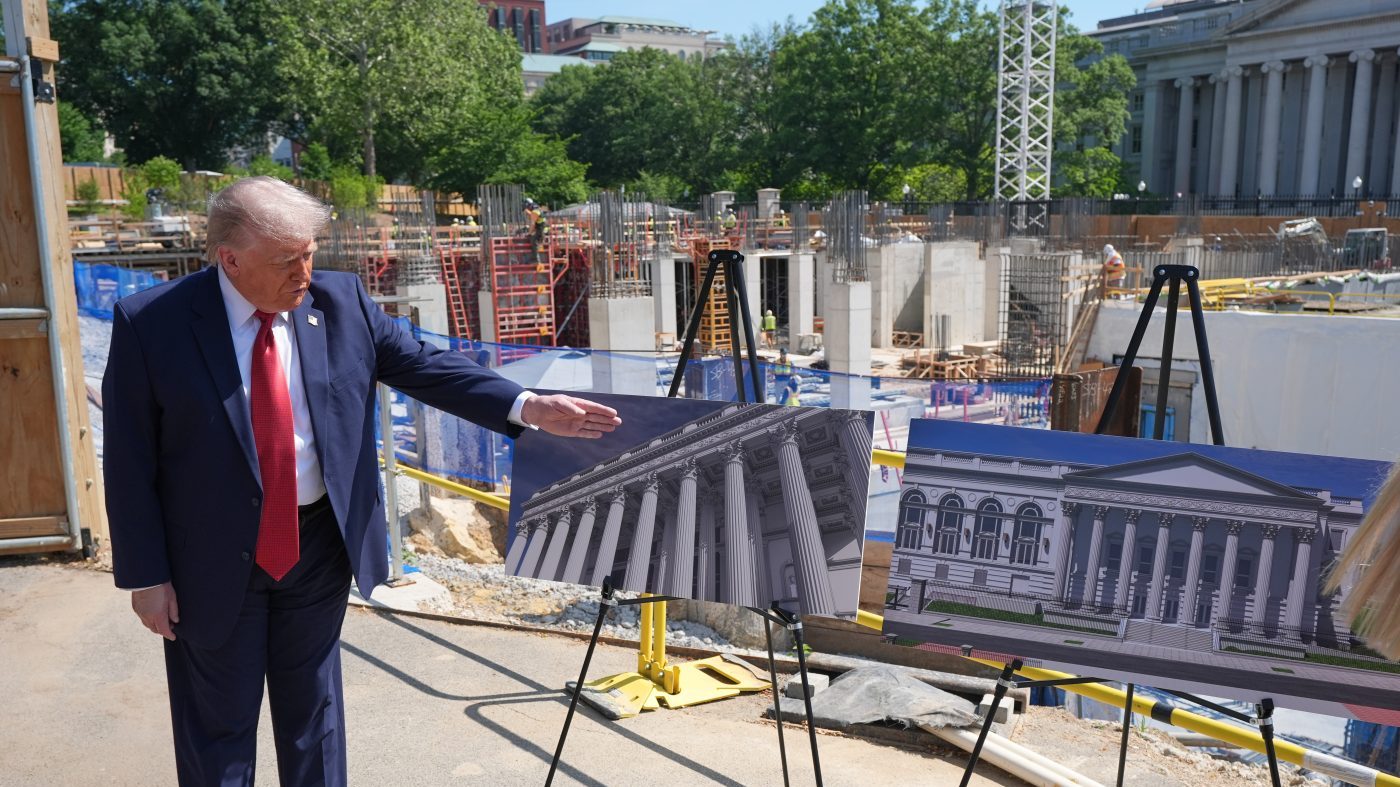
President Trump on Tuesday took reporters on an impromptu tour of the White House ballroom construction site, defending the project as his personal gift to the nation. “All of this paid for by myself,” Trump said, as hammers pounded and heavy equipment loomed in the background. He insisted the ballroom would not cost taxpayers a dime, framing it as a private contribution to the executive mansion.
Security and Design Details
During the walkthrough, Trump highlighted both the architectural features and what he described as security benefits. “The ballroom becomes a shield for everything that you see here,” he said, gesturing to the surrounding White House complex. He also called it “the one opportunity for the military to do something,” though he offered no specifics on that remark.
The president’s defense comes as Senate Republicans are locked in a budget battle over a reconciliation bill that includes $1 billion for the ballroom and other White House projects. Lawmakers have been trying to attach the funding to a larger package aimed at financing immigration enforcement operations through 2029.
Byrd Rule Roadblock
Senate Parliamentarian Elizabeth MacDonough dealt a significant setback to GOP leaders on Saturday, ruling that the ballroom funding violates the Byrd Rule. That decision means the provision cannot pass with a simple majority, forcing Republicans to either strip it or seek 60 votes to overcome a filibuster.
The ruling has intensified scrutiny on the project, with Democrats accusing the administration of misusing taxpayer dollars. Representative Jamie Raskin has previously blasted similar funding efforts as a “private militia” slush fund, while Senator Michael Bennet called the broader push part of the “worst presidency.” The ballroom controversy now sits at the center of a broader debate over Trumpflation and economic pressures that continue to shape the 2025 political landscape.
Political Implications
Trump’s personal financing claim may blunt some criticism, but it hasn’t stopped the political fallout. The ballroom has become a symbol of executive excess for opponents, while supporters see it as a necessary upgrade to the White House. The project’s fate now rests on whether Republicans can navigate procedural hurdles or find alternative funding streams.
The standoff also highlights deeper fractures within the GOP. Some conservatives, like Representative Thomas Massie, have openly challenged Trump in primaries, while others worry about the political cost of defending a luxury project amid ongoing fiscal debates. The ballroom saga is likely to feature prominently in upcoming congressional hearings and campaign ads, as both parties jockey for position ahead of the 2028 election cycle.
For now, Trump remains defiant, insisting the ballroom is both a gift and a necessity. But with the Senate parliamentarian’s ruling blocking the easiest path to taxpayer funding, the project faces an uncertain future. Whether Trump will pour more of his own money into the project or seek a legislative workaround remains an open question.