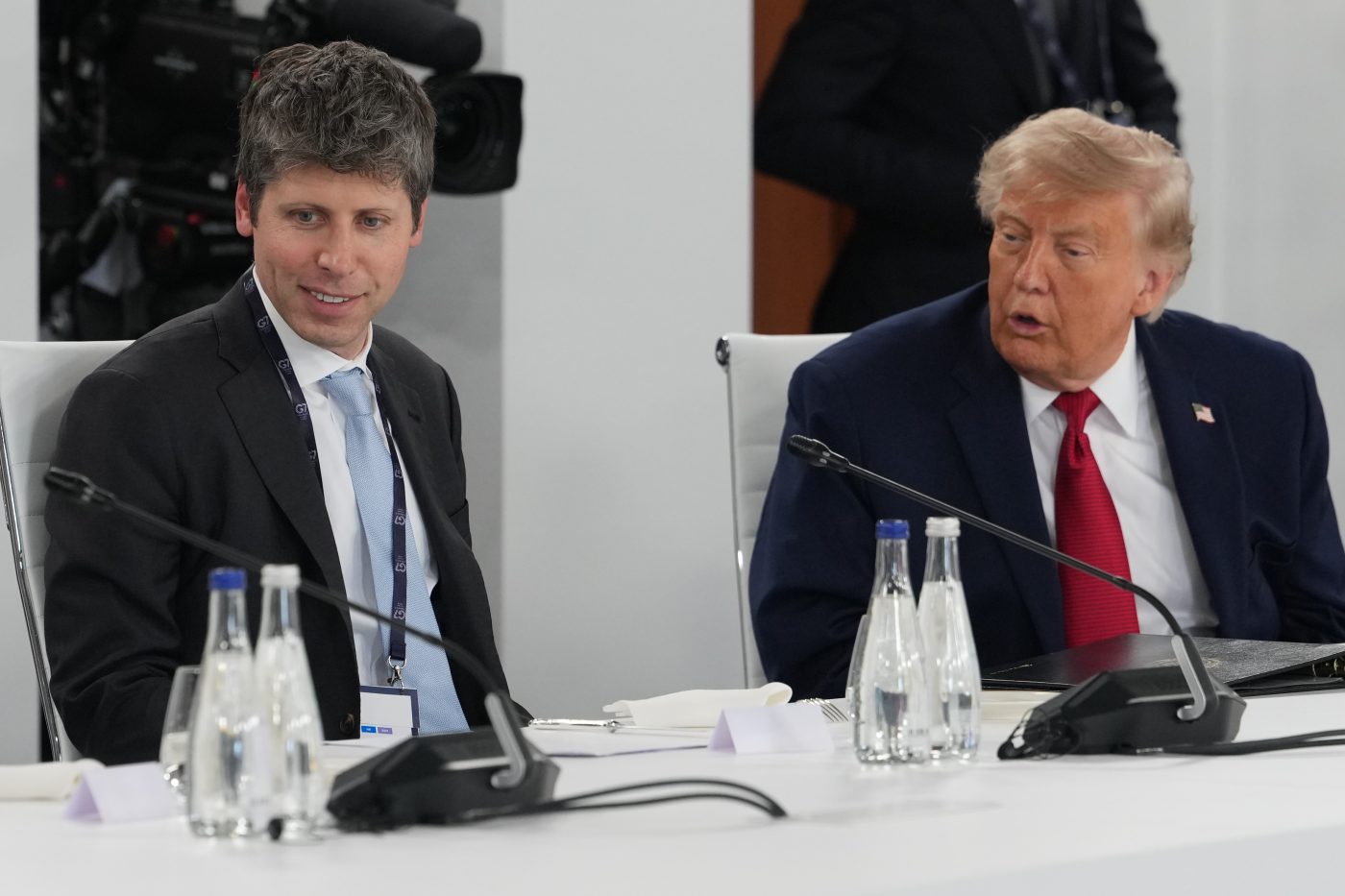
President Trump is weighing a proposal that would grant the U.S. government direct ownership stakes in major artificial intelligence companies, a move that places him in unexpected alignment with some of his most vocal critics on the left.
The president confirmed earlier this month that he is exploring "concepts where pieces could be given to the American public, where the American public essentially becomes a partner." This approach has also garnered support from figures like Sen. Bernie Sanders (I-Vt.) and AI firms OpenAI and Anthropic, creating a rare coalition as policymakers and the tech industry confront the immense wealth AI is expected to generate.

Trump's Deal-Making Approach
Reports in early June indicated that the Trump administration had initiated preliminary discussions with AI companies about taking equity stakes. When pressed on the matter, Trump said he planned to meet with tech executives in the "near future" to hash out the details. "We're talking about giving back something to the public," he added. "And if we do that, the public will become very rich, the people in our country, because that's the kind of money we're talking about."
The concept is not entirely new for Trump, who has taken stakes in over 20 companies during his second term. He pointed to the nearly 10 percent government stake in Intel taken last August as a precedent. Tad DeHaven, a policy analyst at the Cato Institute, characterized the president's style as "government by dealmaking, government by transaction." He added, "At the end of the day, that's how the president views the world. He is transactional, he is deal-based. And the purpose here is about the president exercising leverage, power and control."
This marks a notable departure from traditional Republican orthodoxy, which has long advocated for a limited government role in private industry. Alex Jacquez, chief of policy and advocacy at Groundwork Collaborative, noted, "I think Trump has been able to cut against his own party here and normalize it as a Republican effort. And on the left, this has been a not uncommon tool or demand from progressives as a way to capture the upside for government investment."
Bernie Sanders and the Progressive Push
Sanders has pursued a similar vision, sometimes called "universal basic capital." He unveiled legislation last week to create an AI sovereign wealth fund by taking 50 percent stakes in major AI companies. The senator estimated the fund would be worth about $7 trillion and could provide annual direct payments of over $1,000 to every American. He acknowledged the overlap with Trump during the bill's rollout, saying, "As you know, I'm no great fan of President Trump, but he's a good politician. And I think he senses that the American people are very nervous about this technology, and they want some of the benefits."
Public anxiety over AI is rising, fueled by concerns about job displacement and the environmental impact of data centers. A recent Reuters/Ipsos poll found that 53 percent of Americans worry someone in their household could lose a job due to AI. A May Gallup poll showed 71 percent oppose building a data center in their community. DeHaven noted the political incentive: "Everybody's looking for opportunities to bang the populist drum, and I can't think of a bigger, juicier target than these AI companies."
AI Industry Embraces the Idea
OpenAI and Anthropic have also embraced versions of this plan. In April, OpenAI called for a public wealth fund to give every citizen a stake in AI-driven growth. Anthropic has backed giving Americans a direct financial stake, aligning with the Trump administration despite a sometimes contentious relationship. The firm suggested expanding programs like Trump Accounts—childhood investment accounts created by the administration—and funding them through equity in AI companies.
Jacquez suggested self-preservation might motivate the AI firms: "They know if they do end up being profitable and getting the returns they expect, it's going to make a relatively small number of people extraordinarily wealthy. And I think they see that is probably not a recipe for social stability."
This push to distribute AI's wealth reflects growing concerns about inequality, as the sector drives massive growth in public markets where average Americans are less invested than the wealthy. The evolving debate brings together an unlikely alliance of Trump, Sanders, and Silicon Valley, all eyeing a slice of the AI boom.