President Trump and Defense Secretary Pete Hegseth used the 9/11 anniversary at the Pentagon to frame the ongoing war with Iran as an extension of the global fight against terrorism, drawing direct lines between the 2001 attacks and the current conflict.
Speaking to a crowd of service members and officials, Trump declared, “We salute the service members working right now to ensure the world’s number one sponsor of terror, the Islamic Republic of Iran, will never ever have a nuclear weapon.” His remarks drew applause from the audience, underscoring the administration’s continued emphasis on Iran as a central threat.
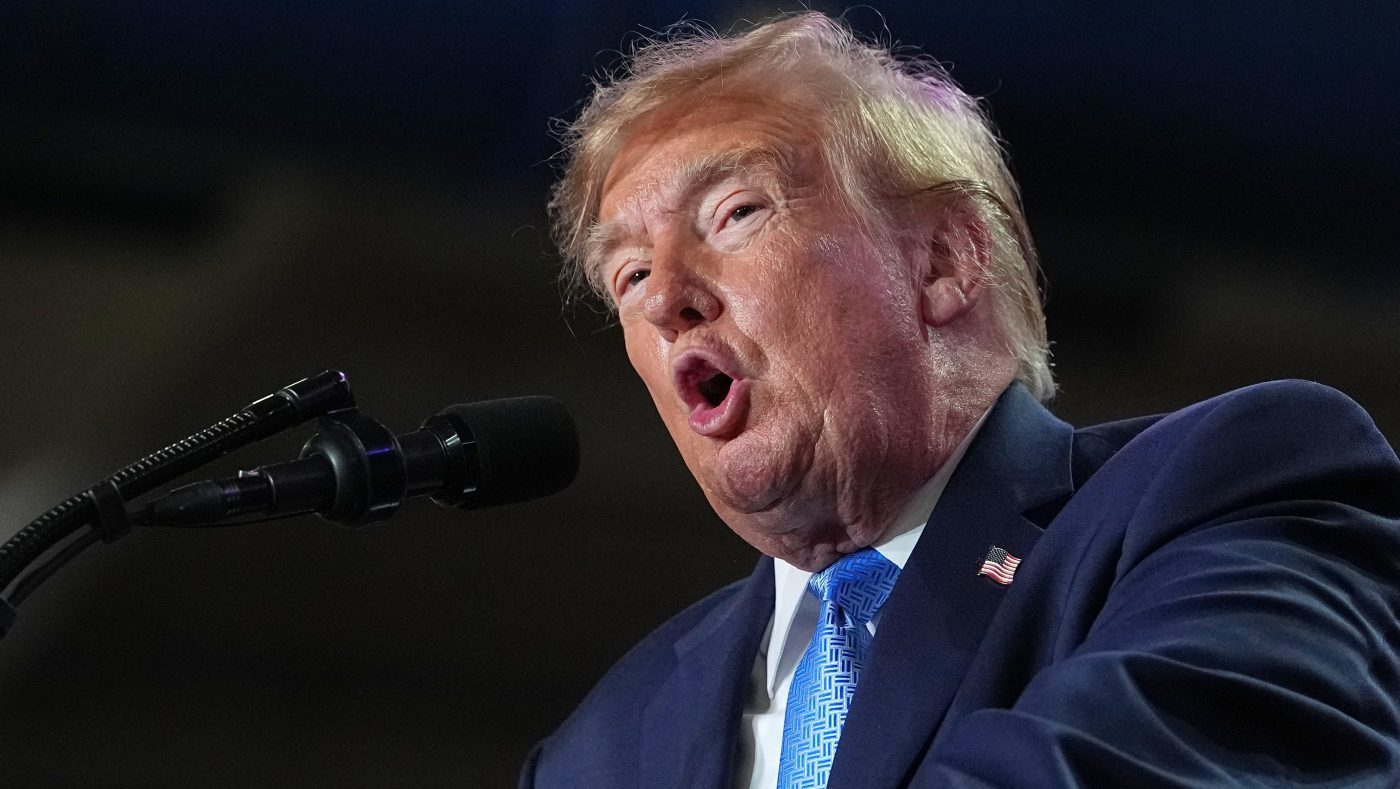
Hegseth, who spoke before the president, stressed that the United States remains “vigilant.” He described the fight against Iran as a long-standing struggle, saying, “Our warriors have fought an Islamic theocracy that has wished us death for nearly half a century, that cheered on 9/11. A regime that has sponsored terrorist attacks against Americans for decades, killing thousands, including our comrades in Iraq and Afghanistan. But they did not factor in this president.”
The defense secretary also reiterated the administration’s military posture, boasting, “We’re still sending terrorists where they belong — to hell — and tankers to the bottom of the ocean, where they belong. And we are ensuring that Iran will never have a nuclear weapon.” He repeated that the U.S. controls the Strait of Hormuz and has effectively destroyed Iran’s navy.
The original “war on terror” was launched shortly after the September 11 attacks, focusing on al Qaeda and other militant groups, and spanned nearly two decades until the U.S. withdrawal from Afghanistan in August 2021. The current conflict with Iran, now past its six-month mark, has become a central pillar of Trump’s foreign policy agenda, as he signaled earlier this week that he expects the war to last until the November midterm elections.
Trump told reporters that he believes the war will “end immediately” after the elections. “They can’t hold out any longer,” he said, referring to Iran. “They’re desperate to try and affect the election so that we can get a nice, weak group of people in there, and leave them alone and let them have their nuclear weapon.”
However, a Wall Street Journal report from Thursday contradicted the administration’s claims of military success, revealing that Iran has resumed production of ballistic missiles. This suggests that Tehran’s capabilities have not been fully neutralized, casting doubt on the administration’s narrative of total dominance.
The White House responded to The Hill, stating that the U.S. “is watching Iran and has eyes on their every move,” a reassurance that officials say reflects ongoing surveillance and intelligence efforts.
The framing of the Iran war as a successor to the post-9/11 efforts is a deliberate narrative choice, echoing the broader shifts in American strategy since the attacks. Critics, however, argue that this comparison oversimplifies the complex geopolitical realities of the Middle East and may be used to justify prolonged military engagement. The administration’s focus on Iran also comes amid domestic distractions and economic pressures, including record diesel prices that have squeezed American consumers.
As the war enters its seventh month, the administration’s rhetoric suggests a commitment to seeing the conflict through, but the resumption of missile production raises questions about the effectiveness of its strategy. The president’s timeline for ending the war after the elections adds another layer of political calculation to an already volatile situation.