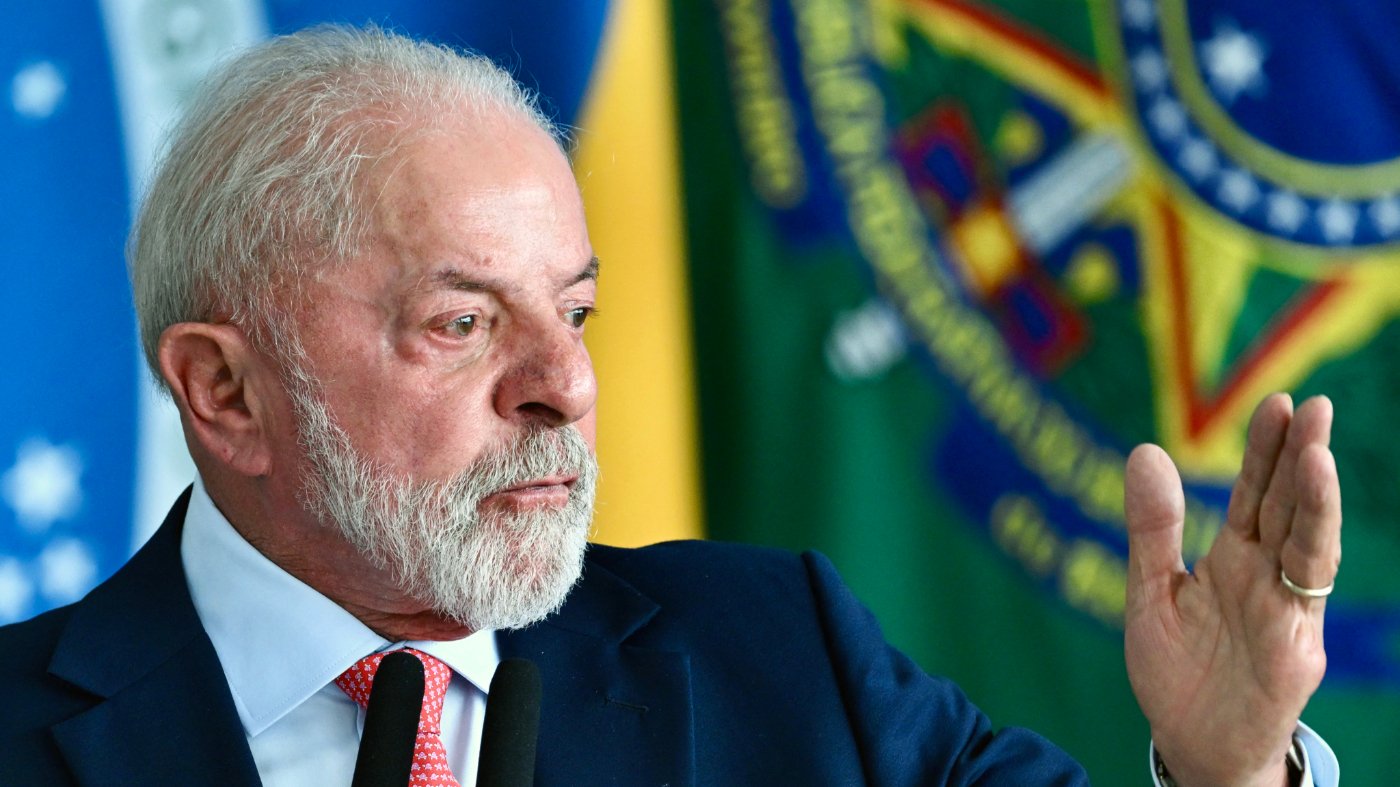
President Donald Trump is set to welcome Brazilian President Luiz Inácio Lula da Silva to the White House on Thursday for a working visit, a White House official confirmed. The meeting, which will center on economic cooperation and security challenges, comes amid a backdrop of tariff disputes and political friction between the two leaders.
The official told The Hill that Trump and Lula will discuss a range of topics, with a focus on bolstering bilateral economic ties and addressing shared security concerns. Brazil’s Vice President Geraldo Alckmin revealed to Globo News on Tuesday that Lula intends to push for an agreement to crack down on organized crime, according to Reuters.
This face-to-face encounter underscores the complex relationship between Trump and Lula, who sit on opposite ends of the ideological spectrum. Their interactions have been marked by periodic tension, most notably over trade policy and political allegiances.
In July, Trump imposed a 50 percent tariff on Brazilian imports, partly in response to the prosecution of former Brazilian President Jair Bolsonaro, a staunch Trump ally. The move escalated a brewing trade war and drew sharp criticism from Lula, who fired back in a New York Times opinion piece in September, labeling the tariffs as “illogical” and economically misguided.
Despite these clashes, the two leaders have found common ground in the past. They met in Malaysia last October during Trump’s Asia tour, following what was described as a “positive” phone call earlier that month. In a conciliatory gesture, Trump lifted tariffs on Brazilian food products—including coffee and beef—late last year, aiming to reduce grocery costs for American consumers.
The upcoming talks signal a potential thaw in relations, though deep divisions remain. Lula’s focus on organized crime aligns with broader U.S. security priorities in Latin America, while Trump is likely to seek concessions on trade imbalances. The meeting also comes as Trump continues to navigate high-stakes foreign policy moves, such as his recent ultimatum to Iran, as peace talks near completion, and his administration’s handling of the Iran conflict, which has drifted into a stalemate.
Political analysts will be watching closely to see whether the two leaders can bridge their differences or if the talks will expose further rifts. For now, the White House is framing the visit as a pragmatic step toward advancing mutual interests in a volatile global landscape.