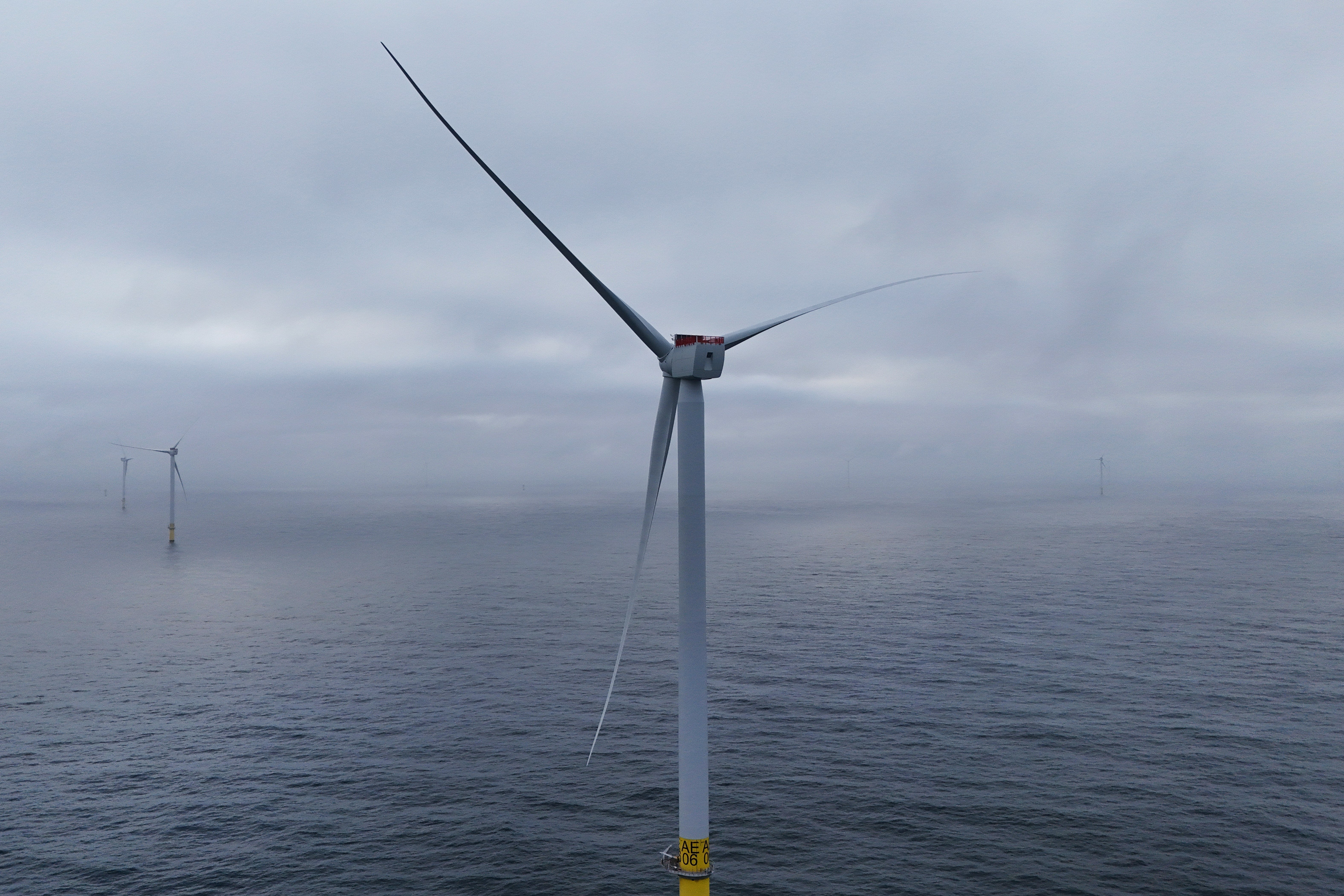
The Trump administration is asking a federal court to revisit its earlier approval of the nearly completed Revolution Wind offshore project, marking a fresh escalation in its broader campaign against wind energy—a push that is complicating delicate negotiations with Democrats over a major infrastructure package.
On Friday, the administration formally requested that Judge Roy Lamberth permit it to reassess whether the project’s approval was justified. In its filing, it pointed to what it described as “potential moderate to major adverse impacts to other uses” of the coastal area.
The move is the latest in a series of actions by the administration targeting renewable power, with wind energy frequently drawing President Trump’s personal criticism. But it comes at an awkward moment: the White House is simultaneously working with Democrats on legislation designed to accelerate the buildout of energy and infrastructure projects across the board.
Last month, Senate Democrats and Republicans announced a deal on a bill that would speed up permitting for a wide range of energy projects—both renewable and fossil fuel—by curtailing certain environmental laws and streamlining other provisions. During negotiations, the administration’s treatment of renewables emerged as a central sticking point.
When the deal was unveiled, Sen. Sheldon Whitehouse (D-R.I.) identified one unresolved issue as “the question of returning to regular order for wind and solar projects in the Trump administration.” He added at the time, “That is unresolved, but we have had what I would consider to be a very reasonable opening proposal from the Trump administration.”
It remains unclear whether the administration’s latest legal maneuver will affect efforts to finalize the legislation. Lawmakers are expected to take up the bill during the lame duck session later this year.
Revolution Wind, located off the coast of Rhode Island, is projected to generate enough electricity to power 350,000 homes in Rhode Island and Connecticut. The administration’s filing comes in response to a 2024 case in which various individuals and organizations challenged the project’s approval.
The administration’s legal challenge to the wind farm’s approval is likely to inflame tensions with Democrats, who have accused the president of prioritizing fossil fuels over clean energy. The outcome of the court case and the fate of the infrastructure bill could have significant implications for the future of offshore wind development in the United States.