The Trump administration has launched a legal bid to strip the U.S. citizenship of a former diplomat who confessed to working as a covert agent for Cuba, marking an aggressive push to punish one of the most damaging espionage cases in recent State Department history.
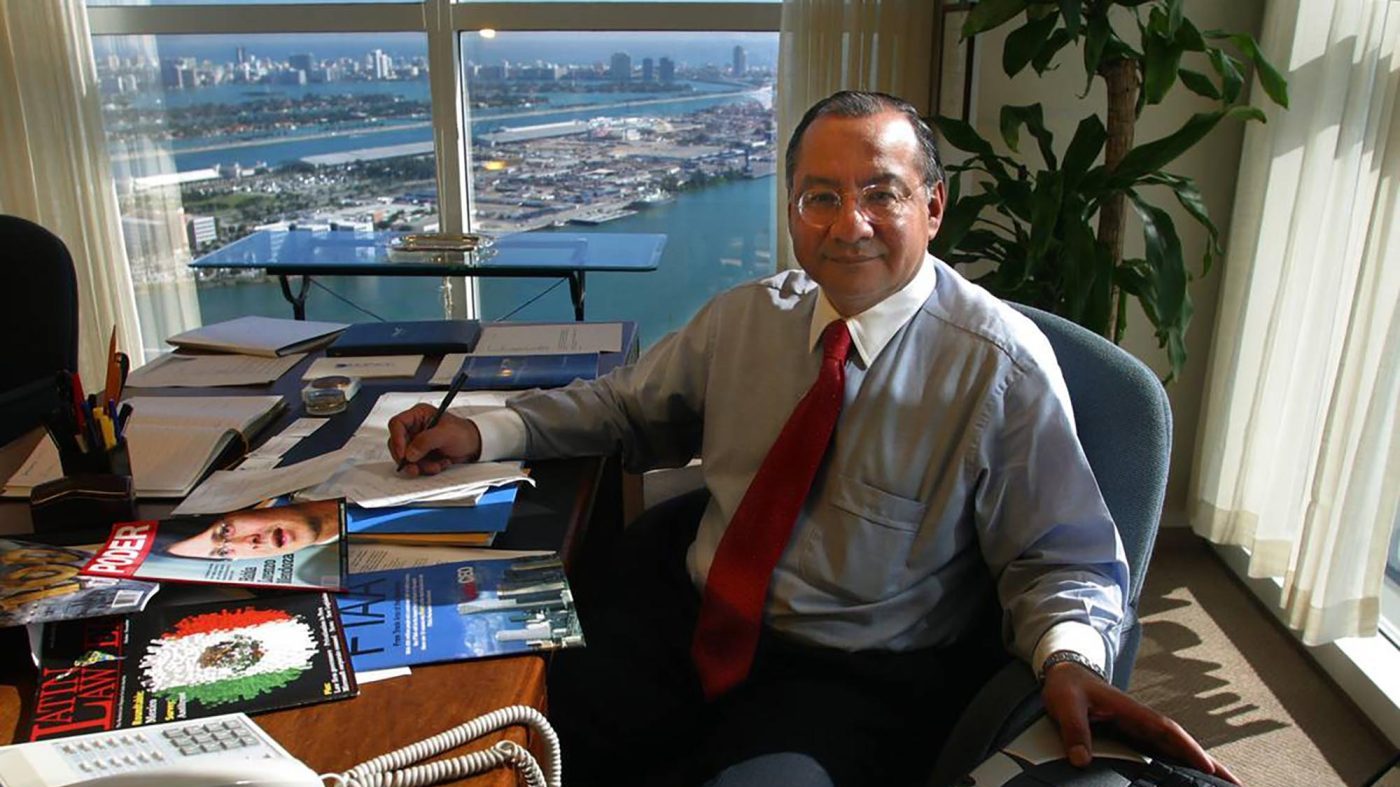
The Justice Department filed a denaturalization complaint Thursday in the Southern District of Florida against Victor Manuel Rocha, a former U.S. ambassador to Bolivia. Prosecutors allege that Rocha lied on his naturalization paperwork in the late 1970s, falsely claiming he had never committed a crime, had no affiliation with the Communist Party, and pledged allegiance to the U.S. Constitution—all of which, the filing states, were untrue.
Rocha, a Colombia native, was charged in December 2023 with serving as a secret agent for Cuba’s intelligence service. He pleaded guilty in 2024 to conspiracy and defrauding the U.S. government, admitting his espionage began in 1973—years before he obtained citizenship. He is currently serving a 15-year prison sentence.
According to the DOJ, Rocha used his diplomatic posts in Bolivia, Argentina, Mexico, the Dominican Republic, Italy, Honduras, and Washington, D.C., to access classified information and influence U.S. foreign policy in Cuba’s favor. The government argues that his citizenship was fraudulently obtained and should be revoked.
“Under no circumstances should an agent of a foreign adversary be permitted to hold the title of American citizen,” Assistant Attorney General Brett Shumate said in a statement.
The case echoes broader tensions in U.S.-Cuba relations, as the Trump administration has taken a hard line against Havana. The administration has also reviewed Mexican consulates amid rising bilateral tensions, a sign of its aggressive posture toward perceived adversaries in the region.
U.S. Attorney for the Southern District of Florida Jason A. Reding Quiñones described Rocha as “not a low-level operative” and said the denaturalization effort is “finishing the job.” He added, “A person who secretly serves communist Cuba should not keep the privilege of United States citizenship, even while in prison.”
Rocha’s betrayal was uncovered during a series of meetings with an undercover FBI agent in 2022 and 2023, during which he referred to the U.S. as an “enemy” and praised late Cuban President Fidel Castro. The complaint alleges that Rocha’s naturalization in 1978 was based on perjury and concealment of his allegiance to a hostile regime.
The denaturalization case highlights the Justice Department’s willingness to pursue citizenship revocation even after a conviction, a move that legal experts say sets a precedent for similar cases involving dual loyalty or espionage. The Trump administration’s broader national security agenda, including a $1.5 trillion Pentagon request criticized as a war budget, underscores its focus on countering foreign threats.
If a federal judge grants the government’s request, Rocha would lose his citizenship and face potential deportation after completing his sentence. The case is likely to fuel debates over immigration, naturalization integrity, and the consequences of espionage for those who once held high-level U.S. government positions.