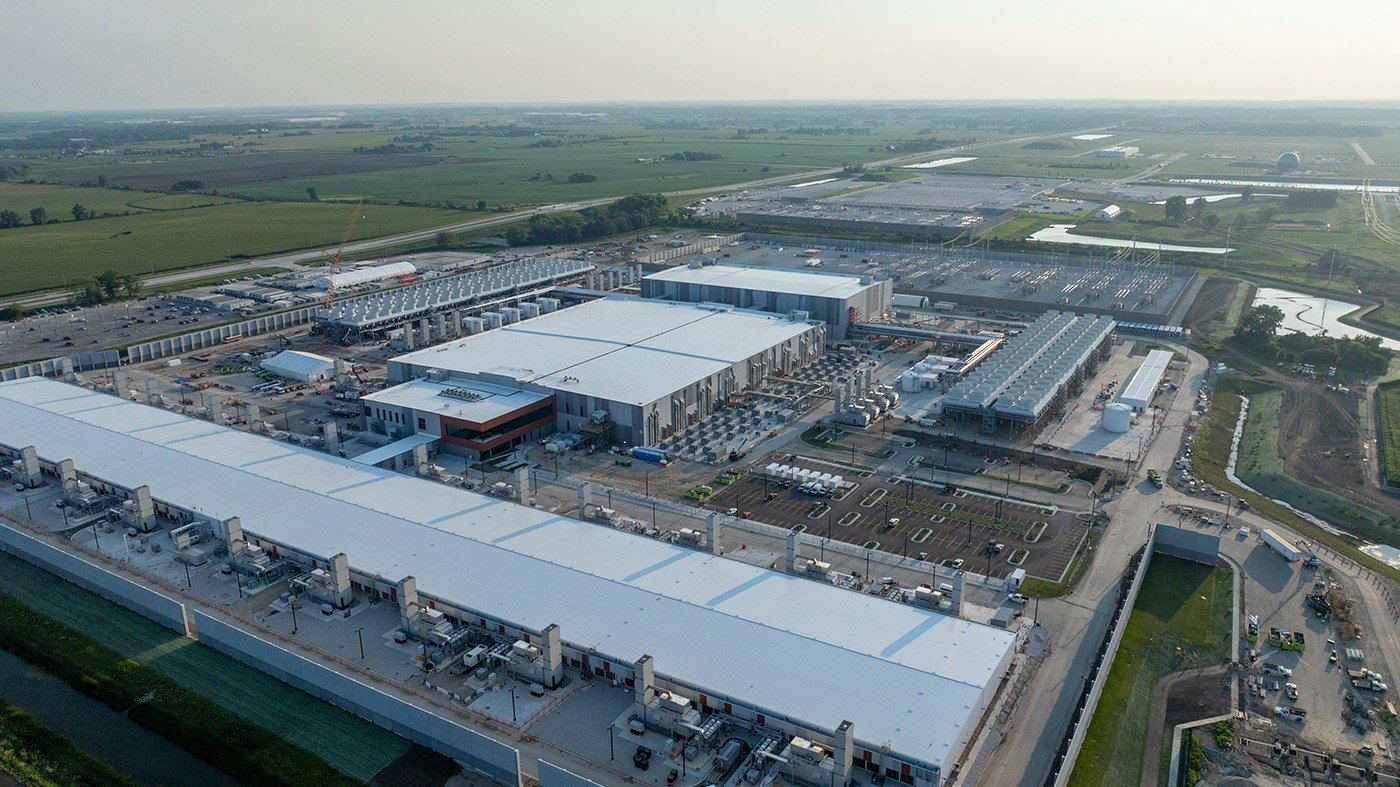
The Tech Oversight Project is urging Democratic candidates to seize on data centers as a closing argument in the final days before the midterms, casting the server warehouses that power the AI boom as a drain on household budgets.
In a memo shared first with The Hill, the tech watchdog group argues that Americans are footing the bill for massive tax breaks handed to major tech companies, even as energy costs and utility rates climb.
“Across the country, Big Tech companies have claimed billions in federal and state subsidies to build their deeply unpopular data centers – and left taxpayers holding the bill,” wrote Sacha Haworth, founder and executive director of the Tech Oversight Project, in the memo released Monday.
Data centers have become an increasingly potent political issue as voters grow wary of the rapid expansion of these facilities to support artificial intelligence. The group notes that Republicans are already feeling the heat, pointing to Sen. Jon Husted (R-Ohio), whose campaign has been dogged by his support for data center incentives. In August, the National Republican Senatorial Committee warned that data centers are “the anchor hanging around Husted’s neck,” and that “politicians across the country will take notice” if they cost him the election.
Democrats see an opportunity to tie GOP candidates to corporate handouts and rising costs. “This message rightly points out the pay-to-play attitude the Republican Party has toward Big Tech,” Haworth wrote. “But that doesn’t solve the cost-of-living crisis Americans are living through; voters demand solutions.”
Haworth suggests that Democrats turn voters’ anger into a clear demand: “the companies profiting from AI should pay for the power they burn, not the family or small business next door.” She argues this framing works at every level, from Senate races to county commissions, because data centers are fundamentally local and the tax giveaways are “outrageous.”
The backlash has already prompted action in several states. Ohio Gov. Mike DeWine (R) suspended the state’s tax exemption for data center developers in May, and Illinois Gov. JB Pritzker (D) paused his state’s incentives in July. The Tech Oversight Project also contends that the promised jobs don’t materialize, noting that while construction creates temporary work, the permanent staffing needs are minimal, making the tax incentives even harder to justify.
Secrecy around data center projects has also fueled frustration, with developers often using nondisclosure agreements to keep details hidden from the public. Tech companies have tried to counter the negative narrative by arguing that environmental and energy concerns are overblown and by pledging to cover their own costs and seek community support.
But public sentiment remains skeptical. A recent Pew Research Center poll found that 60 percent of Americans would be uncomfortable with a new data center in their area, with 54 percent saying the facilities harm the environment and 50 percent saying they drive up energy costs. As the midterms approach, the issue could prove to be a powerful rallying cry for Democrats, especially in races where Democrats are competitive.
For those watching the political landscape, the group’s memo offers a roadmap for turning a local grievance into a national message, one that could resonate with voters frustrated by the intersection of corporate power and rising living expenses.