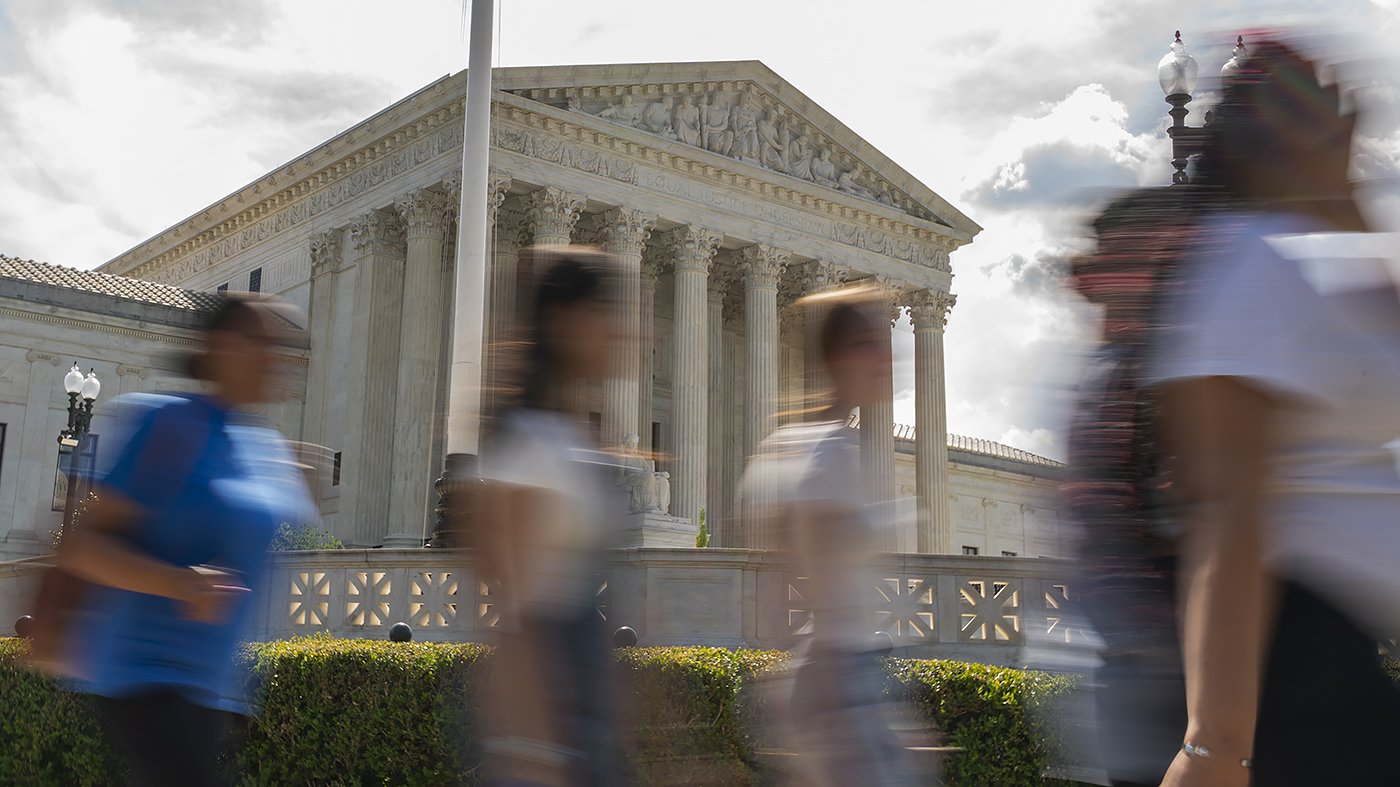
The Supreme Court announced Monday it will hear a case that could reshape how the Labor Department enforces agricultural visa rules, asking whether the Labor Secretary must go to federal court to impose significant fines on employers who violate H-2A program requirements.
The dispute centers on the government's use of an internal administrative process to levy penalties, a practice a lower court found unconstitutional. The Biden administration petitioned the justices to review that ruling, warning it would uproot decades of precedent. A decision is expected by next year.
Solicitor General D. John Sauer described the case as a "quintessential" test of agency authority. "By any metric, barring the Department from relying on in-house adjudication of civil penalties to enforce the terms and conditions of the H–2A program — and requiring the Department to jettison its decades-old procedures for resolving such cases — inflicts upheaval in a national program," Sauer wrote in court filings.
The H-2A visa program allows foreign workers to enter the U.S. temporarily for seasonal agricultural jobs. Employers must comply with Labor Department regulations and provide certifications on housing, wages, and working conditions.
The case stems from Sun Valley Orchards, a now-shuttered family farm in New Jersey that enrolled in the H-2A program in 2015. The Labor Department fined the farm after determining it failed to meet commitments for housing, kitchen access, and transportation for foreign workers. An administrative judge finalized penalties of $211,800 in civil fines and $344,946 in back wages.
Sun Valley sued, arguing the Constitution guarantees employers the right to a federal district court trial. "The farm was forced to defend itself in DOL’s in-house agency courts, where agency employees served as prosecutor, witness, and judge," attorneys from the Institute for Justice wrote in court filings.
The Justice Department, under both Republican and Democratic administrations, has rejected that argument, asserting the case falls under the Supreme Court's "public rights" exception, which allows Congress to authorize agencies to resolve disputes directly.
This case follows a separate Supreme Court battle this term over the constitutionality of the Federal Communications Commission's in-house fine system. However, the government argues the H-2A case raises distinct issues, particularly given the program's national scope and the potential disruption to longstanding enforcement mechanisms.
The ruling could have broad implications for other federal agencies that rely on administrative adjudication, including in areas like immigration and labor law. For now, the justices will weigh whether the Labor Department's internal process violates the separation of powers or constitutional protections for employers.