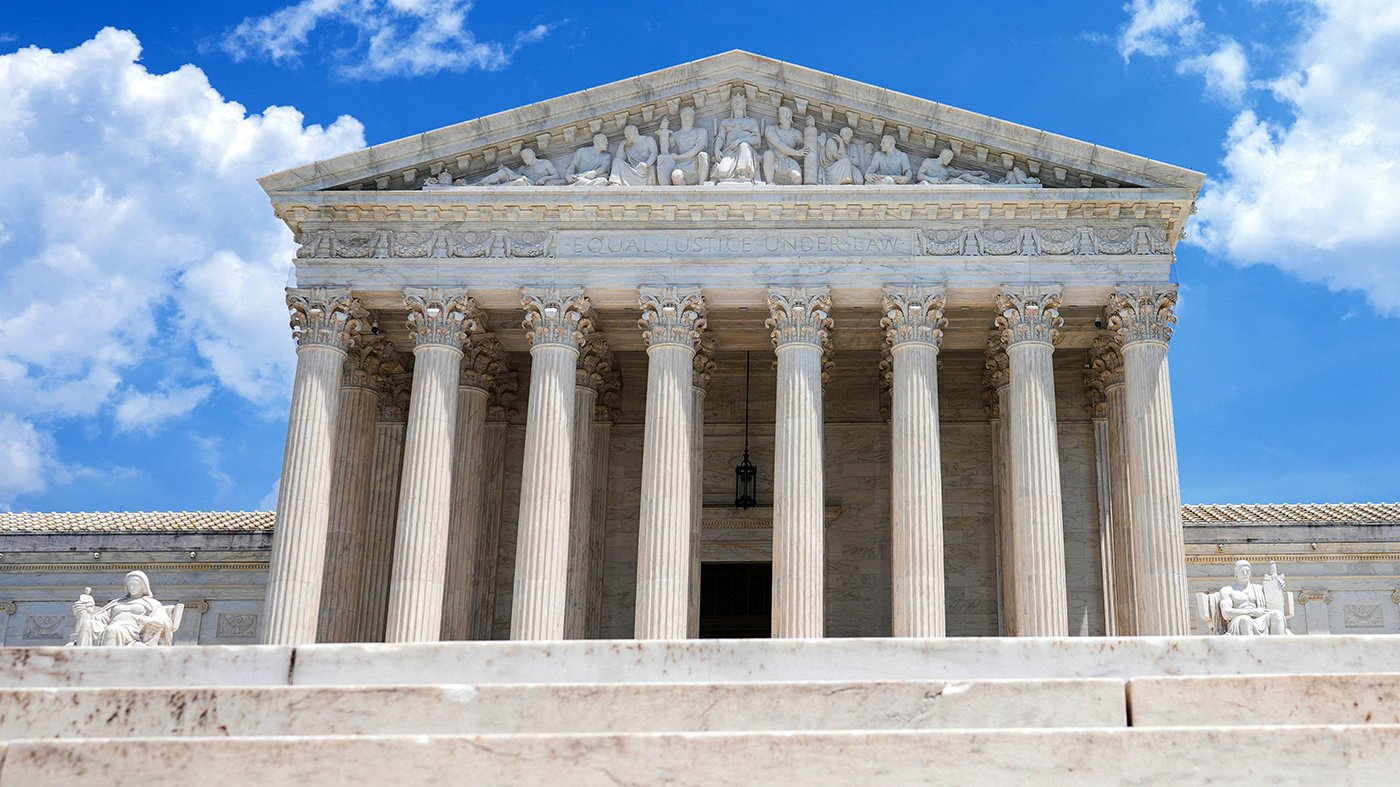
The Supreme Court handed down a technically unanimous gun rights ruling on Thursday, but the narrow decision masked deep ideological divisions among the justices over how to interpret the Second Amendment. The case centered on whether the government can criminally prosecute someone for possessing a firearm simply because they admitted to smoking marijuana a few times a week. The court said no, but the reasoning fractured the bench.
Conservative Justice Samuel Alito and liberal Justice Elena Kagan formed an unusual alliance, writing separately to argue the majority opinion went too far. They wanted the ruling to focus narrowly on the comparison between occasional marijuana users and founding-era restrictions on habitual drunkards. “We need not say more to decide this case, and I would for that reason say no more,” Alito wrote.
The two other liberal justices, Ketanji Brown Jackson and Sonia Sotomayor, went further, calling for the court to abandon the Bruen test entirely. That test, established in 2022 by the conservative majority, requires gun control laws to have a historical analogue to survive. Jackson wrote that the test is “unworkable” and urged the court to “consider whether to retire the failed Bruen experiment” in a future case.
Meanwhile, Justice Clarence Thomas, the court’s longest-serving conservative, suggested the ruling should have gone even further. In a solo opinion, he argued that federal gun bans for drug users may exceed Congress’s power under the Commerce Clause, which only authorizes regulation of interstate commerce. His former clerk, Judicial Crisis Network President Carrie Severino, reacted on social media: “Gentlemen, start your engines.”
The decision leaves many questions unresolved. It does not strike down the criminal charge outright, leaving room for prosecution if the government can prove the individual was under the influence of an unlawful drug at the time the gun was discovered. The case focused on marijuana, which is being rescheduled, but the law also covers users of other drugs. Hunter Biden had invoked the Second Amendment in his defense before his father pardoned him.
Unlawful drug users are just one category barred from gun possession under federal law. The list also includes felons, undocumented immigrants, and those dishonorably discharged from the military. Thomas suggested all these restrictions should be reconsidered, not just on Second Amendment grounds but also on commerce clause limits. A barrage of challenges continues to land at the justices’ feet.
The divisions come as the Supreme Court prepares to apply its Bruen test to another case, Wolford v. Lopez, which challenges Hawaii’s default ban on concealed carry on private property. A decision is expected before the court’s summer recess. Haley Proctor, a law professor at Notre Dame, said the delay could signal another narrow ruling.
Second Amendment advocates were pleased with the outcome. John Commerford of the NRA called it a “major victory,” saying “no one should be deprived of their God-given right to keep and bear arms for engaging in nonviolent conduct.” But Kostas Moros of the Second Amendment Foundation questioned why Alito and Kagan wrote separately, noting their concurrence “mostly seems to just restate a simplified version of the Opinion of the Court.”
The ruling also marked a rare pairing: it was the first time Alito and Kagan joined a concurrence together since 2013, according to SCOTUSGami. The duo didn’t sign onto Justice Neil Gorsuch’s majority opinion, which they said went too far. Gorsuch himself cautioned that “in many respects, this case is a narrow one.” The unanimous Supreme Court shields marijuana user's gun rights, but the underlying debate over the Second Amendment’s reach is far from settled.