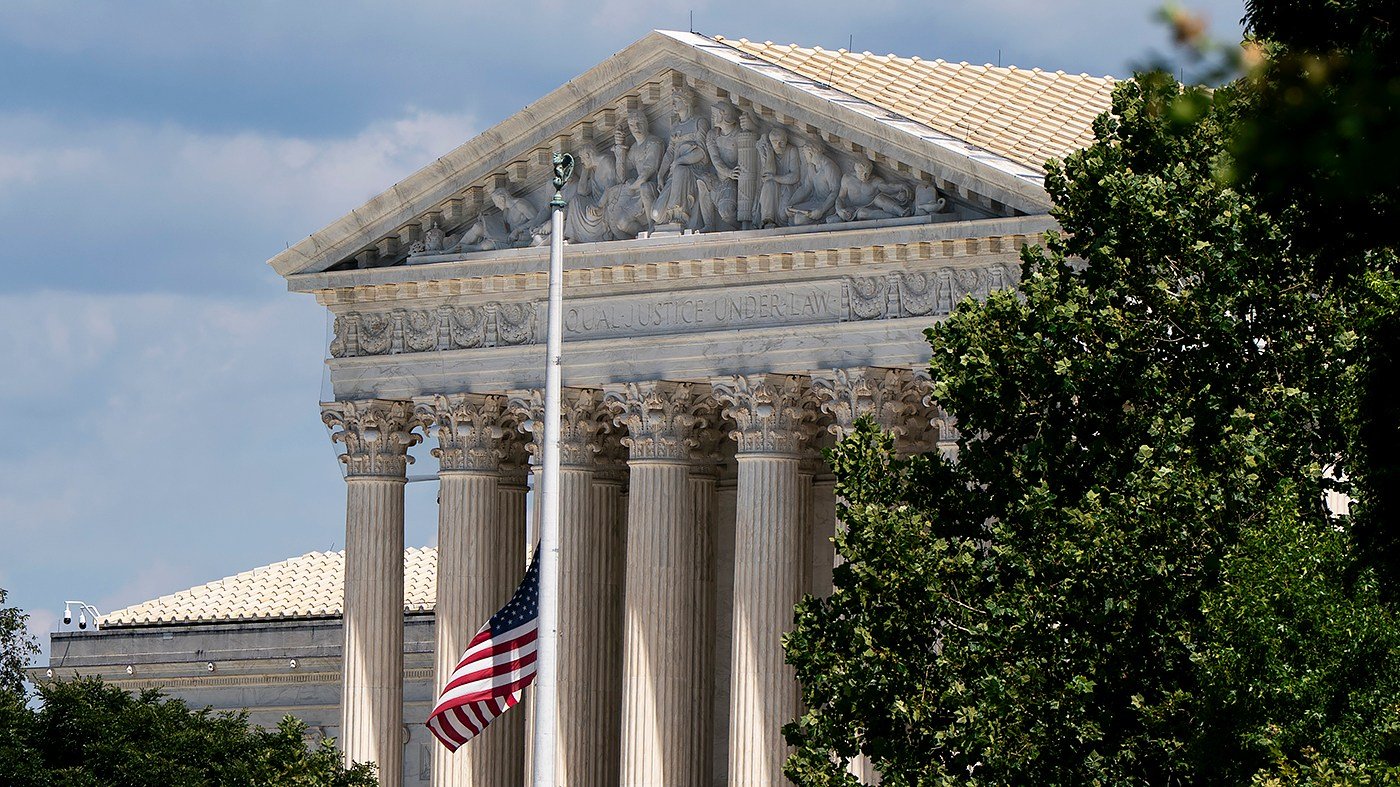
The Supreme Court on Friday sided with the Trump administration, allowing its overhauled immigration database to move forward in time for the November elections. The emergency order lifts a lower court injunction that had blocked the changes, which are designed to help state and local officials verify the citizenship of registered voters.
The decision, issued without oral argument, drew sharp dissents from the court's three liberal justices. Writing for herself and Justices Sonia Sotomayor and Elena Kagan, Justice Ketanji Brown Jackson warned that the ruling could disenfranchise eligible voters. "The harm caused by burdening or disenfranchising even a few lawful voters outweighs the nonexistent harm that the Government experiences when it is prevented from taking an action that it likely lacks the authority to take," Jackson wrote.

The case centers on the Department of Homeland Security's Systematic Alien Verification for Entitlements (SAVE) program. The Trump administration, citing concerns about election integrity, directed DHS to expand the system's capabilities. Updates now link SAVE to Social Security records and allow for bulk queries, replacing a process that previously required individual searches and an alien registration number, which states often lack.
In an unsigned order, the conservative majority reasoned that "the Federal Government has an obligation to respond to requests from state and local election officials seeking to verify the citizenship of voters." The order further stated that the lower court's ruling "prevents the Federal Government from using the program it believes is best suited to the task."
The legal battle began in June when U.S. District Judge Sparkle Sooknanan, a Biden appointee, blocked the overhaul, finding it violated the Social Security Act and federal privacy law. The D.C. Circuit declined to lift that block in a 2-1 vote, prompting the administration to appeal to the Supreme Court.
Solicitor General D. John Sauer defended the changes, arguing that the previous SAVE system was inadequate because it lacked comprehensive data on natural-born citizens and was too cumbersome for states. He emphasized the need for the updated system to protect the integrity of the upcoming elections.
Voting rights groups, including the League of Women Voters, had urged the justices to stay out of the dispute, describing the overhaul as "unprecedented." They argued that Congress has not authorized a master citizenship database and that no existing dataset can provide accurate, real-time verification of citizenship status.
Friday's ruling is not a final decision on the merits. The case now returns to the lower courts for further proceedings, but the practical effect is that the SAVE overhaul will be operational for the midterms. This is the latest in a series of election-related emergency appeals to reach the high court, which recently ruled against the administration on mail-in voting and against Missouri Republicans on redistricting. As Missouri's redistricting fight returns to the justices, the court remains in the spotlight for its handling of election disputes.
The decision also highlights the broader debate over emergency rulings, a topic Justice Jackson has previously addressed, as noted in her recent remarks on the court's credibility. With the midterms approaching, the interplay between judicial intervention and election administration is likely to remain a flashpoint.