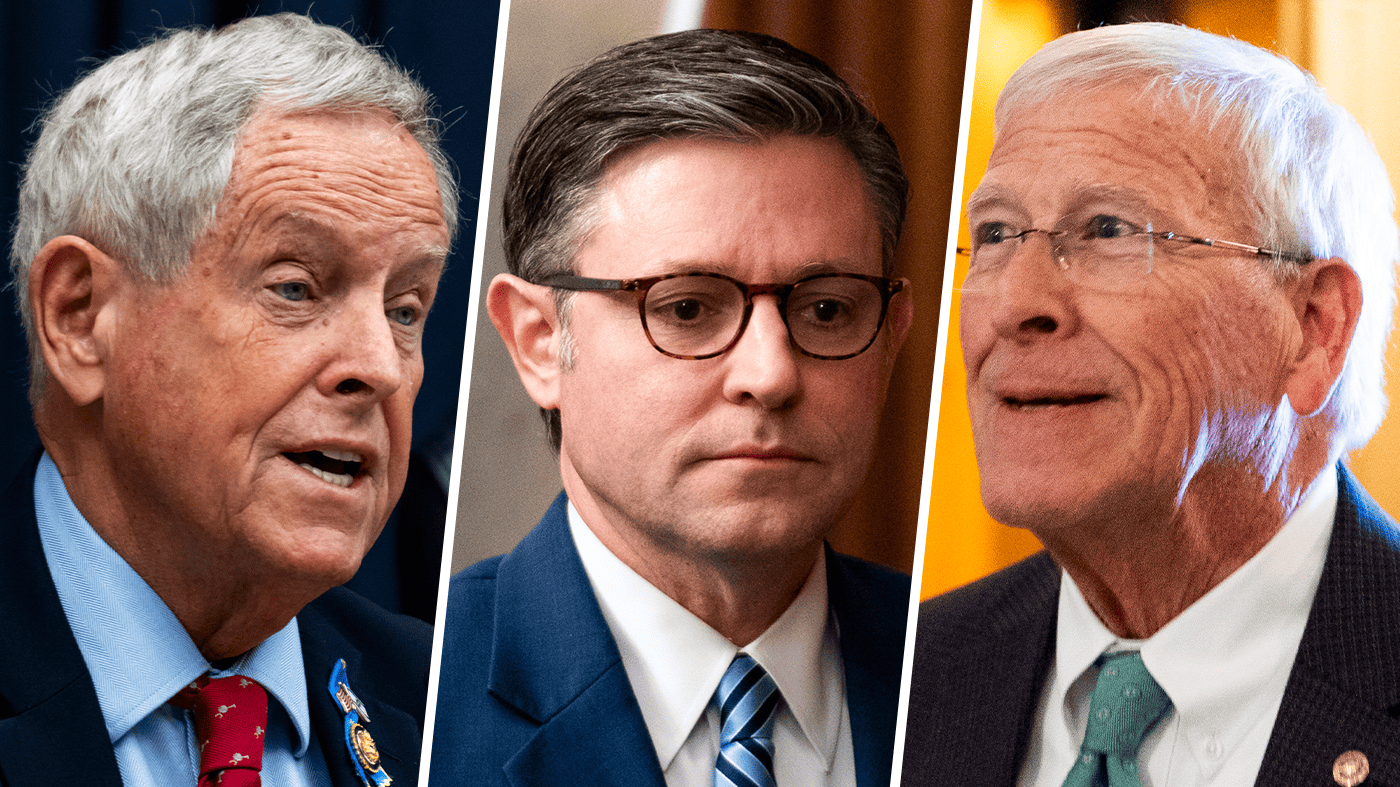
The internal Republican battle over whether Charleston should host a major transatlantic security conference has intensified, with Representative Joe Wilson (R-S.C.) rallying the entire South Carolina House delegation to counter Senator Roger Wicker (R-Miss.). In a letter obtained exclusively by The Hill, the delegation urged Speaker Mike Johnson (R-La.) to intervene and secure Wicker's support for the 2027 OSCE Parliamentary Assembly Annual Session in Charleston.
The dispute, which has simmered for months, marks a sharp break between Wilson and Wicker—respectively the chair and co-chair of the Commission on Security and Cooperation in Europe, known as the Helsinki Commission. Wicker initially backed Charleston in March but has since reversed course, prompting Wilson and his colleagues to demand clarity and commitment from House and Senate leadership.

Staffing Disputes and Personal Fallout
Two congressional sources told The Hill that the feud stems from disagreements over staffing decisions within the Helsinki Commission. The friction has spilled into public view, with Wilson taking to social media and local outlets to insist Charleston remains the host city, and Wicker reportedly threatening to leave Wilson behind on a congressional delegation flight from Europe. The tension even extended to their spouses, who allegedly ignored each other at a US Embassy event in Slovenia.
In the letter to Johnson, Wilson and the delegation—including Republican Representatives Nancy Mace, Sheri Biggs, William Timmons, Ralph Norman, and Russell Fry, as well as Democratic Representative James Clyburn—voiced concern that Wicker is now pushing for Belgrade, Serbia, to host the 2027 session. Serbia has already committed to hosting the 2028 conference, making the push for Belgrade a direct challenge to Charleston's bid.
Charleston's Capacity and Costs Disputed
Wilson told Semafor that Wicker cited a lack of “sufficient catering” and high staffing costs as reasons for his opposition—a claim Wilson dismissed given Charleston's reputation as a top culinary destination and its established conference infrastructure. The delegation's letter highlighted the city's convention facilities, hotel capacity, and support from institutions like The Citadel and the College of Charleston, arguing the event would be efficient and cost-effective.
Sixteen lawmakers, including Wilson and Wicker, had previously signed a March letter requesting $4 million in supplemental funding for the 2027 session, which is expected to bring 300 legislators and 200 support staff from 57 countries. Wilson has vowed to raise the money privately if federal funds fall through, telling the gossip newsletter Sources Say News, “If the money's not there, I'll go out and raise the money.”
The broader context includes ongoing debates over defense and international commitments, with recent controversies over military flyovers in South Carolina highlighting the state's complex relationship with federal priorities. Meanwhile, the OSCE has struggled to prove its relevance, though since Russia's full-scale invasion of Ukraine in 2022, it has served as a key forum for condemning Kremlin human rights abuses.
Transatlantic Security at Stake
Wilson and his colleagues framed the hosting decision as a test of American leadership. “Hosting the Annual Session in the United States would send an unmistakable message of American leadership and reaffirm our nation's enduring commitment to transatlantic security,” they wrote. The letter also warns that moving the session to Serbia would undermine the US role in shaping international policy on democracy and human rights.
The feud underscores deeper fractures within the GOP over foreign policy and institutional priorities, with the Helsinki Commission's rotating leadership adding a layer of procedural tension. As the 2027 conference approaches, the question of whether Charleston—or any US city—will host remains unresolved, with Wilson and Wicker locked in a dispute that shows no signs of cooling.