In a final two-week sprint before the midterm recess, Senate Republicans hoped to score legislative wins that could boost their chances at the ballot box. But the chamber's familiar partisan paralysis set in, leaving only a handful of minor measures and one bipartisan sports bill to show for the effort.
Majority Leader John Thune (R-S.D.) solicited ideas from his caucus, and suggestions ranged from suspending the federal gas tax to capping insulin prices. But as the clock wound down, the Senate's sclerotic pace and Democratic opposition derailed the most consequential proposals.
Data Center Bill Dies
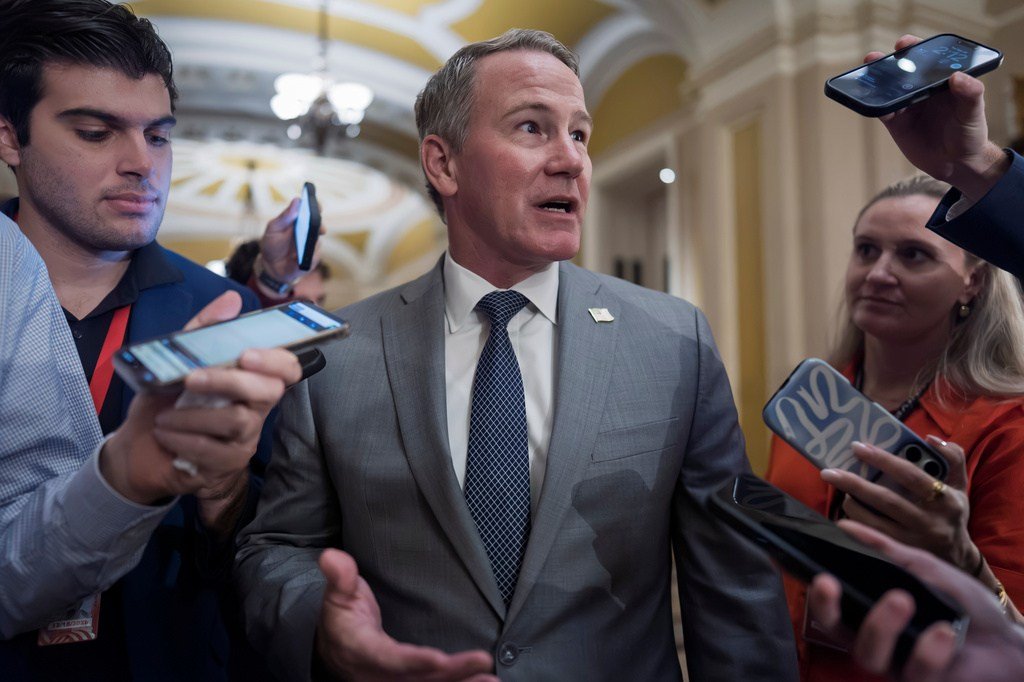
The centerpiece of the GOP's last-minute agenda was the Ratepayer Protection Act, sponsored by Sen. Jon Husted (R-Ohio). The bill would have encouraged state regulators to make large data centers pay for their own grid costs rather than passing them to consumers. It had passed the House overwhelmingly, but Senate Democrats blocked it.
Minority Leader Chuck Schumer (D-N.Y.) dismissed the measure as a "fraud," noting it was voluntary and wouldn't take effect for two years. Sens. Martin Heinrich (D-N.M.) and Sheldon Whitehouse (D-R.I.) are crafting their own stricter data center bill and urged colleagues to wait until after the elections. Husted, facing a tough reelection fight against former Sen. Sherrod Brown (D-Ohio), saw the bill's demise as a political setback. Thune accused Democrats of blocking it simply to deny Republicans a pre-election win.
Minor Measures and a Lobster Day
With the major bill dead, the Senate turned to less significant matters that could pass by unanimous consent, including post office renamings and commemorative days. One notable item was a resolution designating Sept. 25, 2026, as "National Lobster Day," introduced by Sen. Angus King (I-Maine) with co-sponsor Susan Collins (R-Maine), who is in a tight reelection race.
Iran War Resolution Defeated
The Senate also voted 49-50 on Sept. 24 to reject a resolution by Sen. Tim Kaine (D-Va.) to end the Iran war. The defeat was a Republican victory but one that may not sit well with the public, especially given the White House signals on potential Iran strikes.
Sports Bill Passes
The only major bipartisan measure to pass was the Protect College Sports Act, co-sponsored by Sens. Ted Cruz (R-Texas) and Maria Cantwell (D-Wash.), which passed 77-22. The bill codifies standards for athlete compensation, transfers, and eligibility. Sen. John Kennedy (R-La.) wryly noted that no one on the campaign trail had mentioned losing sleep over college football coaches.
The episode underscores a broader truth: legislative achievements rarely move voters. As midterm enthusiasm gaps persist, members are more likely to be judged on their reputations and the economy than on their bill counts.
Don Wolfensberger, a 28-year congressional staff veteran and author of books on Congress, observed that the Senate's last-minute scramble was unlikely to change electoral outcomes. "If you're looking for a last-minute election elixir," he wrote, "do not come knocking on legislative doors."