The Senate on Tuesday approved a House-passed resolution that calls on President Trump to withdraw U.S. armed forces from hostilities against Iran, with four Republicans crossing party lines to challenge the commander in chief's authority. The final vote was 50-48, a narrow but significant bipartisan rebuke of the administration's handling of the conflict.
The measure, which cleared the House earlier this month with a 215-208 vote, landed directly on the Senate floor for an up-or-down vote. Because it is a concurrent resolution rather than a joint resolution, it does not require Trump's signature and carries no binding legal force. Still, its passage through both chambers represents a pointed political message from Congress.
Invoking the 1973 War Powers Act, the resolution directs the president to remove U.S. troops from engagements against Iran, though it carves out an exception for forces needed to defend American assets or allies from an imminent attack. This provision ensures the military retains flexibility to respond to direct threats.
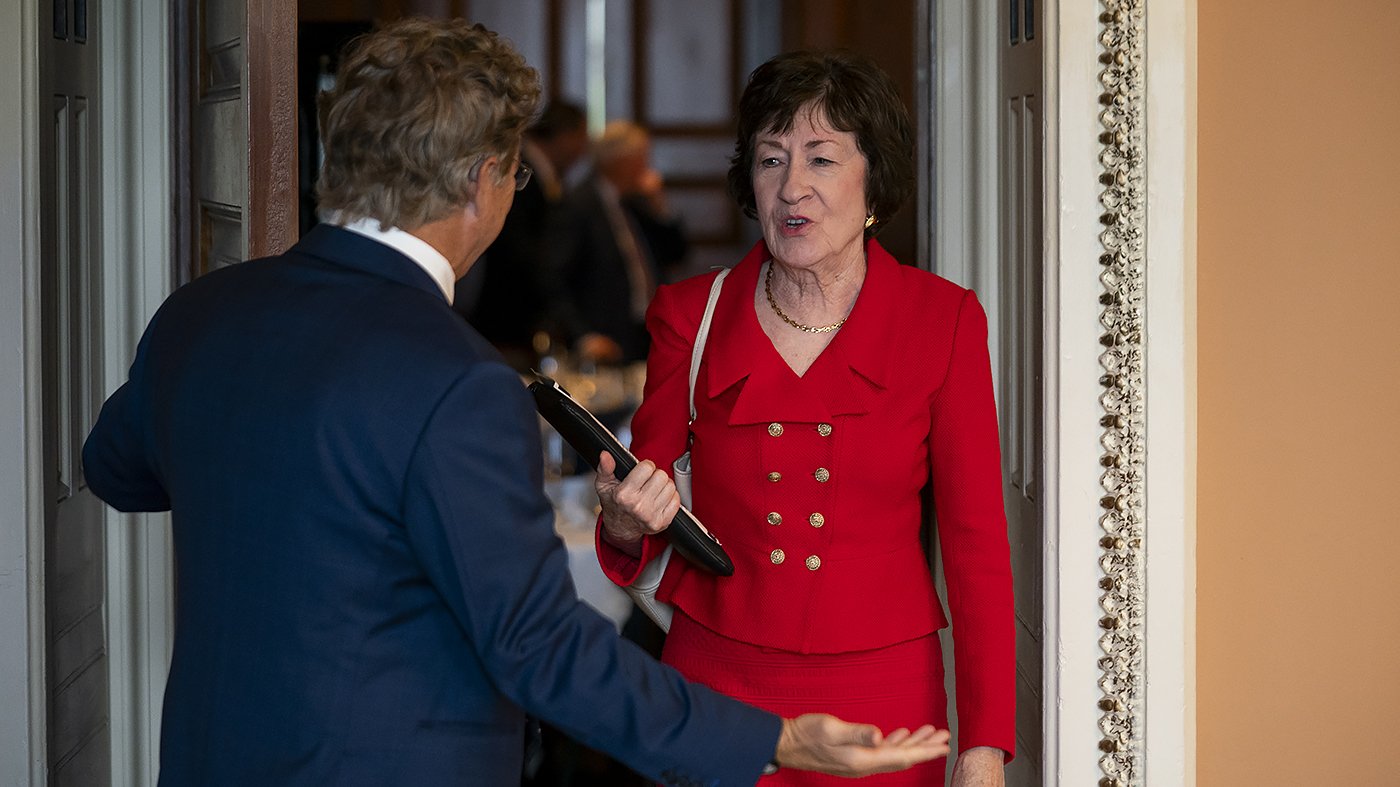
The four Republican senators who voted for the measure were Rand Paul of Kentucky, Susan Collins of Maine, Lisa Murkowski of Alaska, and Bill Cassidy of Louisiana. All four had previously supported discharging a similar resolution from the Senate Foreign Relations Committee last week, but that effort stalled due to Democratic attendance issues. Cassidy's vote came after he lost his Senate primary last month, a development that has freed him to break more openly with the party line. For more on the dynamics behind Cassidy's stance, see how Cassidy received an Iran briefing from Vance after a heated clash with Trump.
Two Republicans missed the vote: Dave McCormick of Pennsylvania and Mitch McConnell of Kentucky. Both had previously voted multiple times against Iran war powers resolutions. On the Democratic side, Senator John Fetterman of Pennsylvania was the sole Democrat to join the majority of Republicans in opposing the measure. The four House Republicans who supported the resolution earlier this month were Thomas Massie of Kentucky, Brian Fitzpatrick of Pennsylvania, Tom Barrett of Michigan, and Warren Davidson of Ohio.
Senator Tim Kaine of Virginia, who brought the resolution to the Senate floor, urged his colleagues to support it in light of the Trump administration's request for $80 billion in emergency funding to replenish munitions depleted since the Iran conflict began on February 28. "We're acting with more knowledge," Kaine said. "The administration has come to us with a supplemental request asking for $80 billion more, largely necessitated by the consequences of the war, to replenish munitions, stockpiles and take other actions that wouldn't fully repair damages, for example, that the Pentagon has incurred."
Senator Adam Schiff of California, who sponsored an earlier Iran war powers resolution that Republicans blocked, hailed the vote as a major victory. "From the beginning, the administration pursued this illegal war without making the case to Congress or the American people," Schiff wrote on X. "In the months since, we’ve seen the region in chaos, shifting goalposts and rationales for the war, skyrocketing gas and grocery costs, and tragically, the lives of 13 servicemembers lost with thousands more put in harm’s way." He added that the vote "represents bipartisan and bicameral support of our efforts to end this war of choice once and for all."
The vote came two days after Trump threatened to bomb Iran if it did not rein in its militant proxies in Lebanon. "Iran must immediately stop their highly paid PROXIES in Lebanon from causing trouble," Trump posted on Sunday. "If they don’t, we’ll hit Iran very hard again, just like we did last week, only harder!!!" Iranian state media claimed those remarks violated a bilateral memorandum of understanding that bars threats between the two sides. This latest Senate action marks the tenth time the chamber has voted on curtailing Trump's war-making authority, with Republican support gradually increasing—from Paul alone, to Collins joining in April, Murkowski in May, and Cassidy after his primary defeat.
Senate Democratic Leader Chuck Schumer of New York denounced Trump's decision to launch military strikes against Iran as a "historic blunder." He argued that "the American people have paid the price for Trump’s historic blunder in Iran. It will go down in the history books as one of the worst foreign policy mistakes America has ever made." Schumer pointed to rising gas prices, the loss of 13 service members, and thousands more wounded, and criticized Trump's deal with Iran to reopen the Strait of Hormuz, which has drawn fire from both parties. For more on the fiscal implications of the conflict, see how GOP fiscal conservatives are resisting Trump's $1.5 trillion defense and Iran war funding push.
Although the concurrent resolution does not have the force of law, its passage by both chambers sends a powerful political signal to the White House. It is likely to provoke an angry response from Trump, who earlier this month lashed out at House Republicans who supported the measure. The resolution's journey through Congress underscores the deepening bipartisan unease with the administration's Iran strategy.