Senate Republicans are moving to advance next year's government funding bills unilaterally, breaking with decades of bipartisan tradition and deepening a stalemate that threatens to trigger a shutdown by fall. The Appropriations Committee had scheduled a markup for the first four of twelve spending bills on Thursday, but postponed it until after the July 4 recess due to the absence of Sen. Mitch McConnell (R-Ky.), whose vote is critical given unified Democratic opposition.
Democrats on the panel have signaled they will vote against the bills unless Republicans first agree on an overall spending cap—a practice that has been standard in recent years. "You want to agree to the overall framework before you start filling in the rooms," said Sen. Chris Van Hollen (D-Md.), a committee member. "You want to know what the architecture of the house is before you start planning out each room."
The four bills up for review—covering legislative branch, agriculture, and other less contentious areas—were negotiated in subcommittees with bipartisan cooperation. Sen. Deb Fischer (R-Neb.), the top Republican on the legislative branch subpanel, noted that "we started out the year good again" and that her subcommittee produced a bipartisan bill as usual. But the process has stalled at the full committee level.
Republicans argue that moving forward without a top-line agreement is not unprecedented. Sen. John Hoeven (R-N.D.), who chairs the agriculture subcommittee, said, "We've been in that situation before and not had a top line and proceeded, so we're going to continue to proceed." A Senate Democratic aide countered that a top-line deal has been reached in each of the last three years.
The core dispute centers on defense spending. Democrats say Republicans are demanding excessive increases for the Pentagon, which would force cuts to domestic programs like infrastructure and education. Sen. Martin Heinrich (D-N.M.) said, "We have a very constructive chair and ranking member, good staff, but until you have an agreement on an overall top line, that makes it very difficult to negotiate a bill."
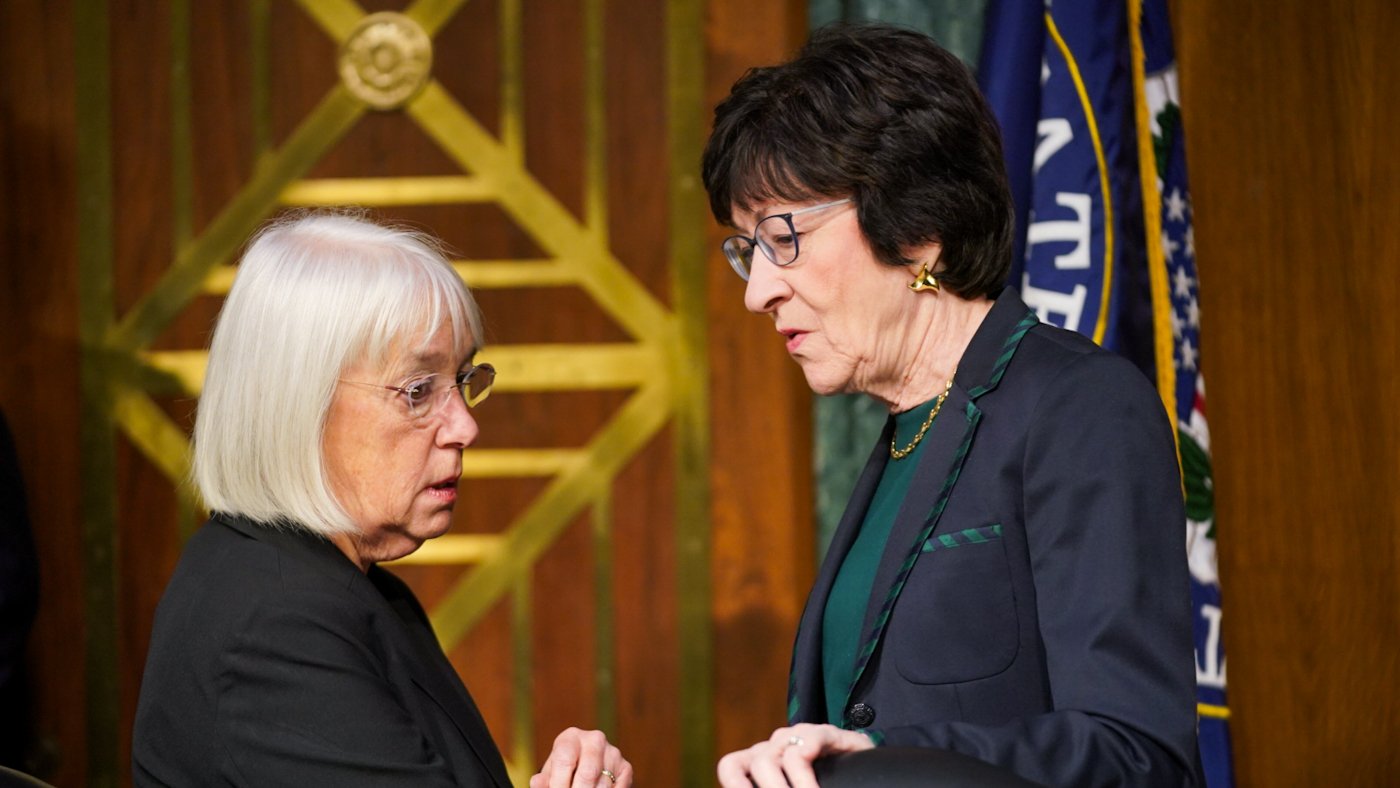
Appropriations Chair Susan Collins (R-Maine) has deemed Democrats' top-line proposals unreasonable, while ranking member Patty Murray (D-Wash.) says Collins has not responded to her latest offer. The impasse echoes broader fiscal tensions, including resistance from GOP fiscal conservatives to large defense increases.
Delaying the markup until after the break does not automatically doom the funding process—last year, the committee approved most bills in July with bipartisan support. But that effort still collapsed into a record-long shutdown last fall. With midterm elections approaching and Congress out for much of August and October, the window for passing all twelve bills before the September 30 deadline is narrowing fast.
Hoeven summed up the GOP approach: "It's never going to be like, 'Oh, everybody's happy and everything's copacetic.' That just doesn't happen around here. So, you just got to keep pushing forward." Van Hollen warned that if no top-line deal emerges, Democrats will introduce amendments aimed at reining in the Trump administration, a shift from the usual norm of avoiding "poison pill" amendments during markups.
Republicans could muscle the bills out of committee without Democratic votes, but they would likely fail on the Senate floor, where 60 votes are required. That could force a continuing resolution or a shutdown. Democrats are holding firm: "I think that's going to be a consensus position," Van Hollen said.