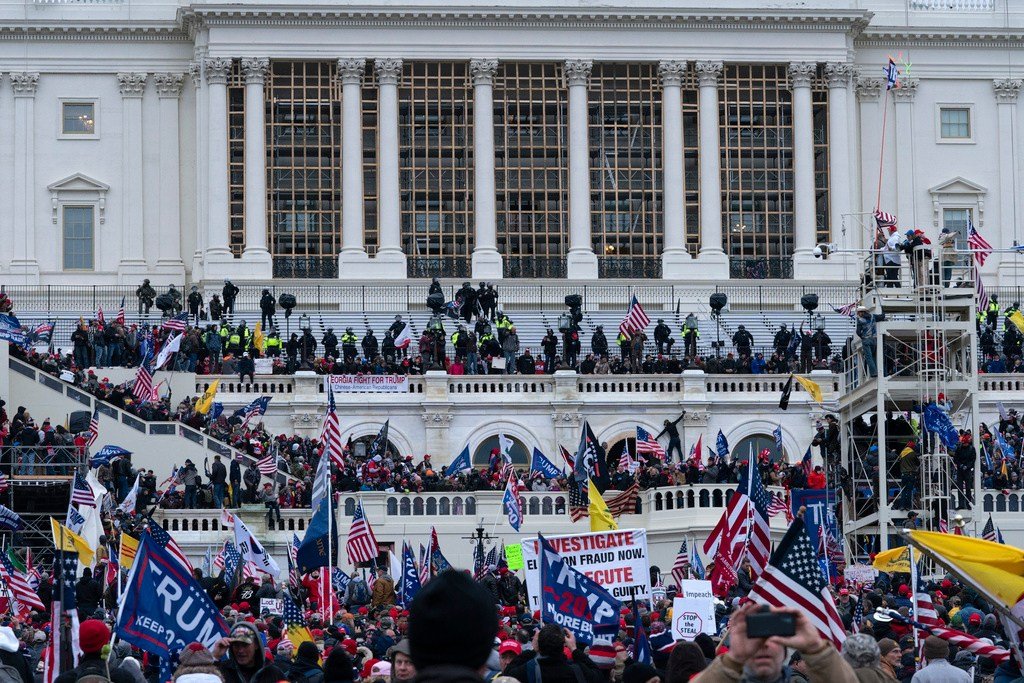
Four years after a coalition of national security veterans warned that American democracy was at risk, the same group is returning with a more nuanced message: the threat remains, but so does the evidence of civic resilience.
In a new essay, retired generals and intelligence chiefs—including former CIA Director Michael Hayden and former Joint Special Operations Command chief Stanley McChrystal—acknowledge that the dangers they flagged in 2021 have not disappeared. But they point to a growing movement of ordinary citizens who are publicly committing to basic democratic norms.
That movement is anchored in the Principles for Trusted Elections, a five-point pledge launched in 2022 that calls for honest processes, nonviolent campaigns, secure voting, responsible oversight, and trusted outcomes. The principles do not endorse any party or candidate, nor do they take sides in debates over election administration. Instead, they establish a shared baseline for how Americans should approach political competition.
So far, more than 6,000 people have signed on, including over 300 national security experts and more than 100 organizations. The list includes institutions from across the political spectrum, such as the Carter Center and the Gerald R. Ford Presidential Foundation—an unusual pairing that underscores the effort's bipartisan appeal.
The authors argue that this common ground is more important than it might appear. Citing research from the nonpartisan group More in Common, they note that roughly 80% of Americans in both parties say it's important to respect those they disagree with—yet each side believes the other feels that way less than 40% of the time. The same misperception surrounds political violence: Americans vastly overestimate how many of their opponents would support it, and correcting that false belief measurably reduces people's own acceptance of violence.
“We are far more united than we believe ourselves to be,” the authors write. “The assumption that the other side has already given up on the rules is the real threat.”
The essay is both a call to action and a plea for individual engagement. The authors urge Americans to add their names to the principles, learn how elections actually work in their communities, and talk to people with different political views about whether they share these commitments. They suggest that such conversations often reveal more agreement than expected.
The timing is significant. With the 2024 election cycle already underway, the debate over election integrity remains a flashpoint. But the authors see the Principles for Trusted Elections as a way to move beyond partisan disputes and focus on the procedural and ethical foundations that make democracy possible.
“Four years ago, we warned that our institutions could not be taken for granted,” they write. “We still believe that. But we have also learned this: it can endure extraordinary pressure, as long as enough citizens decide it is worth protecting.”
Among the signatories are Lt. Gen. Mark Hertling, former commander of U.S. Army Europe, and Lt. Gen. Douglas Lute, former U.S. ambassador to NATO. Their collective experience in conflict zones and diplomatic crises lends weight to their warning—and to their hope.
As the nation heads into another contentious election season, the message from these veterans is clear: democracy is not a spectator sport. It requires active, principled participation from citizens who are willing to defend the rules even when their preferred candidates lose.