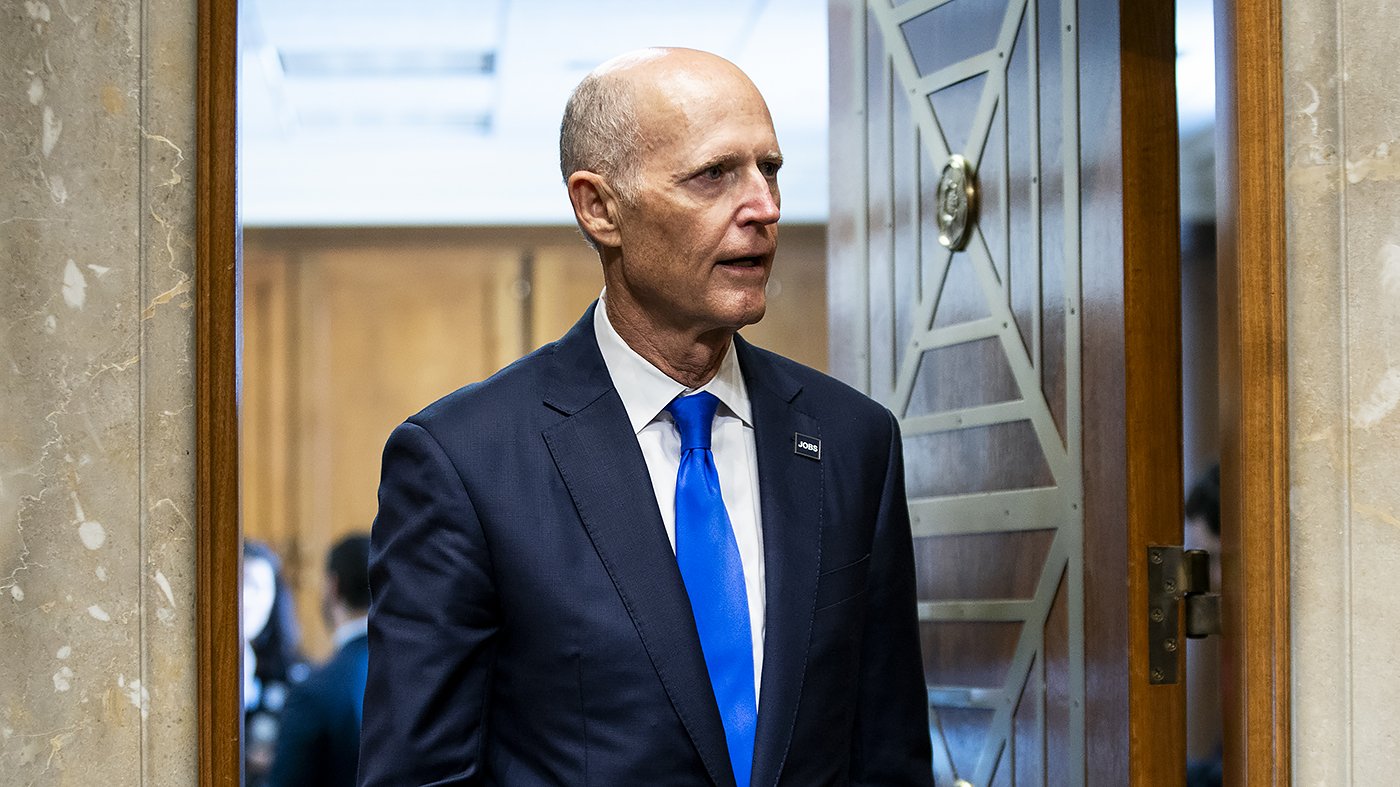
Senator Rick Scott of Florida is set to meet with President Donald Trump and the Senate Republican Steering Committee on Wednesday, with election security at the top of the agenda. Scott has been urging his GOP colleagues to advance the Safeguarding American Voter Eligibility (SAVE) Act, a bill that would mandate proof of U.S. citizenship for federal voter registration.
In a letter circulated Monday, Scott laid out his case for the legislation, arguing that it is necessary to protect the integrity of federal elections. The Florida Republican emphasized that the Senate could pass key provisions of the bill, particularly the citizenship requirement, without waiting for broader action.
The meeting with Trump is expected to focus on uniting the Republican caucus behind the SAVE Act. Trump has pressed senators to pass the bill before the midterms, and has suggested attaching it to other legislation to bypass the filibuster. This strategy has already created friction with some GOP fiscal conservatives who are wary of the procedural maneuver.
Scott’s push comes amid a broader debate over election security, which has been a central theme of Trump’s political messaging. The president has repeatedly alleged that the 2020 election was marred by fraud, claims that have been rejected by courts and election officials. The SAVE Act is part of a Republican effort to tighten voting rules, which Democrats argue would suppress turnout among minorities and low-income voters.
The meeting also underscores deepening divisions within the GOP over how to handle election-related legislation. While Trump has been vocal in demanding action, some Republicans have expressed caution about moving too quickly. The closed-door session with the Senate Republican Steering Committee, a group of conservative lawmakers, is designed to build consensus.
Scott’s advocacy for the SAVE Act places him at the center of a contentious issue that could define the party’s platform heading into the midterms. The bill’s citizenship requirement has drawn criticism from voting rights advocates, who say it could disenfranchise eligible voters who lack easy access to documents like birth certificates or passports.
Trump’s push to attach the SAVE Act to other legislation is a bid to circumvent the filibuster, which requires 60 votes to advance most bills in the Senate. This tactic has been used before by both parties but remains controversial, especially among Republicans who have historically defended the filibuster as a tool for minority party power.
As the meeting approaches, the political stakes are high. The outcome could signal whether the GOP is willing to rally behind Trump’s election security agenda or whether internal divisions will stall the effort. For Scott, the meeting is an opportunity to solidify his standing as a key ally of the president on a signature issue.
The ongoing clash over election security is part of a broader pattern of Republican efforts to reshape voting laws. Similar measures have been introduced in several state legislatures, often facing legal challenges from civil rights groups. The SAVE Act, if passed, would represent a significant federal intervention in election administration.