America's traditional Muslim allies are not severing ties with Washington, but they are clearly recalibrating their strategic bets. After decades of leaning heavily on US security guarantees, these nations are quietly forging alternative partnerships to shield themselves from the vagaries of American policy.
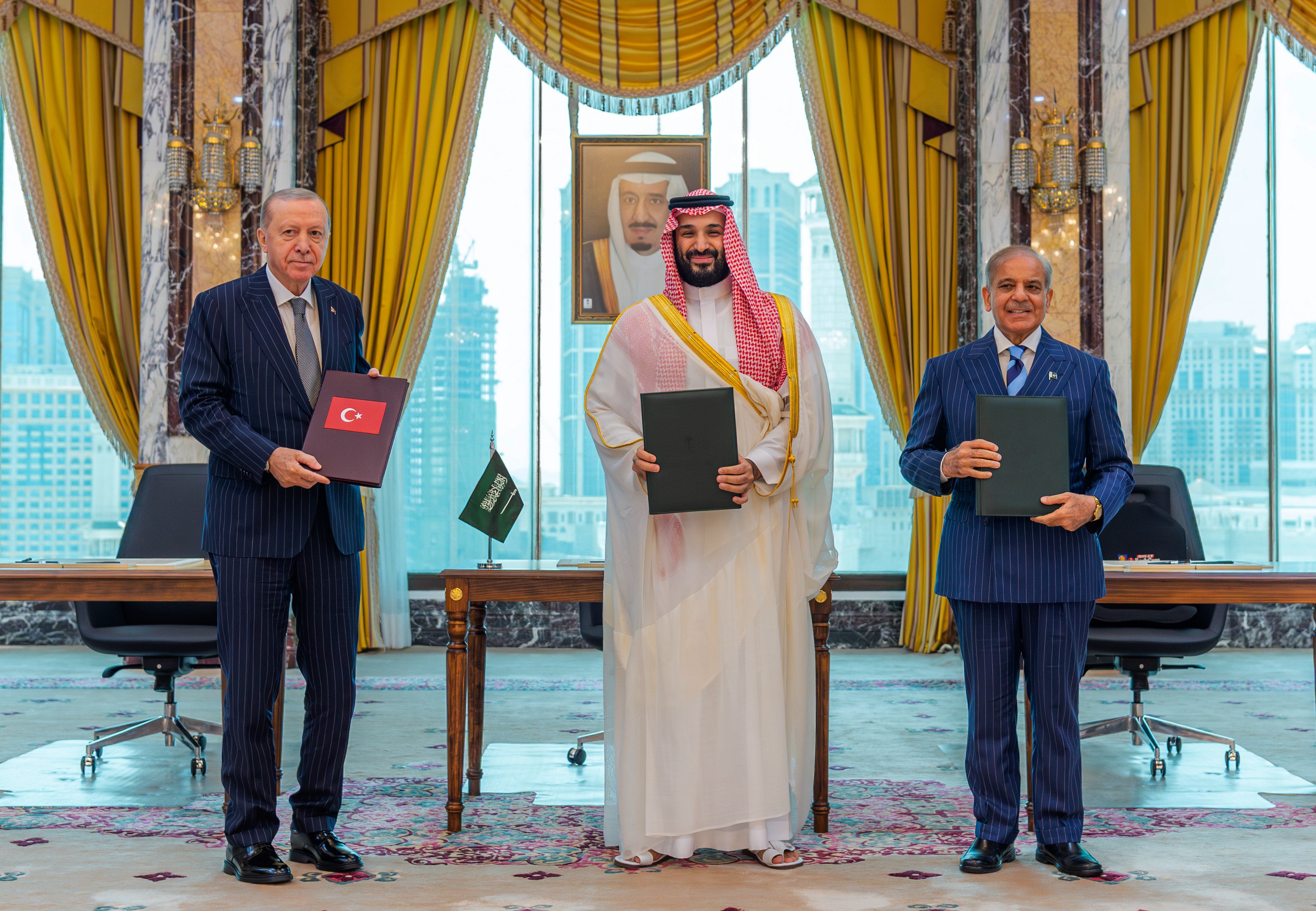
While they still value US technology, intelligence, and military might, a growing number of these allies are determined to lessen their exposure to American decisions over which they have little control. This hedging strategy has now crystallized in the Mecca Joint Defense Agreement, signed on August 7 by Saudi Arabia, Turkey, and Pakistan.
A New Defense Axis Beyond US Oversight
The pact commits the three nations to mutual defense—"an attack on one is an attack on all"—and establishes frameworks for military coordination, intelligence sharing, and defense-industrial collaboration. This trilateral arrangement creates a strategic safety net that operates outside Washington's direct oversight, a clear signal of their intent to secure their own interests.
Turkey's participation is particularly striking. As a NATO member, its decision to join a separate collective-defense alliance underscores how the appetite for strategic autonomy is spreading even within the US-led alliance system. The pact's explicit reference to "Islamic solidarity" and its signing in the holy city of Mecca give it a distinctly pan-Islamic character, seemingly designed to provide insurance against an unpredictable West and implicitly rejecting the regional architecture that former President Trump sought to build around Israel and the Abraham Accords.
Egypt's Calculated Abstention
Egypt, another key US ally and the second-largest recipient of US aid after Israel, participated in the discussions but ultimately opted out. Joining an autonomous defense axis that bypasses US regional leadership could have exposed Cairo to financial and diplomatic risks amid its severe economic distress. It might also have been seen as conflicting with its 1979 peace treaty with Israel, which prioritizes treaty commitments over other regional defense obligations.
Gulf States Rethink Reliance on Washington
The Mecca axis is not an isolated warning. Under Trump's second presidency, US credibility has eroded, prompting allies in the Middle East and beyond to question American commitments. The Gulf monarchies—long the pillars of US power in the region—are fundamentally altering their calculations. They face the dual risk of depending on the US as a security guarantor while bearing the consequences of helping America wage war.
Iranian reprisals during the recent conflict threatened the very infrastructure on which Gulf economies depend: energy facilities, desalination plants, and urban centers. In response, these states have shifted from strict containment of Iran to actively exploring detente with Tehran, including through economic incentives. They are no longer prepared to automatically align with the US agenda.
Building a Complementary Alliance
The Mecca alliance had been in the making for some time. Turkey has long-standing military ties with both Saudi Arabia and Pakistan, which signed a bilateral mutual-defense agreement in September 2025. Trump's war on Iran helped transform that into a trilateral pact. The fact that sophisticated US defenses protected American and Israeli assets while leaving Gulf allies exposed appears to have influenced strategic thinking in Ankara as well.
Turkey's decision signals that NATO membership alone is insufficient for its security. Its foreign minister has approvingly compared the pact's mutual-defense provision to NATO's Article Five. The alliance's architecture is striking because each member brings what the others lack: oil-rich Saudi Arabia provides financial power; Turkey contributes a robust defense industry and NATO-trained military capabilities; Pakistan brings a large standing army, a nuclear arsenal, and experience in asymmetric warfare.
Critics may dismiss the alliance as a paper tiger since the three militaries lack a unified command structure. But the pact's aim is not to create a joint expeditionary force. Rather, it seeks to make each member less vulnerable by pooling Saudi money, Turkish technology, and Pakistani manpower and nuclear deterrence. This is a pointed response to Washington's long-standing complaint that its Middle Eastern allies free-ride on American security: they are now taking greater responsibility for their own defense.