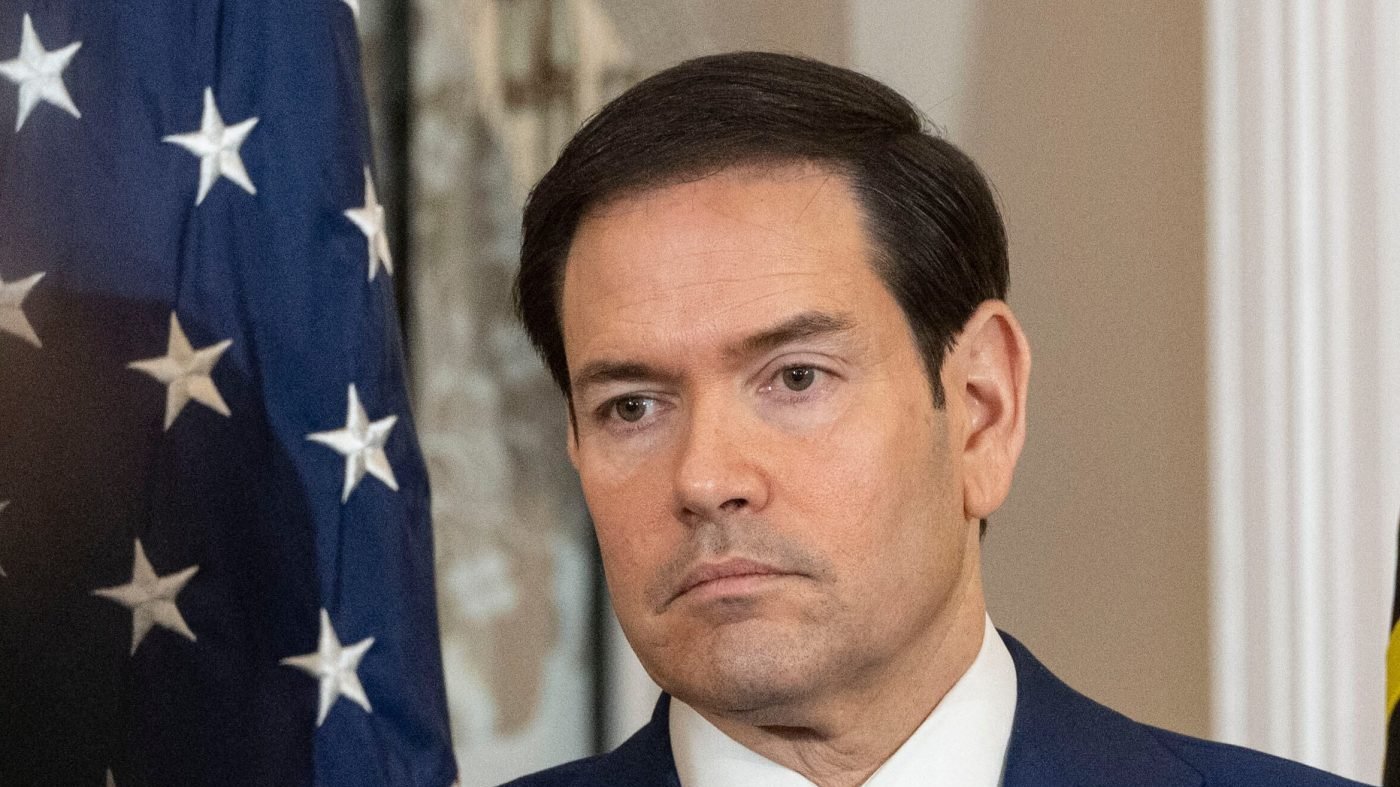
Secretary of State Marco Rubio testified in federal court Tuesday that he had no knowledge of his former political roommate's alleged connections to the Venezuelan government, despite having passed information from him to then-President Donald Trump about potential political upheaval in Caracas.
Testimony in Foreign Agent Case
Rubio appeared as a witness in the criminal trial of former Florida Republican Congressman David Rivera, who faces charges of acting as an unregistered foreign agent for Venezuela. Prosecutors allege Rivera worked to soften U.S. policy pressure on the government of former Venezuelan President Nicolás Maduro. The case is being overseen by U.S. District Judge Melissa Damian, a Biden appointee.
The Secretary of State told jurors that during a July 2017 meeting, Rivera informed him that insiders within Venezuela had convinced Maduro to relinquish power. Rubio, then a second-term senator from Florida, testified that he was skeptical of the claim but nonetheless conveyed the information to President Trump the following day, suggesting "there might be something happening in Venezuela."
Longstanding Political Ties
Rivera and Rubio have a deep political history, having roomed together early in their careers. Rivera represented Florida's 25th Congressional District from 2011 to 2013. Rubio, the son of Cuban immigrants, has been a consistent critic of leftist governments in Latin America, particularly the regimes in Venezuela and Cuba. This stance has made him a prominent voice in Republican foreign policy circles, particularly on issues related to the region, where hardline activists frequently demand regime change.
Under questioning by prosecutor Harold Shimkat, Rubio stated he was unaware that Rivera's company had secured a $50 million contract with Citgo Petroleum, the U.S. subsidiary of Venezuela's state-owned oil giant PDVSA. "I would not have taken any subsequent action," Rubio testified, had he known about the financial arrangement.
Broader Geopolitical Context
The testimony unfolds against a complex geopolitical backdrop. Maduro was captured by U.S. military forces in January following escalating tensions between Washington and Caracas, as part of a broader Trump administration initiative targeting international drug trafficking. Maduro and his wife, Cilia Flores, have pleaded not guilty to drug-trafficking and weapons charges in a New York federal court.
Rubio's role in conveying unverified intelligence about a foreign power to the President highlights the informal channels that sometimes influence high-level diplomacy. The case also touches on the legal boundaries of foreign lobbying, a subject of increasing scrutiny as the U.S. confronts multiple adversarial states. This scrutiny extends beyond Venezuela, with the administration also facing challenges from nations like Iran, which has set new conditions for strategic maritime passage.
Prosecutors have not accused Rubio of any wrongdoing, and Rivera maintains his innocence. The trial continues to examine the nature and disclosure of Rivera's engagements with Venezuelan entities. The outcome could influence how the U.S. government manages relationships with individuals who have close ties to both American officials and foreign governments, a recurring issue in Washington.
The proceedings underscore the persistent challenges in U.S. Latin America policy, where personal relationships, political advocacy, and alleged clandestine lobbying often intersect. As the case develops, it may prompt further examination of how foreign influence is monitored and reported, a concern that spans various sectors of national security and governance.