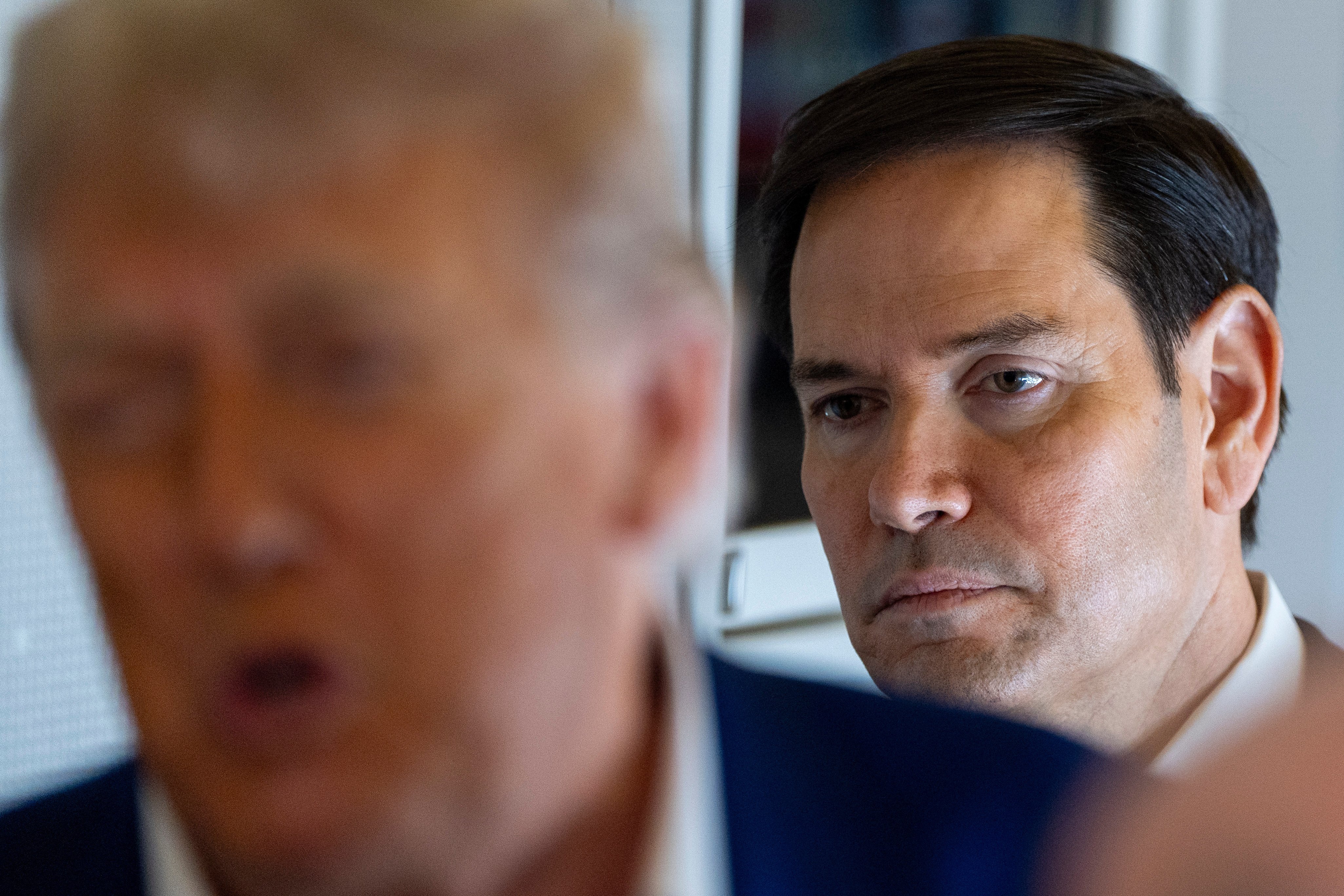
For a politician who prides himself on foreign policy gravitas, Marco Rubio's tenure as secretary of State was supposed to be a career capstone. Instead, it has become a study in irrelevance. Under President Trump, the State Department has been systematically hollowed out—more than 2,000 career diplomats have been laid off or forced out in Trump's second term alone, adding to a 20 percent workforce reduction since his first term. Rubio now presides over an agency that has lost its institutional muscle and its voice in shaping American diplomacy.
The disconnect between Rubio's hawkish instincts and Trump's transactional approach to global affairs has been glaring, especially on Iran. While Trump entrusted sensitive negotiations to family and friends—namely son-in-law Jared Kushner and special envoy Steve Witkoff—Rubio was left on the sidelines. Kushner and Witkoff's diplomacy, critics argue, served their private business interests more than American strategic goals, and the resulting deal has been widely panned as a surrender rather than a victory.
Now, with the deal facing a firestorm of criticism, Republicans are turning to Rubio as a last resort. Sen. Tim Sheehy (R-Mont.) publicly called on Rubio to step in and lead a second round of negotiations if the current pact collapses. “I think having Marco off to the side, of course, to have round two, should this fail, and we have to go back to kinetic strikes and go back for another round, would be good,” Sheehy told reporters. The admission underscores the GOP's growing alarm over a deal that two-thirds of Americans now disapprove of, according to a recent national poll.
Sen. Bill Cassidy (R-La.) captured the mood among many Republicans, remarking that Ronald Reagan is “rolling over in his grave” at Trump's decision to lift decades of sanctions against Iran's regime. The deal, critics say, hands concessions to Tehran while securing nothing concrete for the United States. Cassidy's clash with Trump over Iran war powers has become a flashpoint, reflecting deeper divisions within the GOP.
Rubio, however, is reluctant to take the helm of a sinking ship. His main political rival, Vice President JD Vance, is already positioned to take the blame for the deal's unpopularity. Rubio has spent a year and a half watching Trump's inner circle marginalize the State Department, and stepping in now would mean cleaning up a mess he had no hand in making. The irony is not lost on observers: after being sidelined, Rubio may finally be asked to do his job—but on terms that make success nearly impossible.
The political stakes are high. Republican lawmakers are increasingly worried that the Iran deal will become a liability on the midterm campaign trail. Senate GOP leaders have already backed down from a rebuke of Trump's Iran policy, but the anxiety remains palpable. If Rubio does take the lead, he will have to sell a deal that even many in his own party see as a strategic blunder—a task that could define his legacy, for better or worse.
Max Burns is a veteran Democratic strategist and founder of Third Degree Strategies.