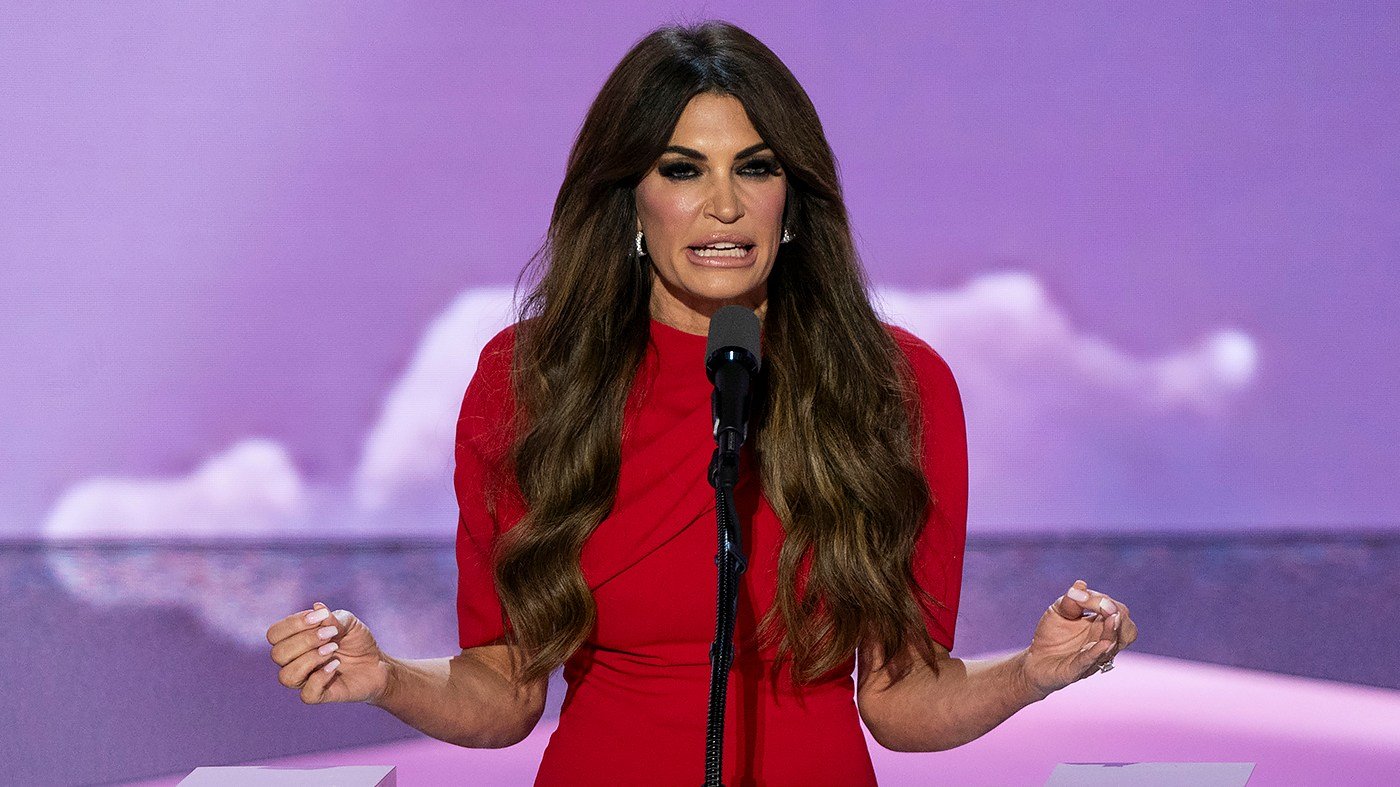
Secretary of State Marco Rubio brushed off questions on Thursday about fresh allegations surrounding President Trump's ambassador to Greece, Kimberly Guilfoyle, who is accused of soliciting money in exchange for access to the administration.
The Wall Street Journal reported Wednesday that Guilfoyle, a former Fox News host and ex-fiancée of Donald Trump Jr., asked a Trump donor for $100,000 to cover her credit card bills, allegedly in a way designed to avoid a paper trail. The report is the latest in a series of stories detailing her conduct, including claims that she gave preferential treatment to a Greek shipping firm.
Speaking to reporters during a diplomatic trip in Greece, Rubio said he would not comment on the newest story, which was published without prior notice to his department. "Like, our job is not to respond every time someone decides to give the media something without any advance warning, without having any chance to look at it and see what's in there," he said. "That's not the way — that's not the way you run an organization, and that's not a serious way to conduct the policy of our country."
Rubio added that he did not know whether the allegations against Guilfoyle were "true or not true," and he insisted that he would not address them while abroad. "So it's just not going to work that way, and it most certainly is not going to work that way when I'm sitting in another country. All right?" he said.
This marks the second time on his trip that Rubio has faced questions about Guilfoyle's conduct. On Wednesday, standing alongside Greek Foreign Minister Giorgos Gerapetritis, he was asked whether her involvement in energy dealings met State Department ethics standards. Rubio deflected, saying, "This is not the forum where we're going to address that, as simple as that. Suffice it to say our embassy here is doing a great job. Our ambassador has been a strong ambassador here." He added, "The questions you're asking me, we're not addressing those at press conferences in Greece with the foreign minister and in another country."
The latest Journal report details an exchange between Guilfoyle and Eric Deters, a businessman and former lawyer, in which she allegedly sought $100,000 and wrote, "What a nightmare you'll literally cost me my ambassadorship stop writing." The report follows a September story that said Guilfoyle gave preferential access to a Greek energy company during multinational discussions on energy infrastructure and that she threatened that the U.S. could bring down a foreign democratic government.
Top Democrats on the House and Senate foreign affairs committees have written to Rubio expressing alarm. Rep. Gregory Meeks (D-N.Y.), ranking member of the House Foreign Affairs Committee, wrote on Sept. 30 that if the reports are accurate, "Ambassador Guilfoyle is unfit to represent the United States abroad and should be removed from her position." Sen. Jeanne Shaheen (D-N.H.), the outgoing ranking member of the Senate Foreign Relations Committee, called for "an immediate review of Ambassador Guilfoyle's actions, and a clarification of what steps have and will be taken to avoid undue influence and even the appearance of a conflict of interest."
Rubio's refusal to engage with the allegations comes as he has been using his diplomatic platform to promote a Western revival in Athens, a theme that has fueled speculation about his own political ambitions. His handling of the Guilfoyle controversy may test his credibility as he seeks to project a serious foreign policy image.
Meanwhile, the State Department has not indicated any review of Guilfoyle's conduct, and the ambassador remains in her post. The controversy is unlikely to fade, especially as Democrats continue to press for accountability and as the administration faces scrutiny over potential conflicts of interest in its diplomatic appointments.