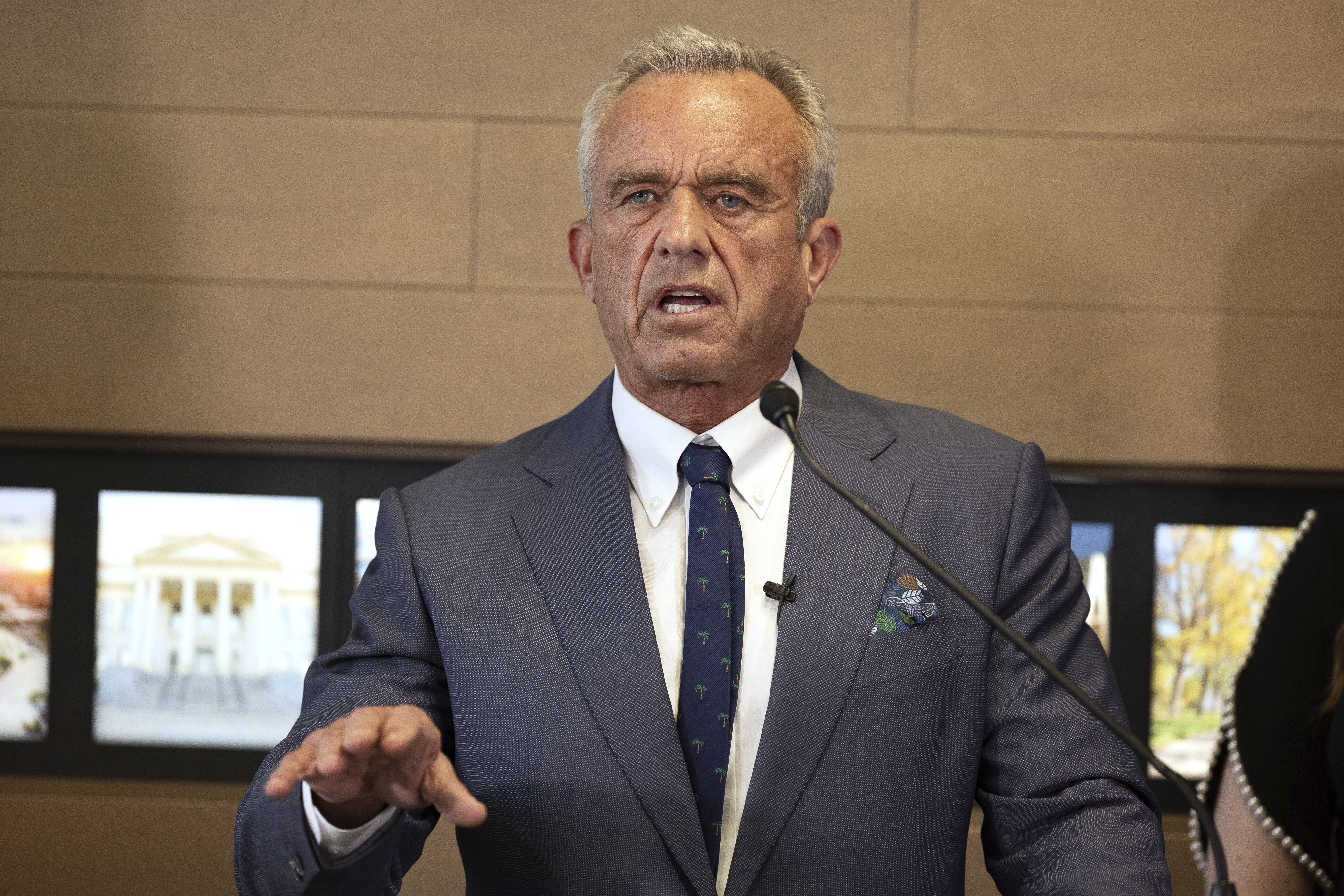
Health and Human Services Secretary Robert F. Kennedy Jr. launched a blistering counterattack Wednesday against a New York Times article that portrayed him as disengaged from his official responsibilities, accusing the newspaper of fabricating narratives and relying on disgruntled former staff.
In a lengthy post on X, Kennedy dismissed the report by veteran correspondent Sheryl Gay Stolberg, which suggested he had “checked out” during department meetings and had stacked HHS with political loyalists. “The fact that you have minimal access to decision makers leaves you covering trivia and relying on your own capacity for invention,” Kennedy wrote.
Kennedy pointed to his publicly available calendar as evidence of his workload and claimed an “unprecedented list of accomplishments” as HHS secretary. He also took aim at the Biden administration’s handling of the COVID-19 pandemic, while sidestepping the article’s mention of Ebola—six Americans have been exposed to the deadly virus currently spreading in parts of Africa.
The HHS chief specifically criticized Stolberg for quoting anonymous employees, some of whom he said were fired or quit to avoid termination. “You also deceptively quote HHS employees without identifying whether they were among those I fired, thereby depriving your readers of the opportunity to make an independent judgment about their credibility,” he wrote.
Stolberg’s article also raised concerns about Kennedy’s appointment of Dr. Jay Bhattacharya—a health economist with no public health experience—to lead the CDC while simultaneously serving as director of the National Institutes of Health. Bhattacharya now oversees the U.S. response to the Ebola outbreak. Additionally, the report noted that John Knox, a former Los Angeles firefighter and vaccine skeptic, is running quarantine facilities in Kenya, alarming longtime public health officials.
Kennedy was also criticized for his absence from CDC headquarters, with Stolberg reporting he made only one known visit there after an active shooting last year. The day after the shooting, which killed a law enforcement officer, Kennedy posted an image of himself fishing with Indian tribes in Alaska. He later acknowledged the controversy but defended the trip as part of his oversight of the Indian Health Service (IHS).
“I consider that part of my job. I run the Indian Health Services, and I’ve had unprecedented success in transforming IHS from a backwater to a top priority for this department,” Kennedy wrote. He added that he has made more visits to tribal health facilities than any predecessor and has elevated Native Americans to senior positions for the first time.
The exchange highlights ongoing tensions between the Trump administration and mainstream media outlets. For more on the administration’s treatment of journalists, read our report on how female officials and women journalists have faced exclusion under Trump. Kennedy’s defense also comes amid broader scrutiny of his health policies, as Senator Cassidy blames Kennedy for a resurgence of preventable diseases.
Kennedy’s response did not address the specific allegations about his leadership during the Ebola crisis, but he insisted his reforms—such as ending telework for 90% of HHS employees—have been ignored by the Times. He also noted that his predecessor, Xavier Becerra, “almost never showed up for work here during his four years in office.”