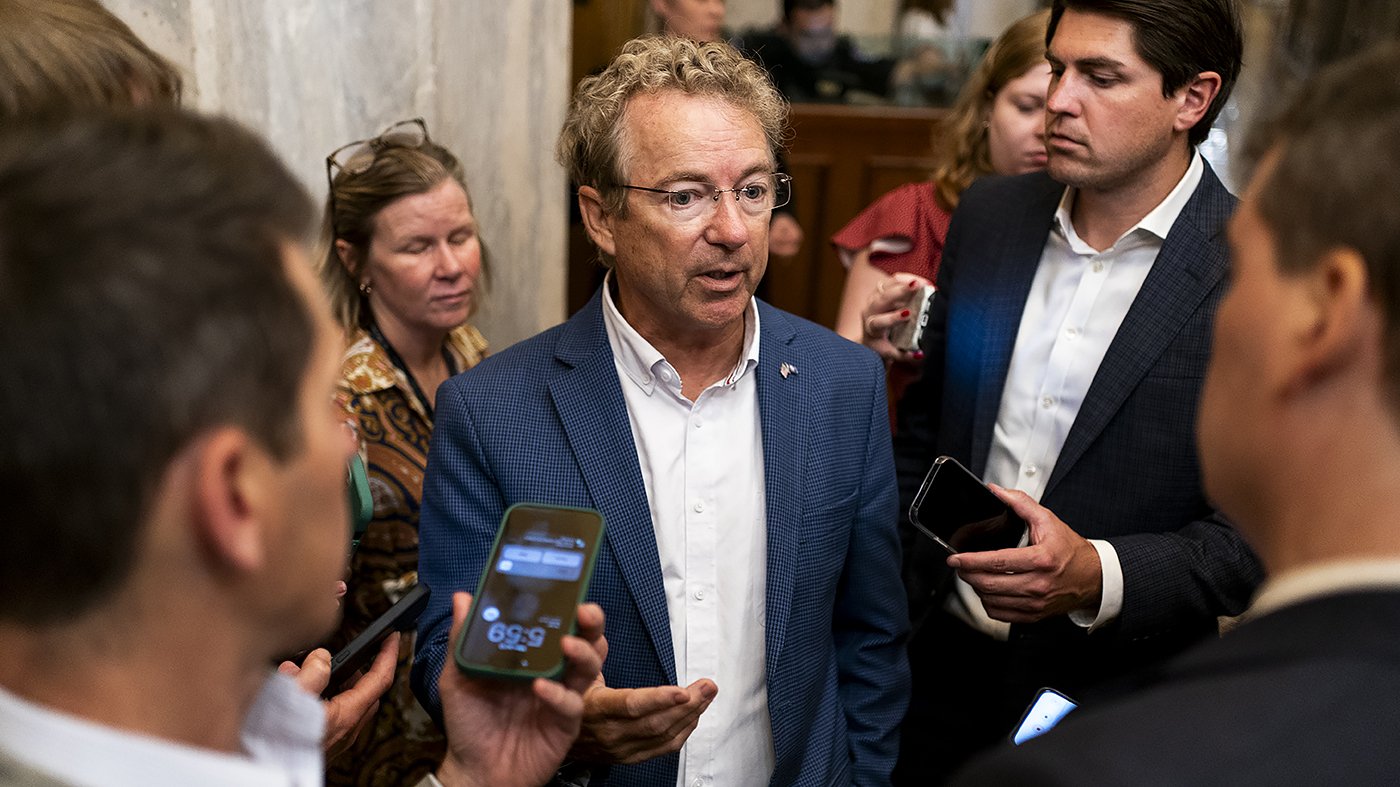
Senator Rand Paul (R-KY) declared Wednesday that the United States is in a weaker position than before President Trump launched military operations against Iran in late February, marking a sharp critique from within the president’s own party. Paul, who has repeatedly voted to withdraw American troops from the conflict, said the war has failed by every objective standard.
“I think the Iran war has not been a success. I’ve been opposed to the Iran war from the beginning. I think by any objective measure we’re worse off than we were before the war,” Paul told reporters on Capitol Hill. His comments come as the administration faces mounting challenges from Iranian threats to commercial shipping in the Strait of Hormuz—a development Paul described as unprecedented. “If you look at the militarization of the Strait of Hormuz, that’s never happened before,” he said. “There’s not an easy way to un-militarize the strait. From that point of view, I think we’re in worse shape.”
The Kentucky senator is among a growing number of Republican lawmakers who worry that Trump’s decision to launch joint strikes with Israel has boxed the administration into a difficult strategic corner. The crisis has directly impacted global energy markets, with Brent crude futures for July surging nearly 5 percent on Thursday after Trump threatened to strike civilian targets in Iran if Tehran retaliates against transport ships in the strait. The price of Brent crude has climbed to nearly $100 a barrel, pushing the national average for gasoline above $4 a gallon. Adding to the pressure on oil supplies, Iranian-backed Houthi militants are threatening Saudi tankers in the Red Sea.
Paul acknowledged that the US may have gained some leverage by defeating Iranian forces militarily, potentially strengthening its hand in negotiations. “You could argue we have some leverage because we defeated them militarily which may get a better negotiated settlement but so far we haven’t seen the advantage play out in negotiations,” he said. The senator’s assessment underscores the administration’s struggle to translate battlefield gains into diplomatic progress, a challenge that has drawn comparisons to the prolonged asymmetric campaign in Ukraine, where military victories have not yielded swift political settlements.
When asked how voters are reacting to the escalating costs of the war—including additional congressional appropriations—Paul pointed to public frustration over rising prices. “I think people are mostly upset about how much things cost, so when they go and see gas prices…” he said, trailing off. He attributed much of the current inflation to deficit spending under former President Biden, but conceded that “some is related to the war.” The senator, a longtime fiscal conservative, framed his opposition to the conflict in both strategic and economic terms. “I’m opposed to the war on many levels but I’m also opposed to more deficits,” Paul said. “I weigh that against what it’s doing to the hard-pressed individual who’s working to try to keep his family fed.”
The political fallout could be severe for Republicans heading into the November midterms. When pressed on whether the party might face a voter backlash, Paul offered a blunt prediction: “Probably.” His warning echoes concerns from other GOP lawmakers who fear that the combination of high gas prices, continued military engagement, and rising deficits could alienate the party’s base and swing voters alike. The rising U.S. death toll in the conflict, now at 17, has only intensified pressure on the White House to either escalate or find an exit.
Paul’s remarks highlight a deepening rift within the Republican Party over the direction of U.S. foreign policy. While some conservatives have rallied behind Trump’s aggressive posture against Iran, others—particularly those aligned with the non-interventionist wing—are increasingly vocal in their criticism. The senator’s focus on the economic toll of the war, especially its impact on working families, could resonate with voters who are already struggling with higher costs of living. As the administration weighs its next moves—including potential ground troop deployments advocated by figures like retired General Kellogg—the political calculus for Republicans grows more complex.