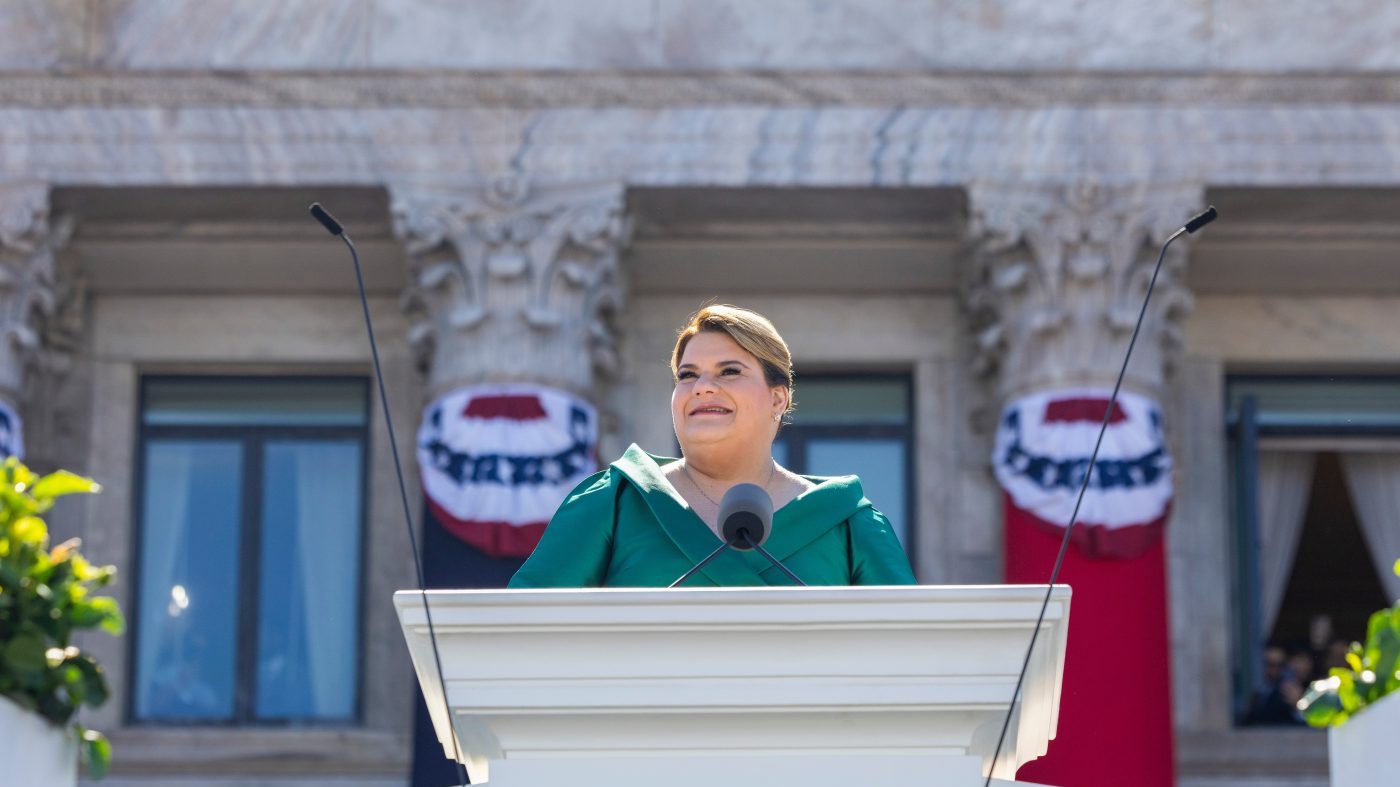
Puerto Rico Governor Jenniffer González-Colón signed an executive order Wednesday declaring a state of emergency over coastal erosion along the island’s northern coast, a move that accelerates mitigation efforts as the Atlantic hurricane season approaches.
The order points to a combination of rising sea levels, storm surges, atmospheric conditions, and what it describes as the “geomorphological vulnerability” of several coastal communities as drivers of what the administration calls an “accelerated” erosion crisis. The document warns that these trends pose a “direct threat” to homes, public infrastructure, natural resources, and public safety.
Specifically, the order highlights the “critical condition” of erosion in Parcelas Suárez, a community in Loíza roughly 20 miles east of San Juan along the northern coast. That area has become a focal point for the administration’s urgent response.
“My administration is acting with urgency to protect lives, property and critical infrastructure in our coastal communities,” González wrote in a statement. “This executive order allows us to accelerate the necessary work to address a situation that represents a real and imminent risk to hundreds of Puerto Rican families.”
The declaration streamlines immediate mitigation, protection, and government response measures. It authorizes the Department of Natural and Environmental Resources and other agencies to “immediately implement” projects and actions, while the Office of Management and Budget, Financial Advisory Authority, and Fiscal Agency must coordinate to “facilitate resources and operational assistance.”
The timing is notable: González signed the order just days before the official start of Atlantic hurricane season, which runs from June 1 through November 30. The National Weather Service projects a 55 percent chance of a below-normal season, a 35 percent chance of near-normal activity, and a 10 percent chance of an above-normal season. Forecasters cite slightly warmer Atlantic ocean temperatures and weaker-than-average trade winds, along with an expected El Niño pattern that can suppress hurricane development in the Atlantic basin.
“Although El Niño’s impact in the Atlantic Basin can often suppress hurricane development, there is still uncertainty in how each season will unfold,” said Ken Graham, director of the National Weather Service. “That is why it’s essential to review your hurricane preparedness plan now. It only takes one storm to make for a very bad season.”
The U.S. Geological Survey has documented that Hurricanes Irma and Maria in 2017 caused “significant impacts” to Puerto Rico’s beaches, dunes, and coral reefs. Those storms accelerated coastal erosion, inland flooding, and coral losses, leaving critical infrastructure more vulnerable to future flooding and erosion.
The emergency declaration comes amid broader political debates over climate resilience and disaster preparedness. In a related context, free speech disputes on campus have also drawn attention to how institutions balance rights and safety. Meanwhile, efforts to combat fraud at the state level continue to shape partisan dynamics. And as daylight saving time legislation advances, the intersection of policy and daily life remains a persistent theme in U.S. governance.