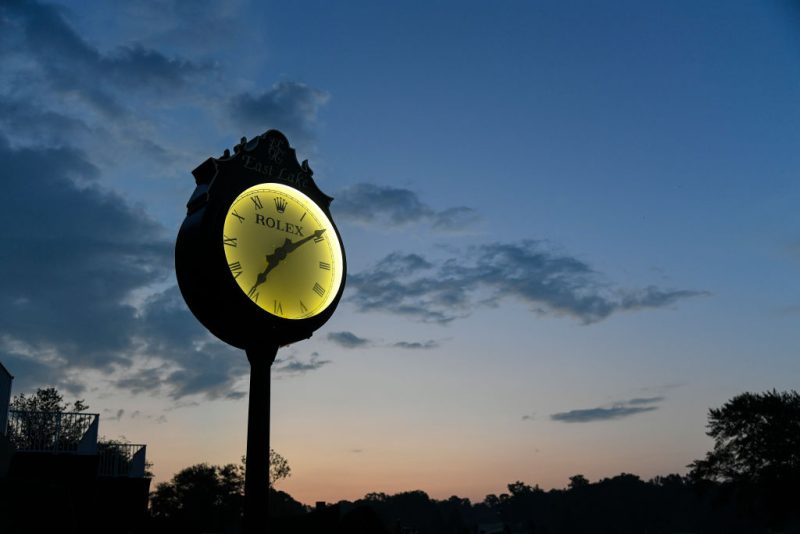
The push to end the biannual clock change gained momentum this week as a House committee advanced legislation that would lock the nation into permanent daylight saving time. Nineteen states have already signaled they are ready to stop changing clocks, aligning with President Donald Trump's vocal support for the change.
The Sunshine Protection Act, reintroduced by Florida Republican Representative Vern Buchanan, was folded into a broader transportation funding package that cleared the House Energy and Commerce Committee on a near-unanimous 48-1 vote. The package now moves to the full House for consideration, marking the furthest the measure has progressed in years.

Bipartisan Support, but Hurdles Remain
While the bill enjoys rare bipartisan backing—similar legislation has been introduced in both chambers—it still faces an uncertain path. Critics argue that permanent daylight saving time would mean darker winter mornings, particularly in northern states, and could disrupt sleep patterns, school schedules, and farming operations. Supporters counter that it would boost economic activity, reduce energy use, and eliminate the public health costs associated with the twice-yearly time shift.
Trump has repeatedly endorsed the idea, saying in a recent statement that making daylight saving time permanent is something the country can and should do. His administration has not made it a legislative priority, but the president's backing has given the bill a political boost among Republicans.
State-Level Action Precedes Federal Move
Even without federal approval, 19 states have passed laws or resolutions that would allow them to adopt year-round daylight saving time if Congress changes federal law. These states include Florida, California, Texas, and several in the Midwest and South. However, under current federal law, states can only opt out of daylight saving time and stay on standard time year-round—as Arizona and Hawaii do—but cannot adopt permanent daylight saving time without congressional approval.
Buchanan's bill would preempt state-level confusion by setting a uniform national standard. “It’s time to stop the madness of changing our clocks twice a year,” Buchanan said in a statement. “This is a commonsense reform that the American people support.”
Opposition and Concerns
Not everyone is on board. Some health experts warn that permanent daylight saving time could lead to chronic sleep deprivation, especially among children and shift workers. The American Academy of Sleep Medicine has called for permanent standard time instead, arguing it aligns better with natural circadian rhythms.
Senator Marco Rubio, a Florida Republican and longtime advocate of the Sunshine Protection Act, has pushed the bill in the Senate. He argues that the economic benefits—ranging from reduced traffic accidents to increased consumer spending—outweigh the drawbacks. “This is not a partisan issue; it’s a quality-of-life issue,” Rubio said.
The bill now awaits a floor vote in the House, though no date has been set. With the clock ticking toward the November time change, lawmakers are under pressure to act quickly if they want to avoid another round of springing forward and falling back.