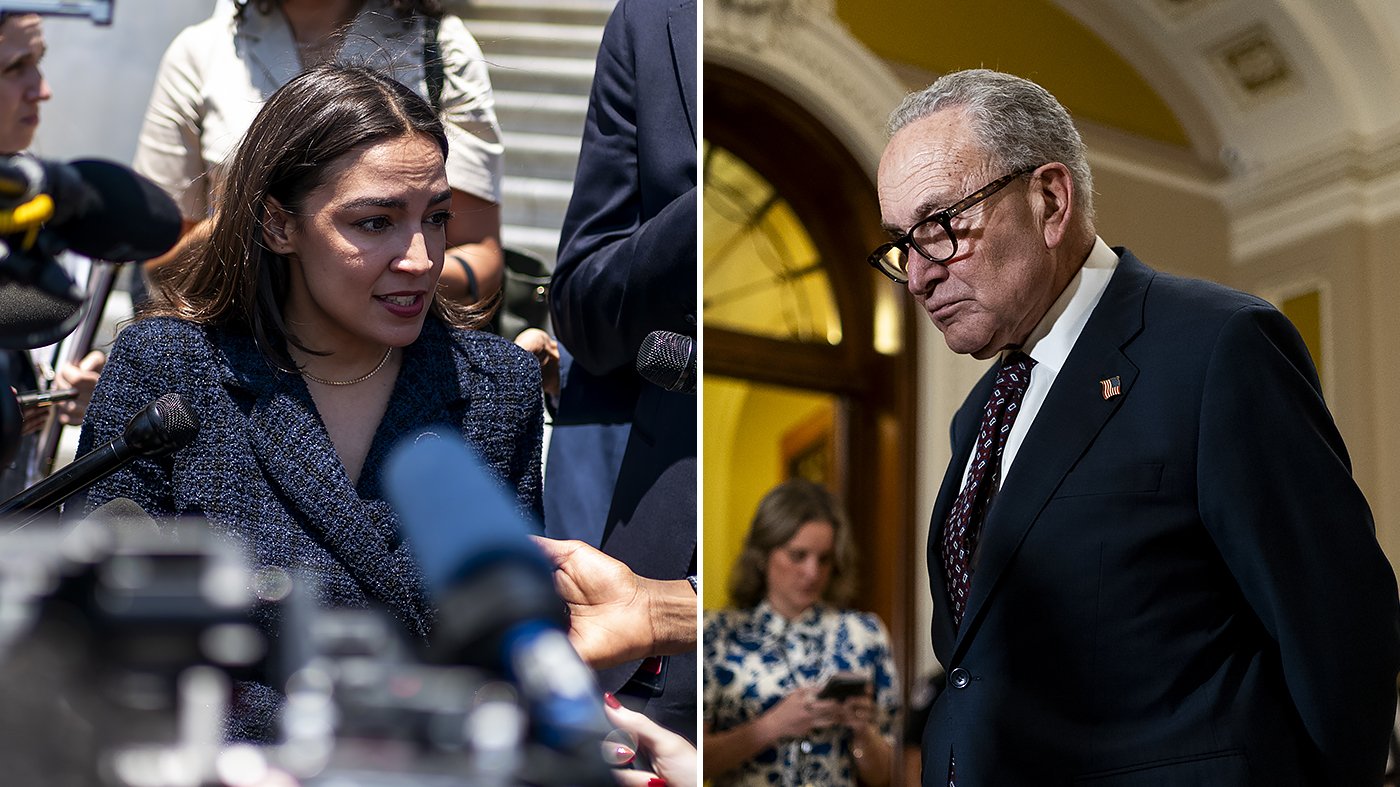
Progressive activists and strategists are ramping up pressure on Representative Alexandria Ocasio-Cortez (D-N.Y.) to launch a primary bid against Senate Majority Leader Chuck Schumer (D-N.Y.) in 2028, following a string of victories by democratic socialist candidates in New York's Democratic primaries last week. The results have emboldened the party's left flank, which sees Schumer as vulnerable and Ocasio-Cortez as the natural standard-bearer for a generational shift.
The push places Ocasio-Cortez at a crossroads. Many within the progressive movement view her as the most credible heir to Senator Bernie Sanders (I-Vt.) in the 2028 presidential race, but the New York primary outcomes suggest she could also mount a formidable challenge to Schumer on her home turf. Whether she could replicate that success in a national election remains uncertain, given the Democratic Party's recent tendency to rally behind centrists over left-wing contenders.

Lupe Todd-Medina, a Brooklyn-based Democratic strategist who previously worked for House Minority Leader Hakeem Jeffries (D-N.Y.), told The Hill that the prospect of a primary challenge to Schumer is now widely accepted among the Democrats she consults. “There is no doubt in my mind that Senator Schumer will be primaried if he runs in 2028,” Todd-Medina said. “And the name that comes up, the only name, is Congresswoman Ocasio-Cortez. I have not heard another name mentioned.”
When asked about the speculation last Wednesday, Ocasio-Cortez sidestepped the question, noting that her focus had been on the 14 downballot candidates she endorsed in New York—all of whom won. “My focus was on them, and so I think I’m going to take a beat and really enjoy their success, and we’ll see what happens from there,” she said.
But the primary upsets have reignited conversations about 2028, with many progressives arguing that the victories signal a broader demand for change. “You’re seeing a change in the people that are being elected, and the people that are being elected are the people that want to see change across the board, so that would include Senator Schumer,” Todd-Medina added.
Ocasio-Cortez has long been discussed as a potential presidential contender, though she has never officially declared interest. She is one of the party’s most recognizable figures and a prolific fundraiser; her “Fighting Oligarchy” tour with Sanders last year drew massive crowds at a time when the Democratic Party appeared listless. An Emerson College poll in late May placed her third among potential Democratic presidential candidates, while an Atlas Poll showed her in first.
At the same time, progressive frustration with Schumer has been building for months. Many Democrats were furious when he backed a Republican bill in May 2025 to avert a government shutdown, and a group of Democrats struck a deal in November to end the longest shutdown in history—a deal Schumer opposed but failed to prevent. Combined with broader discontent over the party’s resistance to President Trump and Schumer’s support for Israel—which has become a litmus test in Democratic primaries this year—the longtime leader appears exposed. A May Siena University poll gave him a 33 percent approval rating among all voters and just 47 percent among Democrats.
A Schumer spokesperson pointed to the senator’s remarks from Wednesday, in which he said, “We’re seeing tremendous energy from all different areas of our party. You’re seeing centrist energy in Virginia, Iowa and New Jersey. Progressive energy in New York City. We’re going to harness it all to win in November.”
Progressives, however, see the New York results as a harbinger of a wider realignment. “New York’s clean sweep was a political earthquake that shows voters want shake-up-the-system fighters who are not owned by corporate interests, billionaires, or corrupt Trump allies like AIPAC,” said Adam Green, co-founder of the Progressive Change Campaign Committee. “This is obviously bad news for Chuck Schumer—who is the exact wrong image for Democrats if the party wants to win.” Green suggested Schumer’s best move would be to step down as leader after the 2026 election and retire in 2028 to make way for new blood.
Senator Bernie Sanders, when asked about the New York primary results, framed them as a rejection of a rigged system. “What I get out of it is that the people of New York City and throughout this country are sick and tired of a rigged economic system in which the rich get richer and working families are struggling to put food on the table,” he said. The progressive left’s rise is reshaping the Democratic Party and poses risks for 2028, as some centrists worry that a leftward lurch could alienate swing voters. Meanwhile, Trump has escalated attacks on democratic socialists, calling them a major threat.