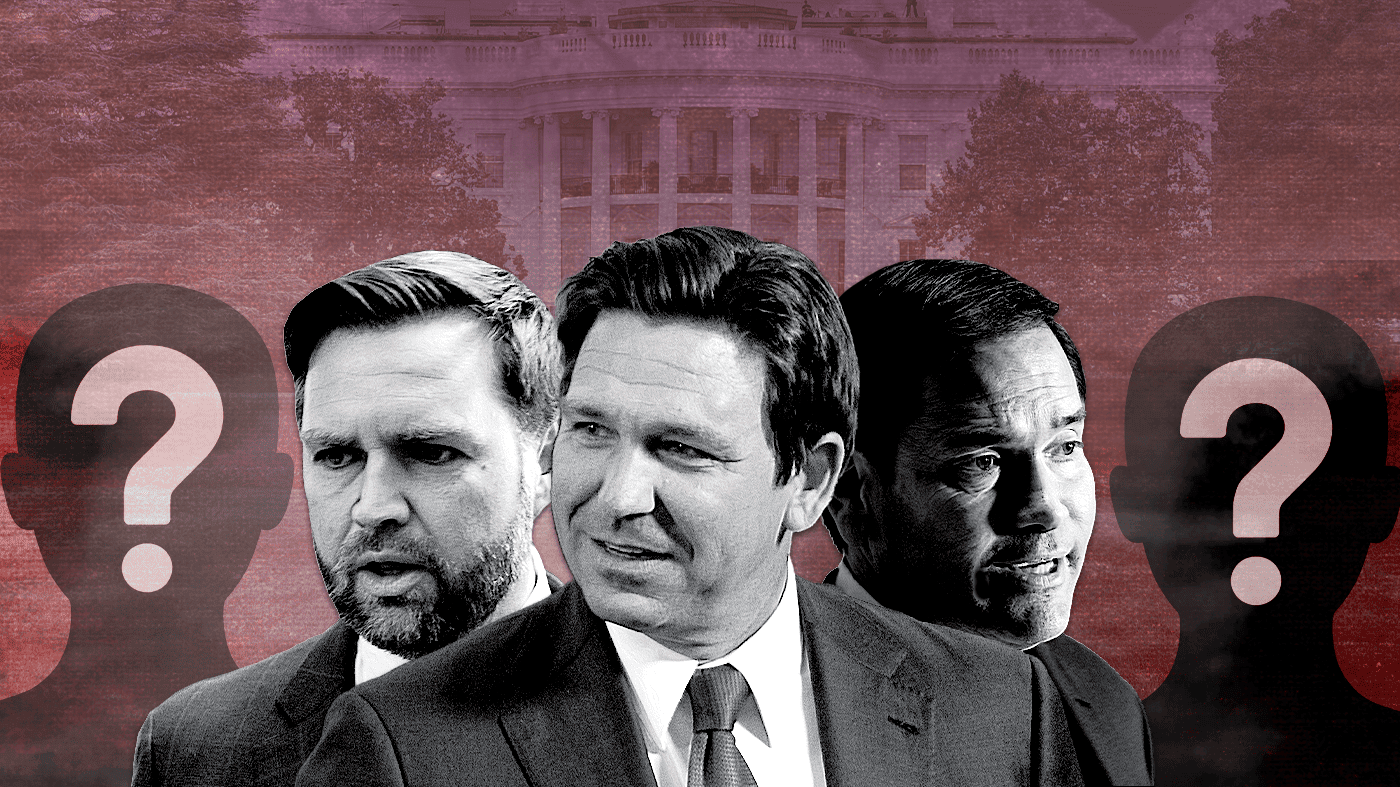
The Republican Party’s sweeping midterm defeats have thrown the 2028 presidential race into chaos, with the field of potential nominees now more fluid than it has been in years. Just 15 months before the first primary contests, the once-clear path for Vice President JD Vance has become increasingly treacherous, while other ambitious Republicans are already maneuvering for a post-Trump era.
Among the most visible figures are outgoing Florida Governor Ron DeSantis and Texas Senator Ted Cruz, both of whom have run for president before and are now seeking to capitalize on the party’s turmoil. The GOP’s search for a new standard-bearer is wide open, with no shortage of high-profile names considering a bid. Here’s a look at the top five contenders, as the situation stands today.
JD Vance: The Embattled Frontrunner
Vance, 42, retains a nominal lead in early polls and betting markets, but his close association with the White House’s failed midterm strategy has become a serious liability. As vice president, he must now defend an administration that voters soundly rejected, while simultaneously trying to position himself as an agent of change—a nearly impossible balancing act.
“It’s the MAGA base that’s still the decider of the presidential nominees and Vance is still probably the best embodiment of the MAGA base, but you know he also has to own every decision that is made the past two years and the next year,” said Arizona-based GOP strategist Barrett Marson.
Vance has shown ideological flexibility, having once been a sharp critic of Trump before aligning with him. In the wake of the midterms, he quickly blamed the president’s trade war for the losses. “The reason we lost is the war. The president himself said so last night,” Vance wrote on social media, adding that if anyone thinks losing the Senate for six years was worth it, they should argue that point.
Trump praised Vance’s statement as “good,” but has declined to endorse him for 2028, saying, “Maybe you have a lot of people running. Maybe nobody’s going to run. Maybe he won’t run. I don’t know who’s going to run.” Vance, who is close to Donald Trump Jr., has not committed to a bid and has not discussed it with Trump.
Some political operatives question whether Vance will even enter the race, given the grim environment. “I think Vance is no fool,” said one national consultant. “He’s probably asking, ‘Am I going to commit the next two years of this when the odds of success are pretty slim?’”
Marco Rubio: The Cabinet’s Most Likely Candidate
Secretary of State Marco Rubio is widely seen as the most probable presidential candidate from Trump’s cabinet, despite the State Department denying reports that he is preparing to step down. Rubio, 55, won his Florida Senate seat in 2010 and ran against Trump in 2016. While Vance leads in primary polls, Rubio performs better in hypothetical general election matchups against Democrats, according to an Emerson College/The Hill survey from August.
Rubio, who also serves as national security adviser, has been a driving force in the administration’s Venezuela policy, including the removal of Nicolas Maduro. As a son of Cuban immigrants, he has long advocated for regime change in Cuba. He has stayed largely quiet on the midterm results, though he was briefly pulled on stage during a campaign event.
Indiana Representative Marlin Stutzman, who won reelection, has already endorsed Rubio. Tim Chapman, president of Mike Pence’s Advancing American Freedom, noted that Rubio has “instinctively coalitional capabilities.” One consultant agreed, saying, “I agree that Rubio is a much stronger candidate than Vance. But I think Rubio is again asking, ‘What’s the nomination worth?’”
Ron DeSantis: The Florida Survivor
Ron DeSantis, the term-limited governor of Florida, has been vocal since the midterms, blaming Trump for the disaster and calling it an “extinction-level event” for Republicans. He argues the results were a clear rebuke of the president and Congress. DeSantis, 48, ran against Trump in 2024 and was an early favorite before Trump consolidated support. In the midterms, Florida remained firmly red while other states flipped, making DeSantis a rare GOP winner.
“Ron DeSantis is trying to repeat his moment from four years ago, and this time it actually could stick, because he gets to point to a lot of great things in Florida, including one of the only red states that actually remained red,” Marson said. Chapman predicted DeSantis will “become much more critical of some of the excesses of the second Trump term.”
Ted Cruz: The Senator with a Grudge
Ted Cruz is the most likely senator to jump in, though he has not ruled out another run. He faces reelection in 2030. Cruz, a 2016 rival of Trump, has been positioning himself as a conservative fighter. Other senators, including Tom Cotton and Josh Hawley, are also seen as ambitious, though Hawley recently said he has “no intention” of running.
The midterm losses have opened up the race, and Cruz is expected to leverage his national profile and fundraising network. His path, however, is complicated by his past clashes with Trump and the lingering loyalty of the MAGA base to the former president’s circle.
Other Potential Contenders
Beyond the top five, several other Republicans could enter the fray. Former U.N. Ambassador Nikki Haley, who ran in 2024, remains a possibility. South Carolina Senator Tim Scott and Virginia Governor Glenn Youngkin are also frequently mentioned. The party’s direction will depend on how quickly it can regroup and whether Trump’s influence wanes.
The 2028 race is far from settled, and the coming months will be critical as candidates test the waters and donors pick sides. For now, the field is in flux, and the only certainty is that the GOP is searching for a new leader after a devastating election night.