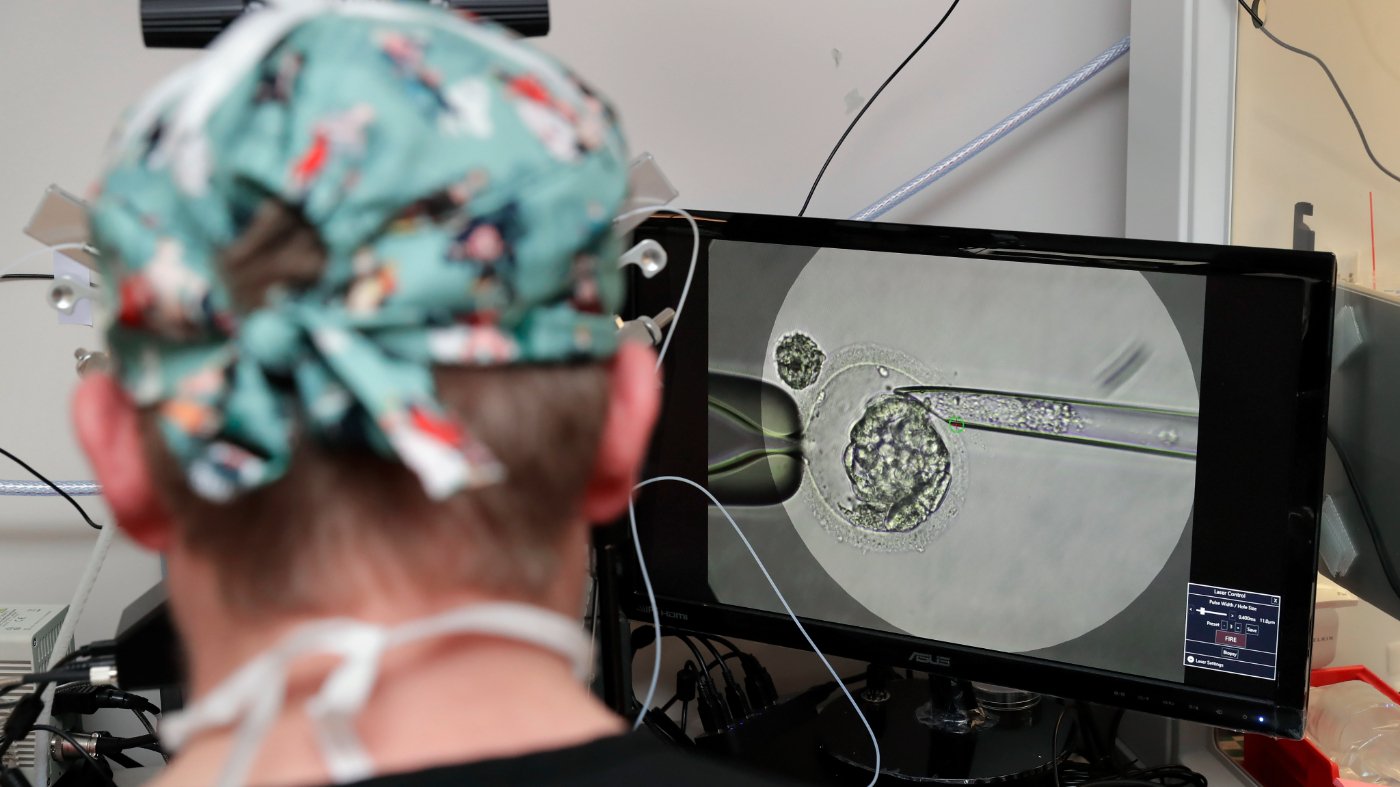
Four years after the Supreme Court's landmark Dobbs v. Jackson Women's Health decision overturned federal abortion rights, the ruling's reverberations are reshaping reproductive politics in unexpected ways—most notably in the contentious arena of in vitro fertilization. Nearly 3% of U.S. births now rely on IVF, a procedure that, like abortion, involves control over prenatal life and has become a flashpoint in the post-Roe landscape.
President Trump, who has branded himself the "father of IVF," moved this year to mandate employer coverage for fertility treatments and ease rules for fertility care. But his administration simultaneously released a document promoting "embryo adoption," labeling embryos as "children who already exist." That dual approach underscores the fundamental tension: if embryos are persons, IVF—which routinely creates and discards excess embryos—becomes legally and ethically problematic.

In states that banned abortion to protect "unborn children," IVF's reliance on surplus embryos clashes directly with those laws. The Dobbs opinion encouraged states to preserve "prenatal life at all stages of development," yet many abortion-ban states treat test-tube embryos differently from those in the womb. This inconsistency is proving hard to sustain.
Italy's 2004 law—which limited fertilization to three eggs and banned embryo freezing—offers a cautionary tale. During its five-year run, IVF success rates fell, multiple births surged, and women faced repeated hormonal treatments. The lesson is clear: embryo-protective restrictions can undermine IVF's effectiveness and safety.
Political battles are intensifying. The Texas Republican Party is debating whether to ban IVF outright. The Southern Baptist Convention recently declared embryos are people, urging members to use only fertility treatments that respect embryo dignity. And the Alabama Supreme Court's 2023 ruling that cryopreserved embryos are persons under wrongful death law briefly shuttered IVF statewide, until lawmakers granted providers immunity.
Demographic realities may shield IVF in most states. Fertility patients tend to be older, married, wealthier, and more likely to vote—demographics that give them political clout. As abortion ballot measures offer Democrats a midterm opening, the contrast in political power between IVF patients and abortion seekers is stark. The majority of abortion patients are low-income women of color in their 20s, with far less ability to overcome bans.
Both IVF and abortion are essential reproductive healthcare, according to the American Society for Reproductive Medicine. Yet post-Dobbs, abortion bans have increased pregnancy-related and infant mortality in restrictive states, even as overall abortion rates have risen. The right to create a family through IVF—or to choose not to—remains unevenly protected.
As the pro-life movement grapples with its next steps, the tension between protecting embryos and preserving IVF access is unlikely to fade. Post-Dobbs, the pro-life movement must pivot to build a supermajority for federal protections, but doing so without alienating IVF supporters is a political minefield.
The stakes extend beyond party lines. Reproductive justice demands the right to have or not have children, and to raise them with dignity. If abortion bans already undermine that for the most disadvantaged, restricting IVF would compound the inequity. In a post-Dobbs world, the two procedures remain flip sides of the same reproductive coin—and neither should be sacrificed.