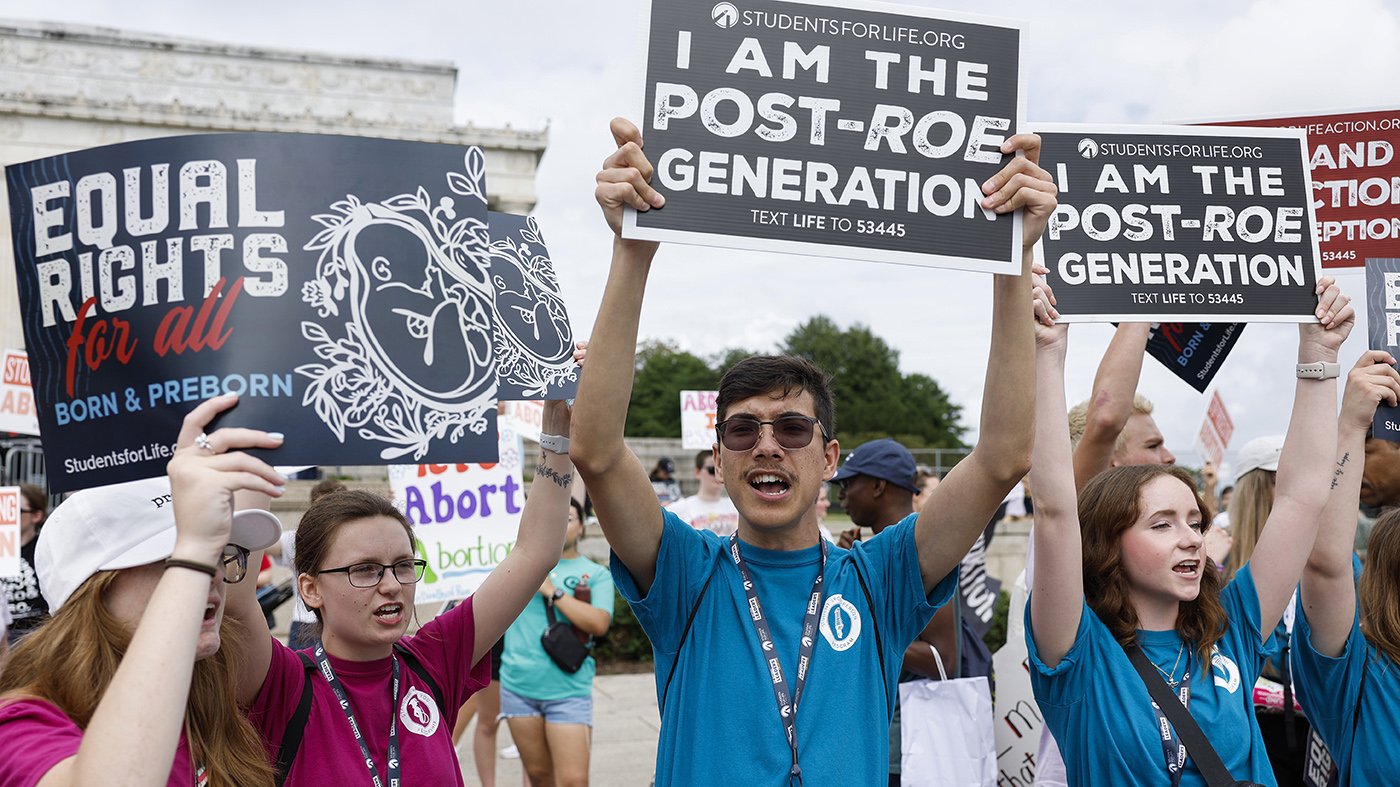
Four years ago today, the Supreme Court overturned Roe v. Wade, declaring that the Constitution does not protect abortion rights and returning regulatory power to the states. For longtime pro-life leaders, that June 2022 decision was the culmination of a nearly half-century campaign. But for a younger generation of activists, the victory was just the beginning of a new fight—one that requires a fundamentally different playbook.
Gavin Oxley, a media and policy strategist with Americans United for Life, writes that the strategies that brought down Roe will not secure the ultimate goal: federal constitutional protections for the unborn. “We are no longer bound by the constraints of Roe,” he argues. “It is time we start acting like it.”
The shift, Oxley contends, must center on public opinion. While political wins—such as restricting mail-order abortion pills or advancing pro-family policies—matter, they cannot be the movement’s primary focus. With Congress perpetually shifting between party control, durable change requires building a supermajority of Americans who support protecting life, not just a Republican platform plank.
Reaching that supermajority means engaging middle-of-the-road Americans, especially Gen Z. A 2024 United Way survey found that 32 percent of Gen Z regularly engage in activism on social issues like abortion. Yet this generation also faces the worst economic instability in decades—soaring housing costs, unaffordable college, and the rising expense of starting a family. Financial stress remains a top reason women choose abortion, Oxley notes, so the movement must treat the fight for life as comprehensive, addressing maternal healthcare costs and economic pressures.
Pregnancy help centers have long provided material support, but Oxley says that’s not enough. The movement must directly confront the financial realities that drive abortion decisions. Lowering maternal healthcare costs and closing care gaps are essential first steps.
Messaging also needs an overhaul. For 53 years, pro-life advocates centered on fetal humanity. But a May 2022 Pew poll found that even one-third of Americans who support legal abortion believe human life begins at conception. They accept the premise yet still support abortion rights—a position Oxley calls incoherent but common. Instead, he argues, centering advocacy on protecting women has proven more effective at shifting moderate opinion. Safeguarding women, by proxy, protects their unborn children while the movement works to win broader hearts and minds.
Oxley urges pro-life leaders to unite behind post-Roe strategies that meet Americans where they are. “We cannot leave our victory on the steps of the Supreme Court if our goal is to see the end of abortion in the U.S. in our lifetime,” he writes.
The path ahead includes not only policy battles—like those seen in recent court rulings on medication abortion and challenges to telehealth abortion bans—but also a broader cultural campaign. As debates over federal resources for mothers continue, the movement’s ability to adapt will determine whether Dobbs becomes a steppingstone or a final victory.