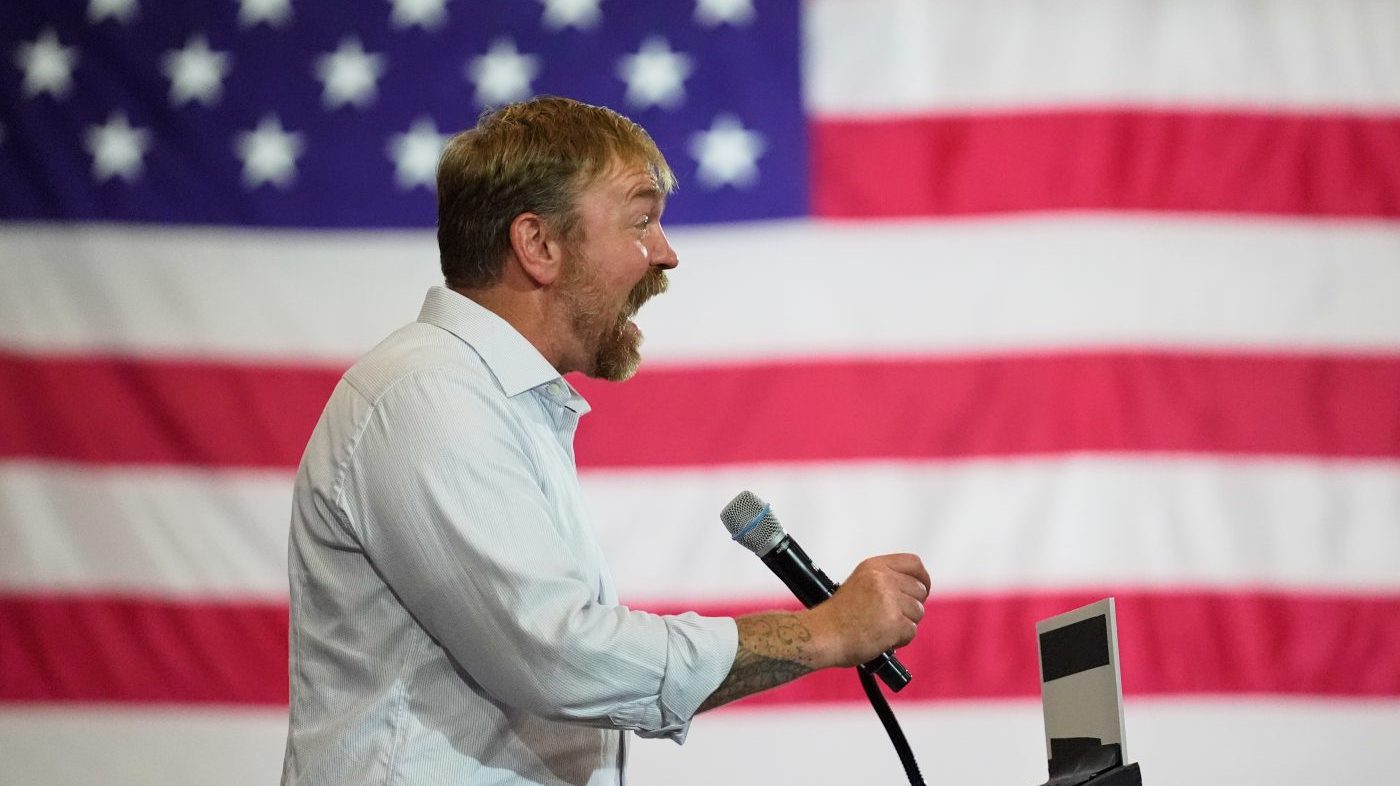
Progressive oyster farmer Graham Platner decisively secured the Democratic nomination in Maine on Tuesday, officially launching a contentious general election contest against Republican Senator Susan Collins. Despite a recent sexting scandal and allegations of toxic behavior from ex-girlfriends, Platner won with about 72 percent of the vote, according to Decision Desk HQ. Outgoing Governor Janet Mills, who suspended her own bid, garnered nearly 20 percent, while Democrat David Costello took just 8 percent.
Platner’s victory comes as a relief to many Democrats, who see this race as critical to winning a Senate majority in November. However, the campaign has been rocked by revelations that Platner sent sexually explicit messages to multiple women early in his marriage, as first reported by the Wall Street Journal. The New York Times also interviewed several ex-girlfriends who alleged he was physically rough with them and that he knowingly bore a tattoo resembling a Nazi symbol—a claim Platner has denied, saying he was unaware of the tattoo's meaning.

In his victory speech, Platner struck a defiant tone. “To any of those who feel let down or disappointed or disillusioned, it is my job to earn your trust, faith, and support,” he said. “It is deeply humbling to stand here as your Democratic nominee. It is an honor, and I will not let you down.” He added, “The national pundits, the political establishment, they keep looking for that one story, that one headline… but in trying so hard to understand me, they failed to understand that this is not about me at all. This is a movement about us.”
Top Senate Democrats quickly rallied behind Platner. Senate Minority Leader Chuck Schumer and Senator Kirsten Gillibrand, chair of the Senate Democrats’ campaign arm, issued a joint statement saying, “In November, Maine voters will elect Graham Platner, and we will win a Senate majority.” The strong showing—with minimal vote imbalance between the Senate and gubernatorial primaries—suggests Platner weathered the recent controversy among Democratic voters.
In South Carolina, Senator Lindsey Graham easily advanced in the Republican primary, avoiding a runoff. Graham fended off five GOP challengers, including businessman Mark Lynch, who questioned Graham’s conservative credentials and sought to leverage former President Trump’s past criticism of the senator. Lynch had endorsements from Trump allies like Michael Flynn but loaned his campaign nearly $5 million of the $6 million he raised. Graham, who secured Trump’s endorsement, also had backing from Senator Tim Scott and outgoing Governor Henry McMaster. The general election will see Graham face pediatrician Annie Andrews, the Democratic nominee, though no Democrat has won a Senate seat in South Carolina since 1998.
Meanwhile, South Carolina’s GOP gubernatorial primary is heading to a runoff, with Nancy Mace’s political career taking a hit after her defeat. Mace has since endorsed Wilson in the runoff. In the state’s 1st Congressional District, Smith and Honeycutt clinched runoff spots in the GOP primary. Nevada also saw competitive primaries, including Governor Joe Lombardo’s tough reelection bid and a hotly contested GOP primary for an open House seat.
The results underscore a pivotal moment for both parties as they head toward November. For Democrats, Platner’s resilience offers a glimmer of hope in a must-win state, while Republicans see Graham’s easy primary win as a sign of strength in a reliably red state.