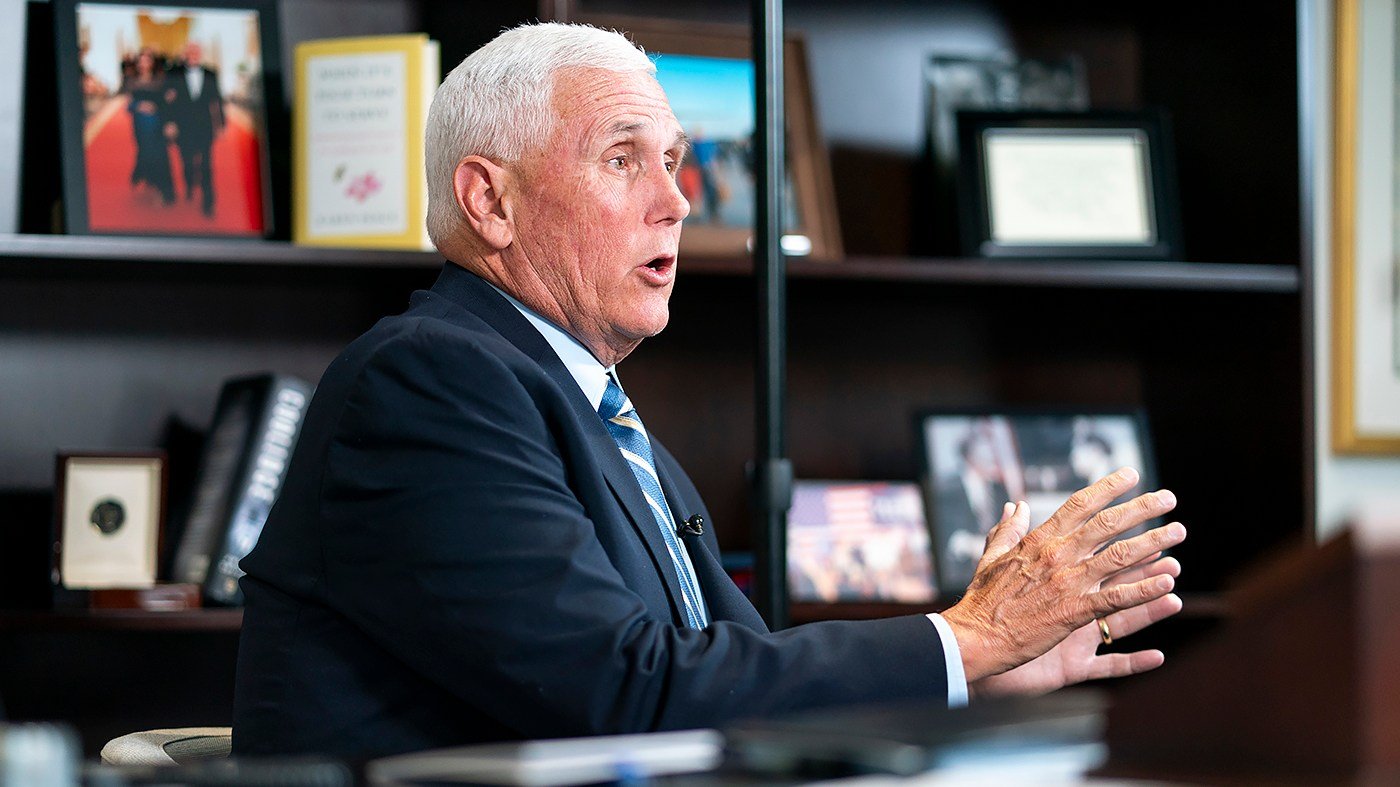
Former Vice President Mike Pence publicly broke with Vice President JD Vance on Sunday, rejecting Vance's assertion that the Iran war was the primary driver of the GOP's devastating midterm losses. Appearing on NBC's "Meet the Press," Pence described Vance as a "good man" but called his assessment "wrong."
"We didn't lose this midterm election because of the war," Pence said. "I think part of the reason why voters were turned off was because after seeing our military respond brilliantly in Operation Epic Fury and the strike against Iran last year, for inexplicable reasons, we stopped after five weeks."
Vance had argued in a statement that many 2024 Trump-Vance voters switched to Democrats in 2026 due to anger over the Iran war, the cost of living, and inflation, and a perceived failure to prioritize America First policies and the U.S.-Israel relationship. Pence, however, contended that the war itself was not the problem; rather, it was the administration's decision to halt military operations prematurely.
The former vice president praised the military's initial successes in Iran, including the destruction of thousands of military sites. He invoked an old adage: "You don't make peace with your enemy, you make peace with your defeated enemy." He pointed to continued Iranian attacks on U.S. targets, such as the recent strike in Bahrain, as evidence that Tehran does not feel defeated. "The Iranians don't give evidence of feeling defeated," Pence said, adding that Americans were frustrated that the military "stopped short."
Pence's comments come as the political fallout from the midterms continues to reshape the GOP. The Council on Foreign Relations reported that Democrats gained 44 House seats and 8 Senate seats, marking their largest House margin since the 1990 midterms and their biggest Senate net gain since 1942. The scale of the defeat has triggered internal GOP battles over strategy and messaging, with some pointing to divisions between Trump loyalists and more traditional conservatives.
Pence attributed the losses, in part, to "voices of isolationism on the right that have gained some perches for this administration." He suggested that a retreat from global leadership alienated voters who expected a strong, decisive foreign policy. The Iran conflict, now in its ninth month, has cost an estimated $47.1 billion as of October. President Trump has sent mixed signals, declaring the conflict "effectively over" at a White House briefing, then later saying on Veterans Day that "we must have a total victory," leaving the endgame unclear.
The midterm results have also reignited debates over the party's future direction. As potential 2028 contenders position themselves, the question of how to interpret the voters' message remains central. Pence's critique of Vance, a leading figure in the party's populist wing, underscores the ideological fault lines that have emerged in the wake of the electoral rout.
Meanwhile, Democrats are savoring their victory but face their own challenges, including early legislative stumbles that have cut their honeymoon short. The political landscape remains volatile, with both parties grappling with the consequences of a seismic election.