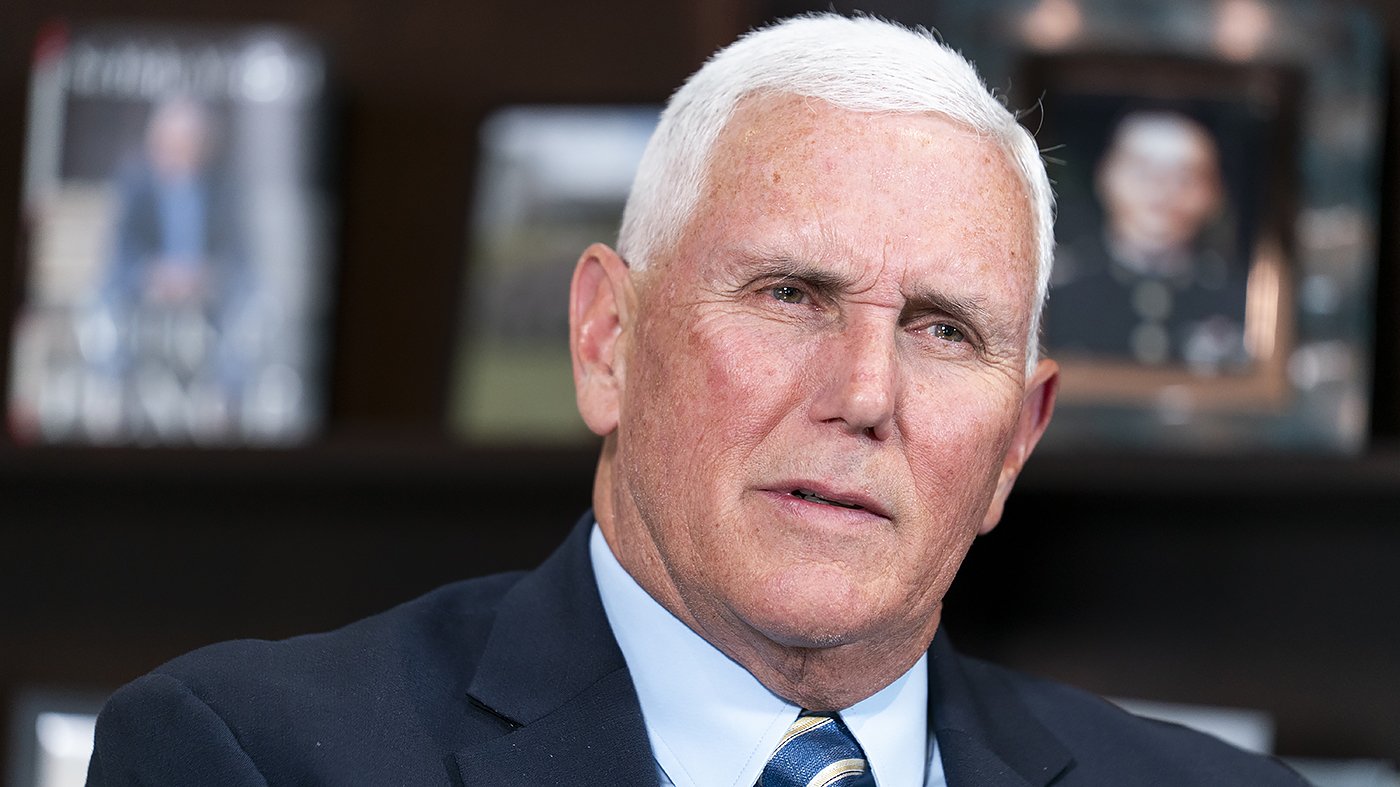
Former Vice President Mike Pence launched a blistering critique of President Trump’s tentative agreement with Iran, dismissing the 14-point memorandum of understanding (MOU) as a “plan to make a plan” rather than a definitive deal. In an op-ed published Sunday in The Wall Street Journal, Pence argued the accord fails to capitalize on the weakened state of Iran’s military following U.S. strikes and risks repeating the mistakes of past appeasement.
Pence began his piece by praising Trump for “acting decisively” in launching a military campaign against Iran, acknowledging that “no one wants another prolonged war in the Middle East.” But he quickly pivoted to sharp criticism of the MOU, which he said “smacks of the kind of appeasement the president rightly rejected during our first term.” He added: “It isn’t the deal a defeated Iran should be getting. It isn’t even a deal—it’s a plan to make a plan.”
The former vice president highlighted several critical gaps in the agreement. Most troubling, he wrote, is that the MOU does not require Iran to dismantle its nuclear program or halt uranium enrichment. He also noted that the accord leaves Iran’s ballistic missile capacity intact and does nothing to end “Iranian support for terrorist organizations.” These omissions, Pence argued, are “equally concerning” and undermine the purpose of negotiations.
Pence also took issue with the agreement’s economic provisions. While the MOU delays answers on nuclear questions, it immediately grants Iran partial sanctions relief and allows renewed energy exports—estimated to generate $5 billion per month for the regime. “That gets the sequence backward,” Pence wrote. “The U.S. shouldn’t provide economic relief first and seek security concessions later. We should secure the concessions first.”
The former vice president called on Trump to use the 60-day window established by the MOU to secure a more robust outcome. He demanded an end to Iran’s nuclear ambitions, a halt to Iranian-backed terrorism, and a restoration of freedom of navigation through the Strait of Hormuz—or else “face the full force of the American military.” Pence concluded: “If those reasonable goals cannot be achieved, Mr. Trump should let the armed forces finish the job.”
Pence’s broadside echoes concerns raised by other foreign policy figures. Former national security adviser Susan Rice recently blasted the MOU as a “very bad outcome” for the United States, while former Defense Secretary Mark Esper has questioned the quality of advice Trump receives on national security matters. The deal has also tested the administration’s credibility as Vice President Vance led peace talks in Switzerland that were delayed by new Israeli strikes in Lebanon.
Trump, for his part, has warned Iran amid the escalating conflict, suggesting the U.S. may seize control of the Strait of Hormuz if Tehran continues to block it. “We may take over the strait, if we have to,” Trump told Fox News on Sunday. “I’ll blow the s--- out of them.”
The MOU remains deeply controversial, with critics on both sides of the aisle arguing it provides too much relief for too little concession. Pence’s intervention underscores the political stakes for Trump as he navigates the delicate balance between securing a diplomatic win and avoiding the perception of weakness.