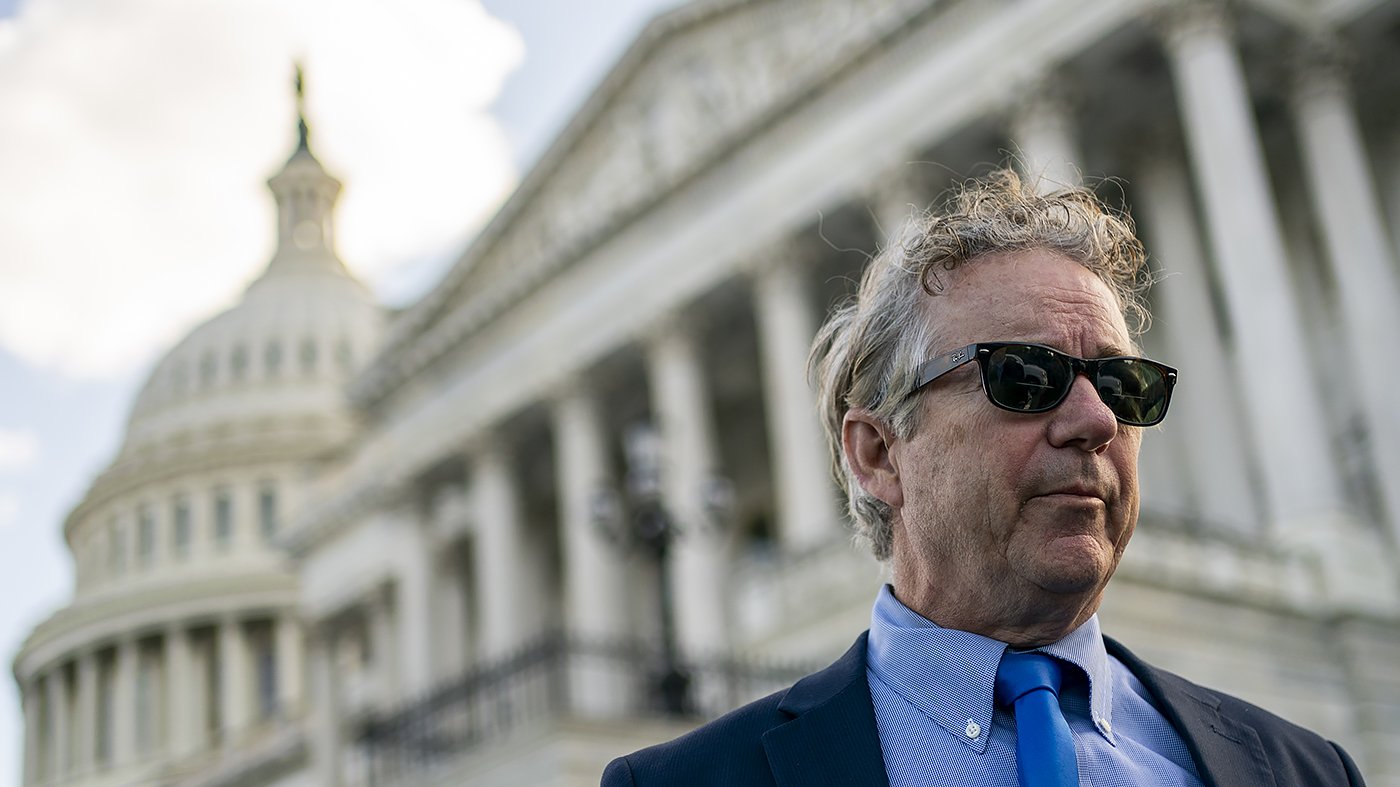
Sen. Rand Paul (R-Ky.) escalated his long-running feud with former top infectious disease official Anthony Fauci on Tuesday, publicly demanding that Fauci be indicted before a key legal deadline passes. Paul alleges Fauci misled Congress under oath about U.S. funding for gain-of-function research conducted in Wuhan, China—the city where the COVID-19 pandemic is believed to have originated.
In a social media post, Paul noted that the five-year statute of limitations for lying to Congress is set to expire on May 11, just six days from now. “The possibility of indicting Anthony Fauci for denying under oath that he funded gain-of-function research involving bat coronaviruses in Wuhan… will be lost,” Paul wrote.
The deadline stems from a heated May 11, 2021, hearing before the Senate Committee on Health, Education, Labor, and Pensions. During that session, Fauci repeatedly denied backing or promoting gain-of-function experiments in China. “I do not favor gain of function research in China. That is not correct,” Fauci told Paul at the time. He added, “We have not funded gain of function research on this virus in the Wuhan Institute of Virology.”
Paul is a leading proponent of the lab-leak theory, which holds that SARS-CoV-2 escaped from the Wuhan Institute of Virology after being genetically enhanced. He has consistently tried to pin responsibility on Fauci, who led the National Institute of Allergy and Infectious Diseases for nearly four decades before stepping down in 2022.
The senator’s push comes just a week after David Morens, a former advisor to Fauci, was indicted on charges of concealing and destroying records. House investigators probing the pandemic found that Morens used his personal email to communicate with EcoHealth Alliance, a nonprofit involved in coronavirus research in China.
Paul’s call also echoes broader GOP scrutiny of pandemic origins and federal research funding. Critics argue that the Justice Department’s recent indictments—including the controversial case against former FBI Deputy Director Andrew McCabe—show a pattern of selective prosecution. Meanwhile, some Republicans have accused the DOJ of weaponizing its authority against political opponents, as seen in the SPLC indictment controversy.
Legal experts say the five-year statute of limitations on false statements to Congress is strict, and any indictment would need to be filed by May 11. Paul’s demand is unlikely to trigger immediate action from the Justice Department, which typically avoids prosecuting high-profile political figures without clear evidence.
Fauci has consistently denied wrongdoing and has defended his record on pandemic response. His supporters argue that Paul’s campaign is politically motivated and that the lab-leak theory remains unproven despite years of investigation.
The episode underscores the deep partisan divide over COVID-19 origins and accountability. As the deadline looms, Paul’s rhetoric is likely to intensify, but whether prosecutors will act remains uncertain.